By former Dutch MP and MEP Derk Jan Eppink
The US and Iran are engaged in a ‘peace process’ that resembles a game of cat and mouse, in which the mouse is leading the house cat up the garden path. As a first step, the negotiations between the two countries resulted in a Memorandum of Understanding (MoU) that would be better described as a ‘Memorandum of Misunderstanding’ (MoM). The roles seem to have been reversed. The Islamic Republic of Iran continues to behave as if it owns the ‘Strait of Hormuz’ – a blatant violation of international law – thereby making a mockery of mighty America whilst the global economy trembles.
Symbolism is often just for show. Last week, Trump signed the provisional agreement with Iran at the Palace of Versailles, during a lunch with French President Macron. The MoU consists of 14 points, reminiscent of US President Woodrow Wilson’s 14-point plan of 1918, which served as the basis for a peace settlement in Europe following the First World War. Much of this was incorporated into the ‘Treaty of Versailles’ of 1919; a new beginning for old Europe. That treaty which would ultimately lead to the Second World War. Beware of Versailles! Not everything that glitters in mirrors is real.
Party of God
Trump’s 14-point plan stumbles as early as point 1: ‘a permanent end to hostilities on all fronts, including Lebanon’. The last two words were included under pressure from Iran, which has a crucial ally in Hezbollah in southern Lebanon. This ‘Party of God’ is ‘trigger-happy’ and constantly bombards northern Israel. A cascade of events followed. Hezbollah, not a party to the US-Iran agreement, fires on Israel, which is also not a party to the agreement. Israel, acting on reflex, fires back. Iran, which had pushed for ‘Lebanon’ to be included in the agreement, becomes angry with America, which is expected to keep Israel in check.
Tehran then threatens to close the Strait of Hormuz, blackmailing the whole world. Trump is blamed because the 14-point plan guarantees ‘the territorial integrity and sovereignty of Lebanon’. Trump then falls out with Israeli Prime Minister Netanyahu. And that is precisely what Iran is aiming for. The MoU makes no mention of Iran’s terrorist proxies – Hezbollah, Hamas and the Houthis.
US President Trump said 'I will do what I have to do' if Iran does not stick to its agreement with Washington pic.twitter.com/oTDcE4Noek
— Reuters (@Reuters) June 22, 2026
Iran is playing chess whilst Trump is sitting at a draughts board
The rest of the MoU is full of points where, once again, Americans are tearing their hair out. For instance, Article 2 states that the two parties to the agreement ‘must refrain from interfering in each other’s internal affairs’. Iran is the world champion when it comes to human rights violations and carrying out death sentences. This is simply ‘glossed over’. The country is a religious-ideological dictatorship and has never known democracy in the many thousands of years of its existence.
America, with its 250 years (congratulations!), is a newcomer. Anyone who delves into the history of Iran/Persia will find numerous invasions, from the Greeks to the Romans, from the Turks to the Arabs, and from the Mongols to the Afghans. Iran has outlived all its conquerors and is now playing a game with America, drawing on its own playbook.
Negotiations have just begun in Switzerland with a view to signing a full-fledged treaty within 60 days of the MoU being signed. In Trump’s words, a ‘final deal’. There are contentious issues, such as keeping the Strait of Hormuz permanently open – Iran’s strategic trump card.
There are also incentives for the Iranian regime, such as: a $300 billion fund for reconstruction and economic development, an end to all sanctions, the immediate export of Iranian oil (largely to China), and the release of internationally frozen Iranian assets, amounting to approximately $100 to $120 billion; in the US, only 2 billion dollars. However, these funds mainly flow to the corrupt Iranian elite.
Nuclear weapons
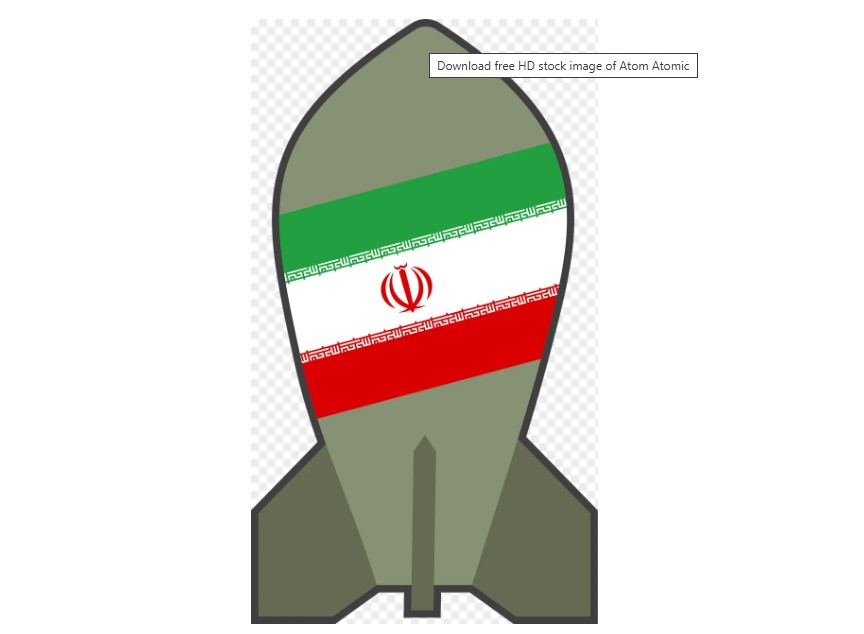
But there is also a price to pay. Iran ‘reaffirms that it will not acquire or produce nuclear weapons’. Uranium that has already been enriched must be reduced in enrichment level using downblending technology, so that it cannot be used for nuclear weapons. The International Atomic Energy Agency (IAEA) in Vienna is to oversee this. For the US, this is essential, but it is also the very issue on which the Islamic Republic has elevated lying to a fine art. Last June, the US Air Force carried out a major strike using ‘bunker busters’ to blow up storage facilities containing highly enriched uranium.
Iran must be content with less highly enriched uranium, but a nuclear weapon is the political regime’s life insurance. Without nuclear weapons, the ayatollahs and the generals of the Islamic Revolutionary Guard Corps (IRGC) will feel exposed, unworthy of the Islamic Republic. The bag of tricks remains within easy reach.
Despite all the American attacks, Iran feels like the winner, because the regime has survived the first blow. It is now trying to secure more through negotiations by sowing division.
The Trump-Netanyahu row is a boost for Iran. Internal strife in America is too, as the Midterms are coming up in November. It is rare for an incumbent president to come through the Midterms unscathed during a second term. The key issue: the price of petrol, which is essential for a country with vast distances. Petrol prices currently stand at $3.94 per gallon; that works out at 0.87 euro cents per litre; in the Netherlands, the tax on a litre of petrol alone is already higher than this amount. In the US, the rule is: expensive petrol = angry voters. By mid-August, it should become clear whether the big ‘Deal’ will go ahead or not.
Trump says "Iran has fully and completely agreed to highest level Nuclear inspections long into the future" and yet adds "If they did not agree to this, there would be no further negotiations"
Iran has repeatedly said it has not agreed to this pic.twitter.com/SI82IXb1hf
— zerohedge (@zerohedge) June 23, 2026
Regime change
Trump is facing criticism at home, naturally from the Democrats in the opposition, but also from within his own Republican ranks. A respected senator such as Lindsey Graham (70) believes the MoU falls short, as does Senator Tom Cotton (49), a former army officer.
There are serious reservations within the American military elite. They are ‘puzzled’ and feel that Trump is allowing himself to be lured into the water by a crocodile. Trump wants a ‘deal’. It is mainly retired senior military officers who are publicly issuing warnings in the media, such as four-star General Jack Keane. He recently said on Fox News: ‘Iran cannot be trusted; they lie and deceive; we all know that’. Keane: ‘We have to finish the job’. He wants ‘regime change’. The Democrats are fervently hoping that Trump will come unstuck over Iran. Many Europeans are hoping for the same.
French capitulation
There are no independent sources in Tehran, but the ruling regime feels stronger. This became apparent last weekend in Paris, where the opposition National Council of Resistance of Iran (NCRI) organised a mass demonstration against the regime in Tehran.
The Iranian Foreign Minister, Abbas Araghchi, rang his French counterpart Jean-Noël Barrot to complain about the demonstration involving some 100,000 Iranian opposition supporters from across Europe. He added that a bomb attack could not be ruled out. France subsequently revoked the permit for the demonstration and sent all the buses carrying demonstrators back home. France rarely misses an opportunity to capitulate.
The rest of Western Europe is little different. German Chancellor Friedrich Merz declared that the confrontation between the US and Iran is not ‘our war’, though he does insist that the Strait of Hormuz must remain open. As if that were a given. Britain is searching for its identity, Spain is staunchly pro-Ayatollah, and for Italian Prime Minister Meloni, the cosying up to Trump is over. Yet another of Trump’s unnecessary squabbles.
The US chief negotiator is the staunch Vice-President J.D. Vance; previously, that role was mainly filled by the Secretary of State, Marco Rubio. Vance hails from the Midwest, the American heartland, and wrote a book about it: Hillbilly Elegy. Rubio has Cuban parents and has a better feel for the outside world, but he isn’t calling the shots.
The roadmap is turning into an obstacle course, under time pressure; not so much for Iran, but certainly for America.
Originally published in Dutch by Wynia’s Week
Disclaimer: www.BrusselsReport.eu will under no circumstance be held legally responsible or liable for the content of any article appearing on the website, as only the author of an article is legally responsible for that, also in accordance with the terms of use.