Global efforts to decarbonise the world’s economy in order to address climate change have long raised concerns among free marketeers. Many demand-side climate policies appeared expensive, prone to cronyism, and interfered with people’s lives.
The UK’s Nicholas Stern, whose work would heavily influence the UN Framework Convention on Climate Change (Paris Agreement) estimated the cost at a recurring 1% of world GDP per year. Significant amounts of public money have been sunk into politically attractive technologies, like carbon capture and storage, that have been superseded by better alternatives. Environmental campaigning that sought to shame people into changing their behaviour sparked a backlash. In Germany there was even a counter-campaign run with the slogan Kein diesel ist Illegal (no diesel is illegal).
The pressure began to mount. Friedrich Merz warned that ‘climate protection must not endanger the industrial base in Germany and in other countries.’ The essence of this conventional wisdom had been that dealing with climate change was necessary, but accompanied by huge costs. Now leaders were beginning to ask: were those costs worth it? And why should we, in Europe, bear them while the rest of the world was not, and the Trump Administration was abandoning previous American climate policies in favour of making fossil fuels as cheap as possible?
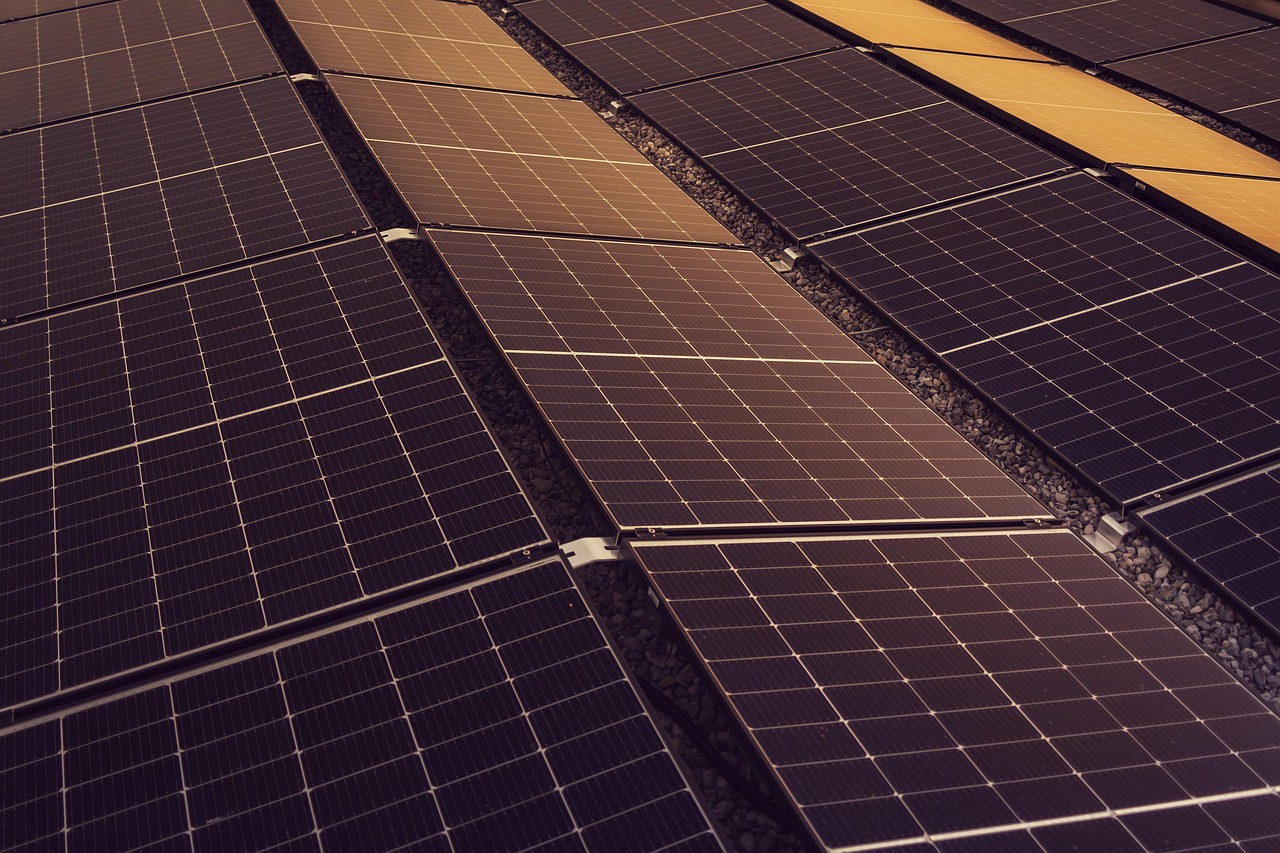
Yet, at the same time as political pressure was mounting against demand-side climate policy, my new paper for EPICENTER, The Supply Side Energy Revolution, reveals that a transformation has begun on the supply side. Continuous year-on-year improvements in solar, wind and battery storage have compounded to bring about enormous price reductions in electricity generation costs. The International Energy Agency estimates that the levelised cost of solar energy with storage will be $45/MWh (€44/MWh) in the United States by 2030. In that cheap gas producing market, gas power is predicted to be $70/MWh (€68/MWh). Electric vehicles are selling fast in Europe and in parts of the developing world, like Indonesia.
These improvements are being driven by market competition in what has historically, even in the more free market economies, been a highly regulated sector. Solar panels are now so cheap that in some relatively poor countries, such as Pakistan, people are turning to solar power to compensate for a conventional power system that has long been inadequate to people’s needs.
Solar is so obviously the future https://t.co/qlXCAxe0vE
— Elon Musk (@elonmusk) September 15, 2026
The change is composed of three shifts.
First, the cheapest way to generate electricity, by far, will be solar. In most circumstances, the second-cheapest will be wind. Other technologies that used to be better will have to justify their costs because they fill particular niches. Gas, for example, can still play a small role to provide peak power, or standby capacity for periods when solar, wind and interconnects with meteorically different geographies cannot meet demand. Already-built nuclear plants whose capital costs have already been paid can continue to generate stable power. In long-haul aviation and long-distance shipping, the fact that empty fuel tanks are lighter than full ones will allow fuel based propulsion to maintain a niche for the foreseeable future.
The second shift is in comparative advantage. Within Europe, the sunniest, and then the windiest places will have the cheapest energy. Expect heavy industry to move to Spain and South-East Europe. The global shift will be even more marked. Since the industrial revolution countries around the equator have been bested by industrial areas with plentiful coal deposits, whether the Ardennes, or in China. Now, it will be sunny countries that reap the benefits. This is a huge and welcome opportunity for North Africa, for example. Because unlike oil rents, which are centralised, and thus favour patronage-distributing dictatorship, solar power is dispersed, and favours market exchange and a democratic political economy.
The third, even more profound shift, is in economic decision making. Instead of working out how to distribute the high costs that had been thought necessary to curtail carbon emissions: in essence how to enforce climate austerity for up to a century, the task required is a different one, but much more familiar to classical liberals.
Energy technology has changed, and market forces, as they are operating in Pakistan, for example, or Bulgarian entrepreneurs’ construction of battery storage to absorb extra daytime solar output from Romania and Greece, and sell it back to them at night, are beginning to make a difference.
But both the energy market and the green transition have, even in otherwise capitalistic economies, been heavily regulated. Power has been nationalised, or even when run by the private sector subject to intense regulation. The owners of these regulated utilities and the transmission system operators that control grids are often resisting change. In Italy, this has led to excessive exposure to geopolitical risks related to gas supply due to Russian aggression and political instability in the Middle East. And when change has come it has often been dirigiste in nature: in Germany and the Netherlands it has resulted in the false economy of trying to switch a gas-based energy system to hydrogen; the UK has lived up to its skill for ‘picking winners’ by choosing astronomically expensive nuclear power at Hinkley Point C.
We need to reconfigure the energy transition on liberal, free-market lines. The essence of this transition has been rapid, surprising change. When people argued for the construction of CCS or traditional nuclear reactors in the first two decades of the 21st century, they were not necessarily wrong, or irrational, though it would be naive to think the large lobbying budgets of the CCS or nuclear industries had no role to play. They were acting according to the best evidence available at the time. Their mistake was to underestimate the pace of change and locking their countries into specific unnecessarily expensive technology instead of developing policy mechanisms that could adapt. We see this mistake being repeated in the development of ETS2, for example. Despite the name, it is in design, a collection of top down regulatory instruments and audits, almost the opposite of the ETS that has worked so well to stimulate carbon reductions without specifying how they should be done.
But above all, there is a need to remove the obstacles to energy transformation, for economic reasons as much as for ecological ones. Grid operators need to learn to manage decentralised networks. Permitting to upgrade old wind turbines or connect new zero-carbon sources should be sped up. There are still EU members where installing a solar system on your own balcony is forbidden and roof-installations need slow and complex approvals by the electricity authority. Failing to adopt this new technology as quickly as possible will only mean European industry and households will pay unnecessarily high prices for power – as Italians are finding out. To attempt to slow down the transition from fossil fuels has become an act of nostalgia, like clinging on to a Blackberry after iPhones had been introduced.
Disclaimer: www.BrusselsReport.eu will under no circumstance be held legally responsible or liable for the content of any article appearing on the website, as only the author of an article is legally responsible for that, also in accordance with the terms of use.