The Irish EU Council Presidency aims to secure agreement on the EU’s long term budget by the end of this year, as any later deal may be even more complicated due to national election campaigns, for example in France. Still, this is a rather ambitious endeavour. In 2025, the European Commission proposed to spend about 2 trillion euro between 2028 and 2034. That represents a massive increase from the 1.3 trillion euro budget for 2021-2027. The proposal was immediately met by fierce opposition from net paying EU member states. For now, the negotiations appear more difficult than ever.
In June, the Cypriot EU Presidency came up with a compromise proposal, which intended to cut a modest 33 billion euro, but that didn’t get much love either. The German government dismissed the proposal outright as “unaffordable,”, suggesting a 400 billion euro cut instead. In an internal document, it warned that “as it stands, an agreement is impossible.” It also pointed out that even if Germany’s 400 billion euro cut to the original Commission proposal would be adopted, the EU’s long term budget would still be 27% larger than the current one, pushing Germany’s annual contribution to over 50 billion euro.
Part of the problem is that the EU needs to start paying back the money borrowed by the European Commission to finance the so-called “Covid Recovery Fund”. As expected, the spending of these funds, which amounted to 800 billion euro, has been rife with fraud and misspending. Last year already, the EU Court of Auditors, the EU’s in-house financial watchdog, came out with a damning report about it. Croatian Court of Audit member Ivana Maletić described the way EU Covid Recovery funds were spent as “completely absurd”, saying: “EU policymakers should not allow such instruments in the future unless they first have information about the actual costs and the final recipients. They must also have a clear answer to the question of what citizens actually get for their money.”
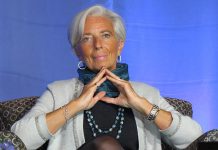
Despite this, the likes of the leftwing Spanish government and ECB President Christine Lagarde are already pushing hard for even more jointly issued debt.
The original idea was that EU spending should be shifted away from agriculture and regional subsidies to new challenges, in particular defence procurement, energy and technological research. In practice, however, the vested interests receiving all that spending – which has equally received heavy criticism by the EU Court of Auditors over the years – have been managing to rein in the Cypriot Presidency from introducing genuine spending cuts. The farmers lobby is notably strong in Ireland and Irish Europe Minister Martin Heydon just called the wasteful and fraud–sensitive “Common Agricultural Policy “an integral part of our future”, so it is unlikely we will see much change this time around.
EXCLUSIVE: Germany demands $450 billion cut to 'unaffordable' EU budget, document shows https://t.co/bPXWkf5AiQ https://t.co/bPXWkf5AiQ
— Reuters Business (@ReutersBiz) June 30, 2026
An EU levy on sugar?
To finance “business as usual” and pay back the EU Covid debt, the European Commission has proposed “own resources” – in normal language EU taxes. Last month, the institution warned EU leaders that a failure to agree such new EU-wide taxes could force spending cuts of up to 40% in the next long-term budget. One diplomat confided that the simulation mentioned that if agriculture and regional subsidies were to be shielded, cuts to “modernisation” – the new challenges, like defence procurement – could stand as high as 80%.
Last year, the Commission proposed five kinds of EU taxes: duties on tobacco, e-waste, and corporations, as well as revenues linked to carbon pricing and greenhouse gas emissions.
Poland and Italy strongly oppose carbon taxation, and are instead pushing to suspend the EU’s emission trading system (ETS), which they rightfully see as a major burden on European competitiveness, giving how it is helping to push the EU’s natural gas price to five times the level of America’s.
Wereldmarktprijzen voor energie zijn vrijwel gelijk, uitgezonderd gas in de USA.
Door de EU ETS heffing zijn kolen in de EU echter 200% en olie 60% duurder dan in Azië en USA. Ook is aardgas in EU hierdoor 50% duurder dan in Azië en zelfs 5x duurder dan in USA.#grafiekvandedag pic.twitter.com/4DpCdLABhE— Martien Visser (@BM_Visser) July 10, 2026
Germany, and many other governments, are firmly against an EU corporate tax.
Sweden has lashed out against the proposed EU tobacco tax, which would provide at least 11.2 billion annually to the EU, calling it “completely unacceptable”. The Swedish government thereby also complained that the Commission intends to target not only tobacco products through significantly higher minimum excise duties, but also nicotine-based alternatives to tobacco, through proposed revisions of the relevant EU legislation, thereby completely ignoring the different impact on health from different products.
Reportedly, the EU is now discussing yet another alternative: a levy on sugar. The last thing Europe needs is more EU-level taxation, particularly from a democratic accountability perspective. Yet if the Commission insists on presenting new taxes as public health measures, sugar at least has a clear scientific basis. Excessive sugar consumption is strongly associated with obesity, diabetes, and cardiovascular disease.
The contrast with tobacco policy is difficult to ignore. The Commission is proposing higher taxes not only on cigarettes, but also on smoke-free nicotine alternatives that do not carry anything close to the same level of health risk. Targeting sugar based on documented health harms while simultaneously taxing fundamentally different nicotine products as though they were equally dangerous exposes the weakness of the Commission’s health argument. If taxation is not proportionate to risk, then public health begins to look less like the objective and more like a convenient justification for raising revenue.
What’s next?
In June, European Commission President Ursula von der Leyen already celebrated as “excellent news” that EU member states had secure a “provisional agreement (…) for the Council position on key building blocks for the EU budget.” She stated: “Member States support the Commission’s ambition for a simpler and modern EU budget. One that invests in Europe’s priorities such as competitiveness, security, agriculture, cohesion and its global role.”
The question is if much progress towards a deal has really been made. Ireland is now preparing a so-called ‘nego box’ by the time EU leaders meet in mid-October.
Real progress would also basically mean massive cuts to the EU budget. In 2019, during the previous negotiations for the EU’s long term budget, I presented a paper to the EU Committee of the German Parliament summarizing the problems with EU spending. Virtually none of the problematic aspects that I highlighted – wasteful and fraud-sensitive agricultural and regional subsidies, as well as spending for the EU’s bloated bureaucracy – have been addressed since then. On the contrary, lots of extra spending for “green” policies, defence and of course the “Covid recovery fund” were added to the bill for taxpayers.
Perhaps a good step forward would be for the European Commission to end its attempts to influence the negotiation process by clearly siding with those that want more money for the EU to spend. Things have even gotten that far that the EU Commissioner for Budget Piotr Serafin openly urged the “frugals”, a group of countries pressing for a smaller EU budget, to back off, even coming with bold statements that “a bigger EU budget will cost you less,” citing economies of scale as the argument.
Euractiv sums up the message by EU Budget Commissioner @Piotr_Serafin to EU member states.
"Hands off our budget, Brussels warns capitals"
Newsflash: EU taxpayers are the rightful owners of that money, not the EU Commission.https://t.co/l2ZdECfegC
— Pieter Cleppe (@pietercleppe) July 16, 2026
Never mind the reports of the EU Court of Auditors, there have been abundant media stories documenting the vast number of examples of waste of EU funds, going back for years, from the greedy dentist in Cosenza who used EU funds to buy a yellow Ferrari Testarossa two decades ago, to an unusable EU-funded “observation tower” in Hungary more recently. Sure, there is national waste, but clearly, the wasting of EU funds on these kinds of projects does not exactly deliver the economies of scale the EU Commissioner is boasting about.
In its defence, the EU Commission was responding to statements by the likes of Dutch Finance Minister Eelco Heinen (picture), who sharply criticised the Cypriot EU budget proposal, saying: “This shows exactly how not to proceed.”
About the so-called “negotiating box” proposed by Cyprus, with EU spending cuts totalling only €33 billion, he commented:
“For the Netherlands, this is a no-go box. (…) It is unaffordable, unbalanced, and with the wrong focus. The overall volume remains far too high at a time when fiscal space is limited across Europe and difficult choices are unavoidable.”
It should be a “no-go box” for everyone.