By former Dutch diplomat Johannes Vervloed
Germany is increasingly charting its own course in defence, energy and the economy: rearmament, a weakened climate policy and growing impatience with Brussels. France, too, is seeking greater national sovereignty, albeit by a different route, whilst countries such as Spain and Portugal remain committed to further European integration. What do these diverging paths mean for the future of the European Union, and who will set the agenda in the future?
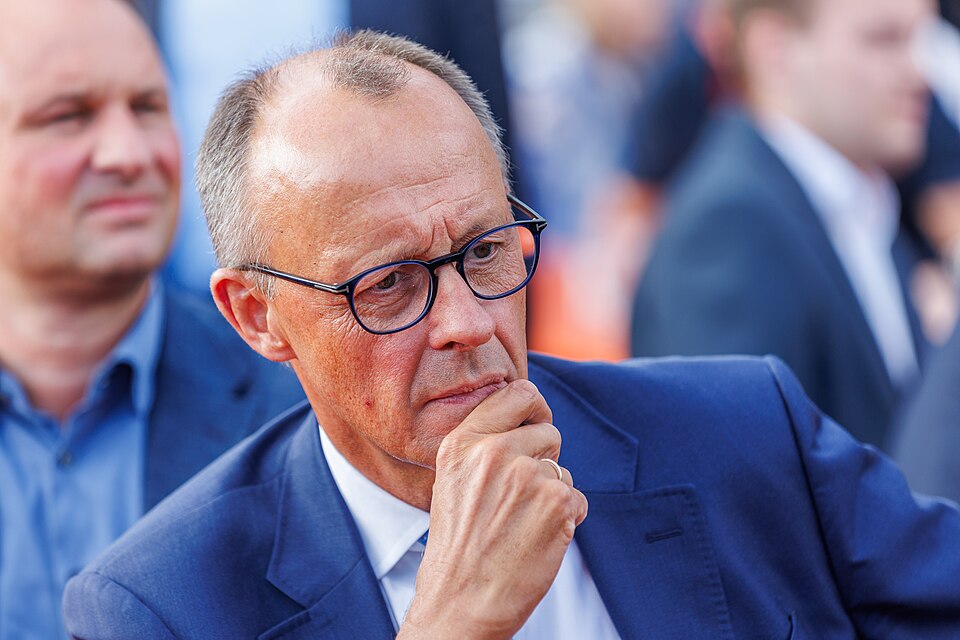
What we are currently witnessing in the Federal Republic points towards a ‘solo course’. It is a loaded term, but no other word would do justice to an undeniable new trend in German politics. In the fields of defence, the economy and energy alike, this trend can be interpreted in no other way. The AfD is not yet in government — although it is now the largest party in Germany in all the polls — yet the party’s manifesto is already casting its shadow ahead. For the time being, Chancellor Merz is holding back from cooperating with the party, which he characterises as right-wing extremist. Yet elements of the AfD’s party programme are already evident in the government policy of the CDU/CSU–SPD coalition.
Sovereignty
This nationalist trend in Germany is not unique in Europe. In France too, with the rise of the Rassemblement National (now the country’s largest party), a clear trend towards national sovereignty is discernible. If we add to this the Eastern European countries, which are still founded on national sovereignty, then only Spain and Portugal remain as advocates of further European integration, involving the transfer of national powers.
The other EU Member States, led by Italy, occupy a middle ground: they want greater national control over migration, taxation and social security, whilst still supporting European cooperation in the fields of defence, energy and industry. Following next year’s presidential elections in France and the German Bundestag elections in early 2029, it will become clearer whether this nationalist trend within the European Union’s member states will continue.
Germany is rearming
Germany’s withdrawal from the joint Future Combat Air System (FCAS) project with France is an unmistakable signal that Germany wishes to take control of its own defence. The FCAS was a joint initiative by France, Germany and, later, Spain to develop a sixth-generation fighter aircraft, as a successor to the Rafale and the Eurofighter, amongst others. Germany did not want the French company Dassault to take the lead and withdrew from the project. No decision has yet been made on an alternative to a manned fighter aircraft, but Germany is already set to build an unmanned, AI-controlled combat drone (UCAV), the CA-1, in collaboration with German firms: Helsing (AI, drones, software), Hensoldt (radars and sensors) and HIL GmbH (maintenance of Bundeswehr ground equipment; not an aircraft manufacturer). Germany aims to establish its own ecosystem of both unmanned and manned fighter aircraft.
Germany had previously decided to substantially increase its defence budget. To do so, the so-called ‘Schuldenbremse’ (debt brake) had to be suspended via a constitutional amendment. This has now been done: defence expenditure exceeding 1 per cent of GDP no longer counts towards the debt brake, meaning there is no longer a fixed maximum amount for defence. Germany can borrow hundreds of billions for defence expenditure. In addition, a separate infrastructure fund of €500 billion has been set up, which is also exempt from the debt brake.
From tolerated ally to superpower
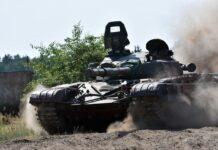
The Bundeswehr — sometimes colloquially referred to as the successor to the Wehrmacht — is being significantly expanded to over 200,000 active-duty personnel. Work is also underway to build up a much larger reserve force. The same applies to military equipment: large numbers of tanks, armoured vehicles, artillery, air defence systems, ammunition, naval vessels and fighter aircraft are being procured. Since 1945, Germany had been cautious about military spending. Within a few years, the country has transformed from a NATO member that was often criticised for failing to meet the 2 per cent benchmark into Europe’s largest military investor and the second-largest defence spender within NATO. The United Kingdom, until recently Europe’s leading military power, has thus been overtaken.
Defence is not the only indicator that Germany wants to take matters into its own hands. It is not only in the field of defence that the country has cast aside all hesitation — the guilt complex over the Second World War —; it is also increasingly going its own way in the economic and energy sectors. The EU is no longer a sacred cow that must be kept happy at all costs. The old division of labour, whereby France set policy and Germany footed the bill, has clearly come to an end. In Brussels (the Council and the Commission) and Strasbourg (the European Parliament), German representatives are making it abundantly clear that they no longer agree with EU legislation and measures that do not align with what they perceive to be Germany’s interests.
Energy and the economy: national interests first
Manfred Weber, the German leader of the Christian Democrats – the largest political group in the European Parliament – plays a key role in this. He and, to a lesser extent, the German President of the Commission, Ursula von der Leyen, have ensured that the rigorous climate policy has been watered down, through amendments and so-called omnibus legislation. That climate policy has caused major problems for German industry, particularly due to energy prices that are much higher than in the countries with which German industry must compete. Germany is also no longer taking European competition policy very seriously: it is subsidising its own industry to offset the high energy prices. The Energiewende initiated by Angela Merkel is more or less ‘on hold’.
There is even talk of restarting the fourteen closed nuclear power stations. Russian gas is still taboo, but the fact that the German Public Prosecutor’s Office is attempting to prosecute the Ukrainian saboteurs of Nord Stream 2 could be a sign that the gas pipeline from Russia might be reopened — following a ceasefire between Russia and Ukraine. A third indicator is the recent reform agenda: an attempt to boost the German economy again through tax measures.
Wir bringen Deutschland auf Kurs: Die CDU-geführte Reformkoalition hat heute ihr Programm für Aufschwung und Wohlstand vorgestellt.
Das sind die wichtigsten Punkte (Thread):👇🏼 pic.twitter.com/n90wkbcz6S
— CDU Deutschlands (@CDU) July 2, 2026
Germany’s regained self-confidence
Germany has regained its self-confidence. It increasingly views the EU as a straitjacket and wishes to break free from it — not entirely for the time being, but if the AfD comes to power following the 2029 German Bundestag elections, this could well be on the agenda. In any case, it is part of the AfD’s election manifesto.
That is also the key difference from the French ‘alternative’ party, the Rassemblement National (RN). The party’s second-in-command, ‘crown prince’ Jordan Bardella, has said that, as President of the Fifth Republic, he does not want to take France out of the EU. He does not want to abolish the euro or dismantle the European institutions outright. This is precisely where he differs from previous generations of Eurosceptics and from the AfD.
France: reforming from within
Bardella wants to reform the EU from within, turning it into an ‘EEC 2.0’, in which the member states would largely regain their sovereignty. It is de Gaulle’s old idea: a ‘Europe des patries’, literally ‘Europe of the Fatherlands’. By this he meant a Europe in which sovereign nation states cooperate closely, but in which no supranational European state emerges that overshadows national governments.
Despite their differences, both parties want a strong nation state. If they come to power — the RN in 2027, the AfD in 2029 — they will drastically change the political landscape in Europe. European integration will be rolled back, and both Germany and France will once again go their own way, free from the straitjacket of the EU. European cooperation will not disappear, but will be based on a more realistic foundation: cooperation will take place only where it offers added value at EU level. In other words, the well-known principle of subsidiarity. On all other matters, the Member States will once again be sovereign.
A Europe of Fatherlands
That does not, incidentally, mean an end to EU enlargement. Not an enlargement leading to further European integration, as the current governments in Germany and France envisage, but de Gaulle’s ‘Europe of Fatherlands’, stretching from the Atlantic coast to the Urals. A single civilisation, to which he explicitly included Russia. The first part of his ‘statement’ does not rule out more European countries joining the EU. The second part is more of a pipe dream: unthinkable in the current constellation, although normalisation with Russia cannot be ruled out in the long term.
The only Member States keen to press ahead with the ‘Ever Closer Union’ are Spain and Portugal. But even in those countries, the political landscape is shifting. Portugal already has a weak minority government that is no longer willing to transfer national powers to ‘Brussels’ at any cost. In Spain, the government of the Socialist Prime Minister Sánchez is on its last legs. Elections are due next year, and the Partido Popular — a member of the Christian Democratic group in the European Parliament — is likely to take over the reins, together with Vox, the Spanish counterpart of RN and AfD. Spain, too, will then turn its back on further European integration.
The rest of Europe will follow
In the stance taken by Giorgia Meloni, the Prime Minister of Italy, we can already see what might be expected from the rest of the EU Member States following a political upheaval in Germany and France: a pragmatic approach. If Germany and France change course, the other Member States will more or less follow suit, with Eastern Europe leading the way. Since their liberation from Soviet rule, those countries have never relinquished their national sovereignty and have always resisted the open-borders policy, climate policy and demands regarding the rule of law dictated by ‘Brussels’. They have always contested the jurisdiction of the European Court of Justice in non-Community matters.
The Nordic countries, too, have always pursued an independent policy. Contributing more money to the EU was taboo — they belonged, just like Germany and the Netherlands, to the ‘frugals’. Denmark has its ‘opt-outs’ and Sweden does not wish to give up the Swedish krona.
In short: if Germany and France take the reins back into their own hands, the rest will follow. Europe will, as de Gaulle intended, become a Europe of Nation-States.
Originally published in Dutch by OpinieZ.
Disclaimer: www.BrusselsReport.eu will under no circumstance be held legally responsible or liable for the content of any article appearing on the website, as only the author of an article is legally responsible for that, also in accordance with the terms of use.