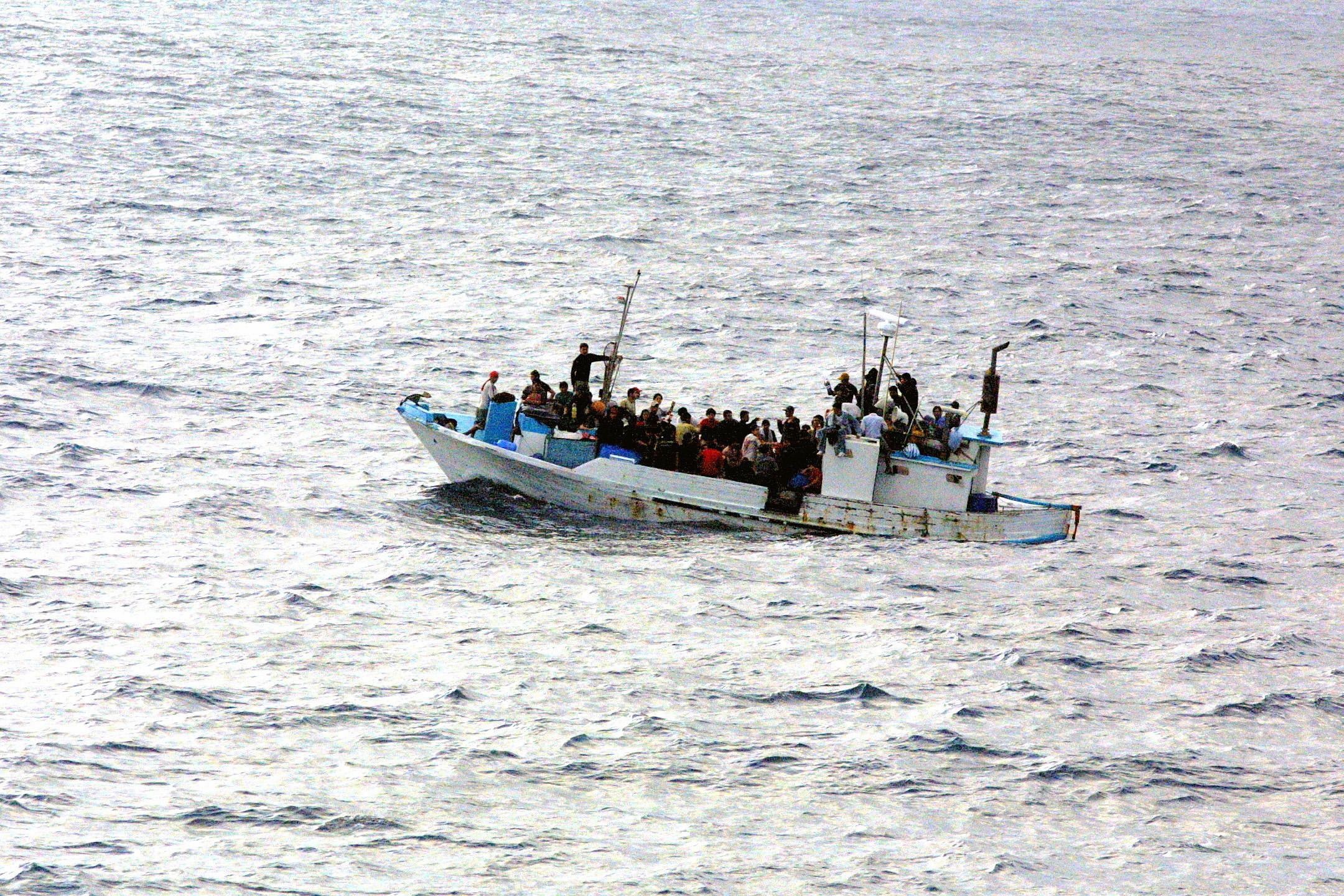
This week, five EU Member States have announced to open a migrant deportation centre in Rwanda next year. It remains to be seen what will come of this so-called “return hub”, but at it clearly represent a sharp change of direction for the EU. Only in June, the EU’s new migrant redistribution scheme entered into force, but it is already scheduled for review in 2027, due to the increasing electoral success of right-wing political forces throughout Europe.
The EU’s new system of “return hubs” differs somewhat from the widely cited Australian approach. They would not be used as reception centres for people entering illegally and applying for asylum, but rather as centres for those whose asylum applications have already been rejected by the EU. For now, it is only a pilot scheme, but it represents an important precedent.
Despite a series of tightening measures, in 2025 some 200,000 people still managed to enter the European Union illegally. Given the existing difficulties in properly integrating the minority groups already living in the EU, it is clear that putting an end to illegal migration is the top priority.
Australia rightly serves as a model in this regard. Since 2013, the country has succeeded in preventing large-scale illegal migration by immediately transferring anyone who enters illegally to a reception centre outside its territory, and by denying those people asylum in Australia. At least at certain times, Australia nevertheless remained committed to granting asylum to those who are entitled to it. It however did so by offering them safety in other countries, such as Cambodia. This approach has destroyed the business model of people smugglers. During the same period, around 30,000 irregular migrants died in the Mediterranean during the perilous crossing, whilst officially there have been almost no further drowning deaths in Australian waters since the system in question came into force. After all, few people are now willing to pay money to people smugglers and risk their lives in the process.
It is true that Australia’s “pushback” system was key to its success, as some have stressed, irrespective of whether those that are being pushed back to Indonesian waters were able to apply for asylum or not. Then under its current legislative framework, EU member states have committed to providing the right to apply for asylum. Naval turnbacks on their own are simply illegal. The question is whether it is feasible to offer this to anyone globally, but that is another discussion. In the first place, as said, the EU’s new Rwanda scheme is only meant for those that have been applying for asylum and cannot be sent back.
Before looking at legalising pushbacks in the Mediterranean – something Greece has been accused of doing already anyway – EU countries like France and Belgium should consider agreeing a naval turnback agreement with the UK, whereby they would accept anyone that entered Britain illegally through the sea. Surely if all migrants that risk their lives to cross the North Sea from France, Belgium, and recently even the Netherlands to the UK would know that they will simply be transferred back after having been rescued by the British Coast Guard, this would end the whole charade, which has now been running until at least the 1990s. Overstretched police services in France and Belgium could focus on other things. There would no longer be shantytowns near Calais, and it would not mean a single extra illegal migrant in the EU, as they were there already anyway. Indonesia tacitly accepted such an arrangement with Australia, so France and Belgium should learn from the experience.
The EU recently passed a law allowing the creation of return hubs like Rwanda, with human-rights and monitoring safeguards. Officials say that puts the scheme on sounder legal footing than previous such efforts. But details are scant, and questions remain https://t.co/PyPoC3geDK
— The Economist (@TheEconomist) November 19, 2026
Integration challenges
The recent large-scale riots in France and neighbouring countries, which have occurred on the fringes of youth demonstrations, raise a great many questions. Shouldn’t the police intervene more forcefully? When police officers come under fire from rioters, they are at the very least entitled to self-defence. It is clear that we must be cautious about permitting police violence, but aren’t the legal risks for police officers in using force too great at present?
More fundamentally: does the extreme violence – which was also accompanied by looting and the burning down of a school in Toulouse and a magnificent 19th-century town hall in Limoges – not indicate that something is fundamentally wrong with society? And how do we go about resolving that? At the same time, a sort of Catholic revival is taking place in France, as was evident during the Pope’s recent visit to Paris. Could religion perhaps offer part of the solution to bring the ‘rebels without a cause’ back onto the straight and narrow?
Amidst all these questions, one thing cannot be denied. The lack of integration of migrants and their descendants played a major role here. Jérôme Fourquet, a French researcher affiliated with the opinion polling organisation IFOP, states that of the 70 individuals identified through press reports following the French riots of 17 October, approximately 75 per cent had a first name of Arabic-Islamic or African origin. According to him, “post-colonial resentment” is at play here.
It is evident that this is, of course, not solely about young people from migrant backgrounds – there are also the particularly violent far-left groups – and that many migrants are, of course, well integrated and an asset to Western Europe. However, the facts can no longer be denied. In Germany, Dirk Peglow, chairman of the police union BDK, commented on similar riots in Frankfurt:
“We must be honest about what happened in Frankfurt. (…) If you look at the footage of the riots, you have to conclude that the rioters were mainly young men from migrant backgrounds. Some members of these groups are known to the police for their involvement in incidents in the city centre. This must be acknowledged. We are talking about specific groups of perpetrators, not about people with a migrant background in general. The fact that many of those arrested are German citizens does not alter the classification of the group.”
Peglow also expressed his support for the German Minister of the Interior, Alexander Dobrindt (CSU), who had faced criticism from his Social Democratic colleague, Minister Boris Pistorius, over his recent statement regarding “migrants causing unrest” during the riots in question. The trade unionist also called for swift legal action and a review of migration policy. These are the kinds of events that drive the EU to adopt a version of the “Rwanda” plan to cope with illegal migration, which makes an already difficult situation even more difficult.
Riots in France: How anti-government protests spiraled out of control https://t.co/Wau9ssazQ6
— Reuters (@Reuters) November 14, 2026
Parallel societies
The think tank New Direction, which is affiliated with the centre-right ECR group in the European Parliament, published a study earlier this year on “Immigration, Islamisation and the rise of parallel societies”. It demonstrates that poor integration also has an impact on security, and not merely as a result of riots by certain young people following demonstrations.
The study provides an overview of 900 to 1000 “no-go zones” in Europe, which it defines as a geographically demarcated urban area characterised by multiple dysfunctions: a high level of violent crime, parallel cultural norms – ethnic or religious enclaves – and a government that has partially withdrawn from the area, for example because the police or emergency services often avoid the area for fear of trouble.
In addition to the cultural challenges, there is the major problem that in Western Europe, around a third of non-EU migrants of working age are not in employment. This has a great deal to do with the generous benefits of the welfare state. In Belgium, where until recently people could receive unemployment benefit for life, the figure is as high as half. Those without a job will, of course, find it difficult to integrate into society.
As early as 2010, then German Chancellor Angela Merkel stated that attempts to build a multicultural society in Germany had “completely failed”. She added at the time that the so-called ‘multikulti’ concept – whereby people would happily ‘live side by side’ – was not working, and that immigrants needed to do more to integrate, including learning German. A poll from that period indicated that more than 30 per cent of Germans believed the country was being ‘overrun by foreigners’.
Nevertheless, in 2015 – five years later – Merkel allowed a million migrants to enter Germany, partly as a result of the war in Syria, and this took place amid particularly lax controls. Political correctness proves to be particularly intractable. Yet acknowledging certain problems is the first step towards a solution.