By Matthew Robinson, Director of the Euro-Gulf Information Centre
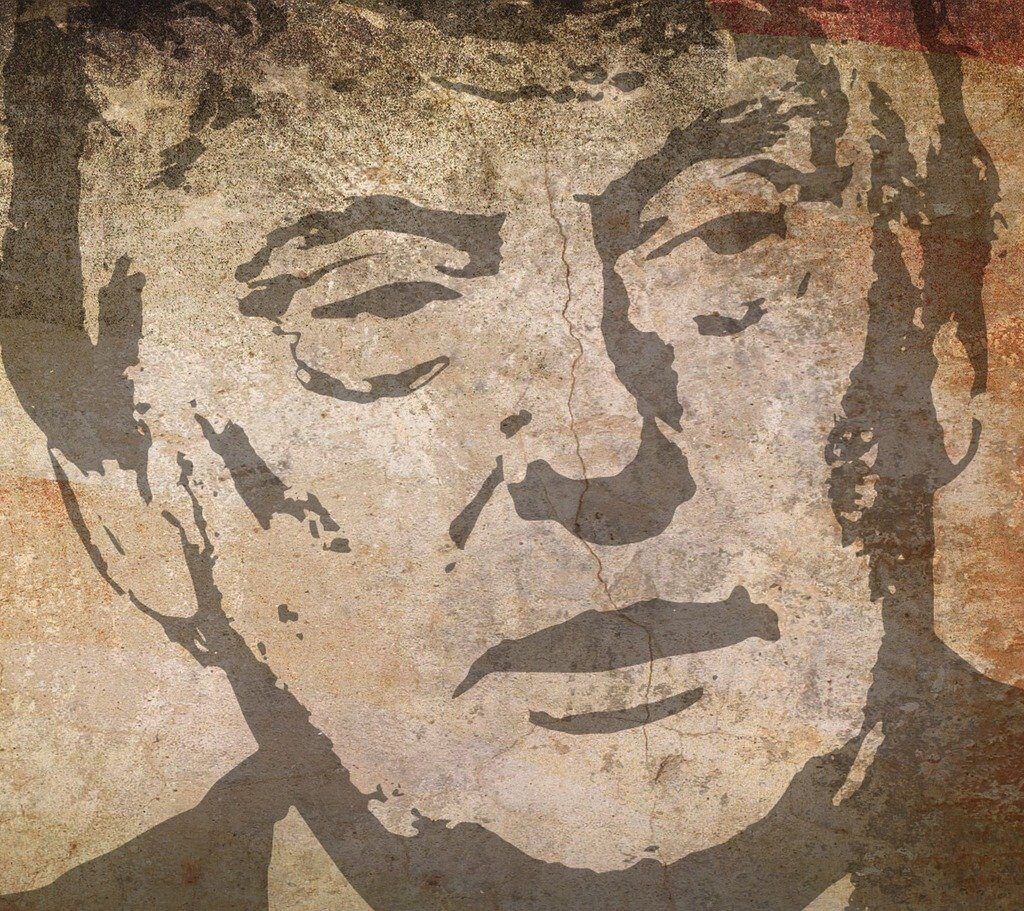
President Donald Trump has faced a devastating political blow. The Democrats’ victory in the US Midterm Elections on 3 November, which have handed them majority control of both the House of Representatives and the Senate, is more than just an expected congressional defeat for the party of an incumbent President. It is an outright rejection of the increasingly expensive foreign policy of which the Iran War and resulting soaring energy costs were at the heart.
The irony is clear to see. A President who returned to the White House with the promise of ending America’s engagement into expensive wars. Trump, who has based his political popularity largely upon the principle of putting America first, has found his Presidency embroiled in a foreign conflict, not unlike President George W. Bush and Iraq.
BREAKING: Donald Trump admits the Iran war was to blame for the Republicans' midterm defeat.
He adds that if he had to do it again, he would, as he won't let "Iran have a nuclear weapon".https://t.co/bI6jofJ78a pic.twitter.com/8IZ5Vlj020
— Sky News (@SkyNews) November 4, 2026
The Democrats’ successes, including countless victories in traditionally ‘ruby-red’ Republican states like Texas, Kansas and South Carolina, are primarily a result of the anger over the economic and cost of living woes of the American people. The domestic political reality being the war in Iran is now interwoven with Americans economic hardships. Disruption of energy supplies through the Strait of Hormuz, rising gas prices and other negative consequences of the war have brought the foreign policy problems right into the homes of American voters. The electorate that has been promised prosperity and disengagement from foreign wars is forced to pay more for gas, especially diesel in the agriculture heartland of the country and midwest.
Trump has already acknowledged the reality the war led to significant challenges in his second term, albeit without actually expressing any regret over the beginning of the military operation. The President’s statements about his readiness to launch the war once again show the dilemma faced by his presidency today, and the beginning of public spilts in his administration on the matter. Vice President JD Vance’s statement on 4 November about the Iran War being the central cause of the Republicans’ historic defeat in the midterms marks a highly unusual and very public departure from the White House’s messaging. Trump’s reliably steadfast and loyal Vice President is no more. Vance’s intervention is politically important because, due to Trump being constitutionally ineligible to run for the third term, the future of the party will shortly ignite competition among those who wish to run in 2028.
Vice President Vance is mistaken. The reason we Republicans lost yesterday is not just the war in Iran. Yes, the resulting higher fuel prices contributed to the inflation that infuriated Americans who were promised lower prices by this administration. But the war is not the… https://t.co/XK6VLE1skV
— Pat Toomey (US Sen. ret.) (@SenToomey) November 5, 2026
Contrary to the previous years, when divisions between isolationists from the America First direction of the Republican Party and traditional neoconservative supporters of policies involving military actions seemed to be confined to television studios, opinion-makers and congressional debates, they now feature as a split between the President and Vice President. One side comprises a bloc of the party who support the need for taking part in military operations abroad regardless of how cost-effective they are, including supporters of military action against Iran, support for Israel and domination, even regime change in the Middle East. The other wing, represents an ever-increasing, younger and isolationist faction embodied by Vance, and once championed by Trump himself. Trump managed keep these two conflicting ideological factions within the Republican tent for some time, in part through the appeal of transactional and bullish diplomacy, the Iran War and the midterm results have brought this unity to an abrupt end. Early Exit polls suggests that as many as 63% of all voters and a quarter of Republican voters disagreed with the US intervention in Iran (Edison Research).
A weakened and ‘lame-duck’ Trump administration could now cut in various ways politically. On one hand the President could pivot to a more pragmatic manner of dealing with Iran. His defeat at the polls makes the case for reaching an agreement with Tehran more compelling than ever. A deal to decrease tension in the region, restore trade across seas, and bring about cheaper energy prices would afford Trump a much-needed victory on the international scene. Gulf countries have every incentive to back such an approach since Saudi Arabia, Bahrain, the UAE, Kuwait, Oman and Qatar have already paid a high price in human and economic capital. The GCC wants stability within the region, shipping lanes secured, and energy infrastructure protected.
On the other hand, Trump could double-down in a more aggressive approach and military campaign. Any such move would be fuelled by the hope renewed pressure on Iran could help him legacy build in the region, possibly regime change. Any such move would involve great risks. Iran may assume that the results of the elections signal a decreased readiness on the part of the US for an escalation of tensions. Any unexpected move contrary to this assumption may ruin chances for successful negotiations.
Beyond Iran, the intervention on the part of the Vice President could also open a wider wedge on foreign policy and the Middle East within the Republican Party, namely the US’s close ties to Israel. This further fuelled with Democratic control of Congress might mean a more substantial taking-stock of the long-standing US-Israel alliance and deep military cooperation and ties, at least in the public discourse.
When it comes to the EU and the UK, Europe still must recognise that a lame-duck President Trump at home, does not necessarily translate to a weakened Commander-in-Chief abroad. Trump will still be very influential when it comes to foreign affairs and pressures as it relates to NATO, trade polic will not disappear in Trump’s final two years in office. Indeed, the inability to pursue a robust legislative agenda domestically may embolden Trump to focus on a raft of unilateral foreign policy manoeuvrings.
There is also may be pause for thoughts for Europe’s populist and nationalist movements both left and right. Trump has always served as an inspiration for those who wanted to go against the mainstream. His electoral setback underscores that even a political movement as powerful as ‘MAGA’ can lose public support when it collides with economic reality.
The midterms have exposed the central contradiction of Trump’s second term. A president elected to put America first has found himself politically damaged by a war abroad. The next two years will determine whether Trump responds by pursuing the diplomatic victories that could define his legacy, or by doubling down on the military confrontation that has helped cost his party control of Congress. For America’s allies and the wider international community, the consequences of that decision could be far more consequential than the election itself.
Disclaimer: www.BrusselsReport.eu will under no circumstance be held legally responsible or liable for the content of any article appearing on the website, as only the author of an article is legally responsible for that, also in accordance with the terms of use.