By Thierry Mariani, Member of the European Parliament
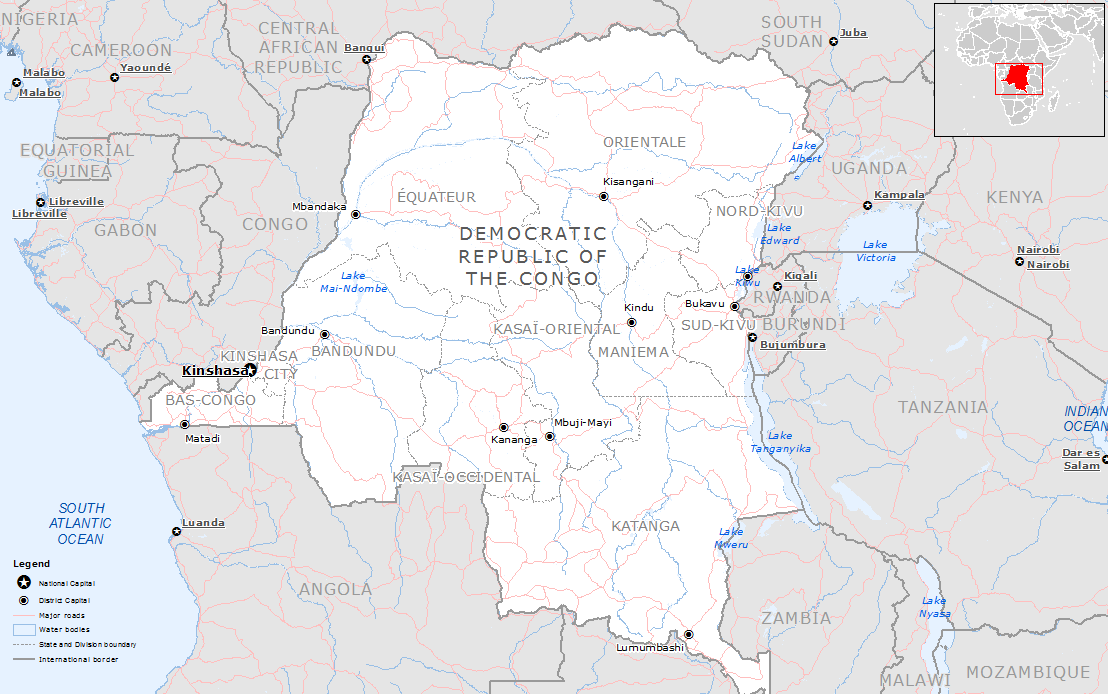
For three decades, the eastern Democratic Republic of the Congo has been the site of one of the deadliest conflicts since 1945. The International Rescue Committee puts the death toll above six million. By that measure alone, it is the most lethal crisis the world has seen since the Second World War. And yet, if you asked most Europeans what is happening in Goma this month, I doubt one in a hundred could tell you.
I recently chaired a conference at the European Parliament on this very subject, bringing together Congolese officials, a legal scholar and survivors who had travelled to Brussels to describe what has been done to them and to their country. I did so because this subject does not, in the ordinary run of things, fill a committee room, let alone a newspaper column or a plenary agenda. That is not an accident. It is, I believe, the problem itself.
I say this with a particular attachment to the Democratic Republic of the Congo, and I say it plainly: there are peoples whose suffering is discussed on the evening news, and there are peoples who have been massacred for three decades amid something close to general indifference. This double standard troubles me. The populations of eastern DRC belong to a category of humanity that much of the world prefers not to see – a population that can, in effect, be sacrificed against access to mineral resources the rest of us rely on every day, in our phones, our batteries, our electric cars.
They are displaced, raped, killed, and they have almost no one to carry their voice beyond their own borders. That is not for want of documentation. The United Nations’ own Mapping Report set out the gravest crimes committed in the DRC as long ago as 2010. Sixteen years later, justice has still not caught up with facts that were established well over a decade ago – even where the identity of those responsible is not seriously disputed.
It is not as though this Parliament has said nothing. In February 2025, we adopted a resolution condemning the occupation of Congolese territory and naming the involvement of Rwanda in the violence. I voted for it, as did an overwhelming number of my colleagues from across the political spectrum. But a resolution is a sentence on paper unless something follows it. Since February 2025, the European Union has taken no action commensurate with what we ourselves described. A handful of modest sanctions have been imposed. The occupation continues. The M23 continues. The killing continues. Whatever protection our resolutions were meant to offer, it has not reached the people living under this violence.
This is why I organised the conference, and why I am writing now: not to add one more statement to the pile, but to say, as directly as I can, that the next step belongs to us. The Congolese officials I hosted are not asking Europe to adopt their narrative wholesale. They are asking something narrower and harder to refuse: that when a State can no longer deliver justice to its own citizens because the crimes against them cross its borders, those of us who can act, act.
That means more than a resolution. It means genuine, enforceable sanctions on those financing and arming the violence. It means supporting the international mechanisms – including at the International Court of Justice – that the DRC is now using to try to hold Rwanda to account. It means looking honestly at the mineral supply chains that connect a mine in North Kivu to a factory in Europe or Asia, and asking whether we are, even indirectly, underwriting what we claim to condemn. And it means recognising, clearly and without euphemism, what more than three decades of killing, displacement and sexual violence actually amount to in law – including, where the evidence supports it, the crime of genocide.
I do not pretend that one conference, or one article, changes any of this. But I refuse to accept that the silence surrounding the Congo is simply the natural order of things – an unfortunate but unavoidable feature of a crowded world with too many crises competing for attention. Silence is also a choice. Europe chose, for years, to look away from a war that has cost more lives than almost any conflict since 1945. We can choose differently.
The survivors who came to Brussels did not come to be pitied. They came to be heard, and then to see whether being heard changes anything. That is now a question for this Parliament and for the European Commission to answer – not with another resolution, but with the follow-through that has been missing for years. The facts have been known since 2010. The responsibility, from here, is ours.
Disclaimer: www.BrusselsReport.eu will under no circumstance be held legally responsible or liable for the content of any article appearing on the website, as only the author of an article is legally responsible for that, also in accordance with the terms of use.