Enlargement of the European Union has been very much at the forefront of the debate in recent months. Last month, there was the Iceland referendum, whereby voters rejected continuing with EU negotiations. Any strategy to allow rich Iceland to enter the EU at the same time as poor Montenegro is therefore no longer possible.
During EU Commission President’s Ursula von der Leyen “State of the Union” speech, she suggested an “associate membership” status for Canada, before being overruled by Member States wary about the whole thing, also because they had been blindsided by her, while also Canada tamped down expectations.
Even enlargement with the United Kingdom may be on the table again at some point. Reportedly, UK Prime Minister Andy Burnham has declined to rule out including a pledge to rejoin the EU in the next manifesto of his Labour party. The Daily Mail notes this “paves the way for rejoining EU to be in next Labour manifesto”, something a few Labour politicians are pushing for.
Obviously, a Reform party victory would make that impossible but EU policy makers like Finnish EPP MEP Mika Aaltola, vice-chair of the European Parliament’s delegation for relations with the U.K., seem to realise the importance of a closer economic relationship with the UK. He has suggested a Swiss-style relationship between the EU and the UK, with “sectoral” deals, or “some kind of a market freedom of markets type of arrangement, like with Switzerland.” In a sense, the EU-UK deal already is some kind of Swiss-style sui generis agreement, but his comments go further and are clearly a departure from the hostile EU attitude towards such flexibility.
"In the end, the course towards the EU failed not because of provincialism, but because of a sober cost-benefit analysis – and the will not to outsource one’s own future to Brussels." – Former EFTA Court President Carl Baudenbacher and Icelandic Professor Hannes Hólmsteinn…
— BrusselsReport.EU (@brussels_report) August 31, 2026
Moldova
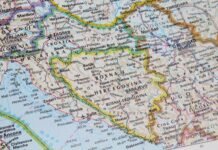
Despite the increased talk about association agreements with Canada and the UK, the real enlargement debate is still with countries from Europe’s shaky south-eastern underbelly.
On 14 July, the European Commission hosted four accession conferences on the same day, with EU Enlargement Commissioner Marta Kos stating:
“Today is a Super Tuesday for EU enlargement. For the first time in over 2 decades, we are holding four accession conferences on the same day. Our four front runners Ukraine, Moldova, Albania and Montenegro are all taking major steps forward.
With Ukraine and Moldova, we are opening Cluster 6, covering areas like defence and security where the case for their EU membership is especially strong. Albania will close its first chapters. And Montenegro is firmly in the endgame of formal negotiations having closed 18 of 33 chapters.”
Today is a Super Tuesday for EU enlargement.
For the first time in over 2 decades, we are holding four accession conferences on the same day.
Our four front runners Ukraine, Moldova, Albania and Montenegro are all taking major steps forward.
With Ukraine and Moldova, we are… pic.twitter.com/piUZLMuCYc
— Marta Kos (@MartaKosEU) July 14, 2026
Right before, EU affairs think tank Bruegel commented:
“Montenegro, the leader in acquis adoption, could feasibly complete accession negotiations by the end of 2026 or early 2027. Albania, less advanced in reforms but making systematic progress, wants to conclude negotiations by the end of 2027.
Moldova and Ukraine, which recently opened negotiations on Cluster 1 (‘Fundamentals’, including democratic governance and judicial independence rules) of the acquis, have much further to go than most of their Western Balkan peers, though Moldova has made substantial progress since 2023.”
In particular Moldova has been catching attention. Two weeks ago, it was revealed that the European Commission is redirecting internal resources to Moldova’s enlargement process, after the country’s reform pace outstripped the EU Commission department’s capacity to keep up with it. Despite this, its accession remains politically coupled with Ukraine’s bid, which is currently stalled, also due opposition from Hungary.
However, aside from the fact that a part of Moldova’s territory is practically occupied by a rather belligerent third country, quite a few issues indeed need to be sorted. In August, Moldovan authorities searched the offices of Rotalin Gaz, a U.S.-owned gas company, in the context of criminal charges over an alleged tax evasion scheme.
The fact that the searches are happening right before the decision in an arbitration suit launched by the company against Moldova, at the World Bank’s International Centre for Settlement of Investment Disputes (ICSID), is raising eyebrows. The company is arguing that it is suffering partial expropriation of its natural gas distribution business, which was the only competitor to Russia’s state-owned Gazprom in the Moldovan market.
Clearly, if so, this would not be a good look for a country trying to break away out of Russia’s sphere of influence, most certainly on the energy front. Then Moldovan society is split. A 2024 referendum on formally inscribing the goal of EU membership into the constitution passed with a very slim majority, 50.17 percent.
Corruption
Also for Ukraine and the six Western Balkan countries that are not yet part of the EU, the enlargement debate has continued intensely. Earlier this year, German Chancellor Friedrich Merz proposed granting the country “associate member status” which would allow it to “take a major step by moving immediately closer to full membership” and to “facilitate the ongoing peace negotiations as part of a negotiated settlement”. He also suggested that “innovative solutions” should be applied in order to advance the integration of the Western Balkans, by offering them observer status and privileged access to the single market.
Developments in the countries concerned are the key factor influencing this debate. Corruption ranks very highly here. Only last week, Ukrainian President Volodymyr Zelensky has appointed a new acting prosecutor general, after the predecessor resigned over an anti-corruption investigation. Earlier this month, a senior investigator at Ukraine’s National Anti-Corruption Bureau told the Financial Times the agency has opened cases against more than 60 members of parliament over vote-buying, illicit enrichment, and schemes tied to state companies.
Zelensky appoints new chief prosecutor after predecessor's corruption scandal https://t.co/en61OIFLl5
— BBC News (UK) (@BBCNews) September 17, 2026
One could argue corruption scandals are positive, as they suggest something may perhaps be done about it. Then the fact that accusations have been levelled at several members of Zelensky’s inner circle aren’t exactly good news for Ukraine’s bid to enter the EU or for its hopes to receive more EU financial support.
A few years ago, it was estimated that Ukrainian accession to the EU would mean that the country would receive a whopping €186 billion in EU funds over seven years, according to an internal EU Council note.
This would logically mean that current EU member states “will have to pay more and receive less,”, according to the document, which also spelled out that preparations for the eventual accession of Ukraine, Moldova, Georgia, and six Western Balkan countries should be carried out internally, not in the public eye.
"The EU has decided preparations for the eventual integration of Ukraine, Moldova, Georgia, and six Western Balkan countries should be carried out internally, not in the public eye." https://t.co/Hmzu6QOU0x
— Pieter Cleppe (@pietercleppe) March 20, 2024
At the time, an EU official quoted about the subject did put it even more bluntly:
“Let’s be honest: nobody wants to talk about this [enlargement] before the European elections. (…) Talking about less subsidies for European farmers is not something you’d want to put on your campaign slogans — or give as electoral ammunition for the far right.”
In the past, attempts have failed to tackle corruption in Ukraine by means of applying the successful recipe of Georgia in the 2000s, where President Mikheil Saakashvili and his Economy Minister Kakha Bendukidze managed to book impressive progress in the fight against corruption – confirmed by international rankings – by simply taking the state out of the economy.
Transferring more EU funds to Ukraine can perhaps be justified, given the fact it is bravely fighting a defensive war against Russia. However, transferring more EU resources to other EU candidate countries with high levels of corruption is only going to make matters worse there, looking at Georgia’s experience – before the country backslided again.
Little political appetite for enlargement
Often forgotten in this debate is what EU citizens think about all this. Last year, a Eurobarometer poll found 56 percent of EU citizens were in favour of further EU enlargement, but a majority of citizens of net paying big member states like Germany, France and Italy were “not very much in favour” or “not in favour at all”.
At the political level, there seems to be very little appetite for enlargement. In EUObserver, Adnan Ćerimagić, a senior analyst at the European Stability Initiative, looks at the role of EU enlargement in von der Leyen’s latest “State of the Union” speech, noting that “Enlargement was not absent, but it was brief. It surfaced near the end of the 80-minute address, in a promise to propose “roadmaps for the candidates that have made most progress”, set within the now-familiar language of merit and shared values. A roadmap is a process, not a destination.
Offered without any acknowledgement that Montenegro aims to finish its negotiations this year, it made membership feel further away, not closer, and it said nothing at all about whether joining would leave Montenegrins better off.”
He makes the point that if there is one country that deserves enlargement, it is Montenegro, writing: “Montenegro is the easiest case: some 600,000 people, an economy built on tourism, a Nato member since 2017, fully aligned with EU foreign and security policy, with no war fought on its soil and none of the disputes that entangle some of its neighbours, and a government that plainly wants in. If the Union cannot bring in Montenegro, it will not bring in a harder case like Serbia, Bosnia and Herzegovina or Kosovo either.”
The prospect of receiving lots of EU funds may have made it easier to convince the political elites of candidate countries to support entering the EU, but there is a flipside of the coin. Electorates in net-paying countries are likely more wary to welcome poorer fellow member states. In this way, scaling down the size of the EU budget may ultimately make EU enlargement more likely.