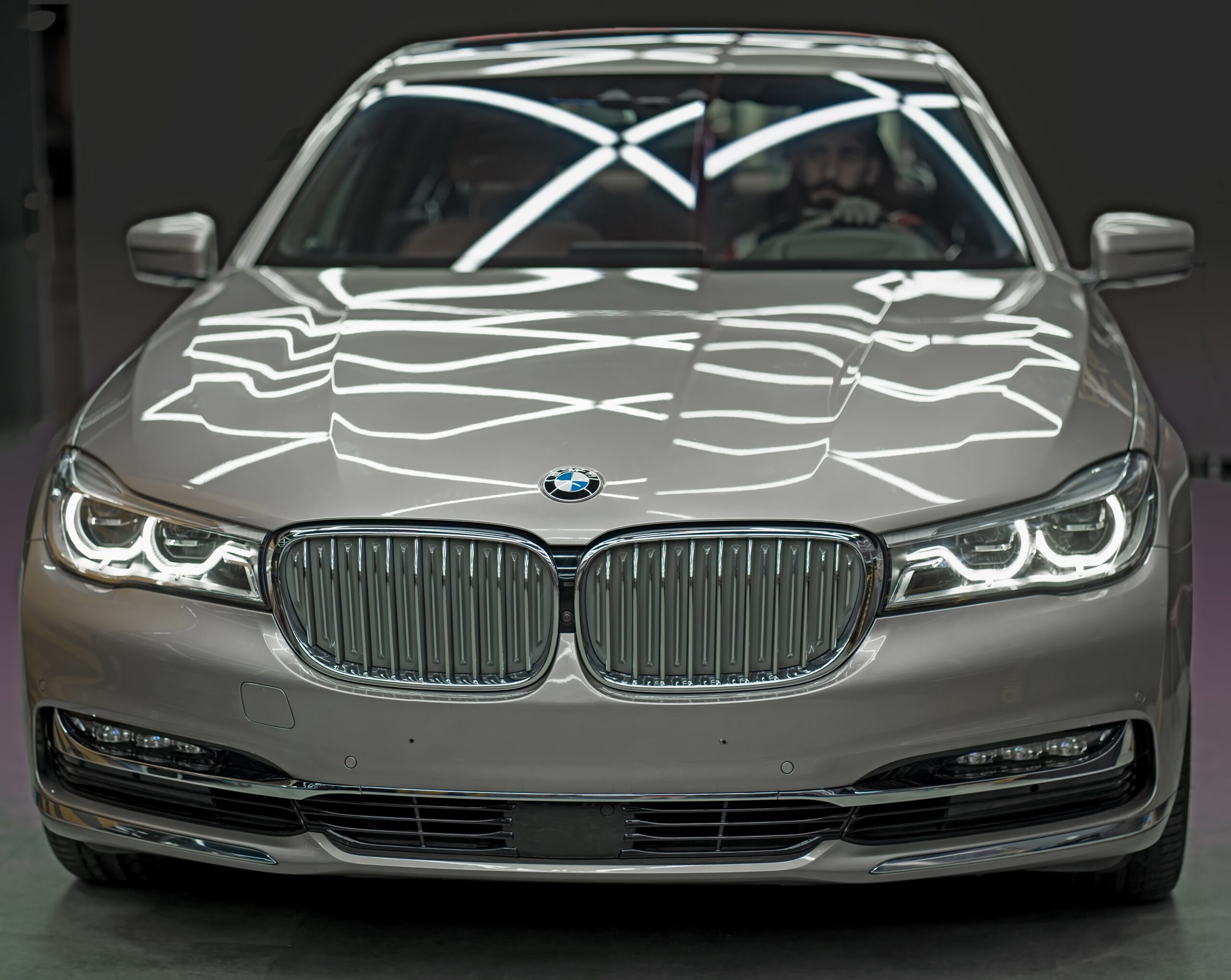
The crisis confronting Europe’s automotive industry continues to deepen. Despite robust growth in global vehicle demand—with annual sales rising from 66 million to 76 million units between 2012 and 2023—European manufacturers have seen production fall from nearly 13 million to just 12 million vehicles. The result has been a marked decline in Europe’s global market position, with its share of production slipping from 19.4 percent to 15.9 percent.
These trends are cause for growing concern. The outlook becomes even more troubling when examining the global electric vehicle (EV) market. During the first quarter of 2025, six of the world’s ten largest EV manufacturers were Chinese, accounting for an overwhelming 93.6 percent of total sales among the top-ten producers. By comparison, one American manufacturer represented 3.1 percent of sales, while three German manufacturers collectively accounted for just 3.3 percent.
Overall, European EV sales grew by roughly 20 percent year-on-year in September 2025. However, this performance has been supported in part by aggressive price reductions that have compressed profit margins, as well as the European Union’s tariff regime, which imposes duties of up to 35 percent on imported Chinese electric vehicles. The sustainability of this competitive position therefore remains uncertain, particularly as Chinese manufacturers continue to expand their technological capabilities, production scale, and global market presence.
The EU Is to Blame for Its Weakening Car Industry
The European Union’s stringent decarbonization agenda, including the planned phase-out of new internal combustion engine (ICE) vehicles by 2035, has imposed significant adjustment costs on the continent’s automotive industry. Legacy manufacturers have been compelled to channel substantial resources into the transition to electric vehicles, often at the expense of profitability and market competitiveness. At the same time, these firms have faced growing pressure from foreign competitors, eroding the market positions they historically enjoyed.
Here is a list of the key legislative pillars that have squeezed the profitability and competitiveness of European automakers:
Proposal to amend Regulation (EU) 2019/631 on CO₂ emission performance standards for new passenger cars and new light commercial vehicles (European Commission Automotive Package, 16 December 2025)
Under the European Commission’s December 2025 proposal, carmakers would be required to achieve a 90 percent reduction in tailpipe CO₂ emissions by 2035, with the remaining emissions compensated through the use of low-carbon steel produced in the European Union or sustainable e-fuels and biofuels. The proposal was intended to preserve a role for technologies such as plug-in hybrids (PHEVs), range-extender electric vehicles (EREVs), and internal combustion engine vehicles using low-carbon fuels, alongside battery-electric and hydrogen-powered vehicles.
According to Regulation (EU) 2019/631, if the average CO₂ emissions of a manufacturer’s fleet exceed its specific emission target in a given year, the manufacturer must pay—for each of its new vehicles registered in that year—an excess emissions premium of €95 per g/km of target exceedance. As a result, many automakers faced potentially billions in non-compliance penalties for missing targets, forcing them to invest heavily in EVs regardless of real-world profitability.
The “Fit for 55” Package
The “Fit for 55” package is a comprehensive set of interconnected legislative proposals designed to reduce the EU’s net greenhouse gas emissions by 55 percent, laying the groundwork for climate neutrality by 2050. Under the European Commission’s Cars and Vans initiative, this framework required massive structural overhauls, shifting substantial R&D spending away from legacy, profitable internal combustion engines into battery technology.
Euro 7
As part of the European Green Deal, the EU adopted the Euro 7 regulation to tighten limits on air pollutant emissions from road vehicles. The regulation introduces stricter standards for exhaust emissions while, for the first time, regulating non-exhaust emissions from brake particles and tyre abrasion. It also establishes battery durability requirements for electric vehicles. According to the European Commission, Euro 7 aims to lower air pollutant emissions from exhaust fumes and brakes by setting tighter EU-wide rules on emission limits, fuel and electric energy consumption, and battery durability for road vehicles.
It is fair to say that the EU’s zero-emission frameworks negatively impacted the European car industry by forcing a rushed transition to costly electric vehicles against a backdrop of weak consumer demand, while stringent emission penalties resulted in substantial financial challenges.
The European car industry made a significant miscalculation. Industry groups argue that the EU’s overregulation decreased productivity and stifled innovation. Manufacturers believed that clean energy would be cheap and therefore encourage consumers to buy more cars; that green regulation would come with generous subsidies to production; and that European technology was not far behind China.
After VW’s big market loss in China, and a weakness in USA, they want the protection of an increase in tariffs on Chinese hybrids, which have captured nearly 30% of the European market.
They do not plan to start manufacturing Chinese vehicles in Europe, like Ford and…
— kmartyn (@kmartyn5) July 27, 2026
The EU’s Aggressive Climate Agenda Increased Production Costs
Non-fossil energy is expensive and subsidies have proved scarcer than expected. Regulatory compliance, material shifts, and factory retooling have escalated manufacturing expenses.
To comply with increasingly stringent EU climate and vehicle regulations—including fleet-average CO₂ standards under Regulation (EU) 2019/631, the Euro 7 emissions regulation, and the broader objectives of the European Green Deal—European automakers have undertaken extensive changes across their production processes and supply chains. These adjustments have required substantial capital investment and operational restructuring at a time of intensifying global competition.
First, many manufacturers have sought to reduce the carbon footprint of vehicle production by incorporating lower-emission materials. This includes the growing use of low-carbon (“green”) steel, which can significantly reduce embedded emissions while requiring few changes to vehicle design.
Second, automakers have accelerated the decarbonization of manufacturing operations. Across Europe, companies are investing in renewable electricity, improving energy efficiency, and adopting more circular manufacturing practices to reduce waste, increase resource efficiency, and lower production-related emissions.
Third, and most significantly, the industry has reoriented production toward electrified vehicles. This transition has required extensive retooling of assembly plants, major investments in battery technologies and supply chains, and the development of dedicated electric vehicle platforms, while gradually reducing reliance on conventional internal combustion engine vehicles.
Adapting to a green agenda significantly inflates per-vehicle production costs. Low-emission steel remains significantly more expensive to produce than its traditional blast-furnace equivalent. While costs vary, integrating green steel generally adds hundreds of euros in manufacturing expenses per car. What is more, the shift toward electrification requires massive battery components. Electric vehicle raw materials (such as lithium, cobalt, and nickel) are costly and heavily dependent on complex global supply chains. For the internal combustion vehicles that remain in production, meeting stringent Euro 7 pollution limits requires advanced, complex exhaust after-treatment systems and onboard diagnostic tools. ACEA estimates these requirements add over €2,000 to the direct manufacturing cost of an ICE vehicle.
Is It Just Overregulation?
Europe’s automotive challenges cannot be attributed solely to overregulation. While increasingly stringent emissions rules and compliance costs have added pressure on manufacturers, the industry’s difficulties are also driven by broader structural factors, including high labour costs, elevated energy prices, dependence on foreign battery supply chains, weaker software capabilities, slower product development cycles, intensifying competition from Chinese manufacturers benefiting from economies of scale, softer domestic demand, and lingering post-COVID supply chain disruptions. Regulation is therefore one important factor in a wider competitiveness challenge rather than the sole cause of Europe’s automotive decline.
China Gains Momentum
Because European consumer demand for expensive EVs stagnated, carmakers were forced to artificially inflate ICE prices or slash EV prices to avoid penalties, severely squeezing profit margins.
The European Union’s rigid regulatory framework to eliminate carbon emissions placed a heavy burden on its domestic car industry while inadvertently handing China a massive competitive advantage.
The EU relied on a punitive framework—forcing manufacturers into electrification through the threat of massive fines. Conversely, China treated New Energy Vehicles (NEVs) as a strategic national priority. While Europe built a wall of bureaucracy, Beijing spent over a decade (2010–2022) pouring vast state subsidies into building raw material refinement, localized component ecosystems, and developing its automation, scale, and supply chains.
Following intense lobbying by European automakers, the European Commission proposed greater flexibility in the implementation of the 2035 CO₂ standards. Under its December 2025 proposal, manufacturers would be required to achieve a 90 percent reduction in tailpipe CO₂ emissions by 2035, replacing the previous 100 percent reduction target that had effectively phased out the sale of new internal combustion engine vehicles. The remaining emissions could be compensated through the use of low-carbon steel produced in the European Union or sustainable e-fuels and biofuels. While intended to preserve technological neutrality and provide manufacturers with additional compliance pathways, the proposal could inadvertently strengthen China’s competitive position. Chinese manufacturers already enjoy a significant technological and cost advantage in plug-in hybrid (PHEV) and extended-range electric vehicle (EREV) technologies, meaning that a larger market for these vehicles in Europe could disproportionately benefit Chinese producers.
China Takes Hold of Battery Production in Europe
Europe’s ambitions to establish a competitive domestic electric vehicle battery industry suffered a major setback with the bankruptcy of Swedish battery manufacturer Northvolt. Despite receiving substantial public support, including a €5 billion EU-backed financing package, the company was unable to overcome a combination of rising capital costs, supply chain disruptions, geopolitical uncertainty, and weakening market demand. Northvolt’s collapse has underscored the broader difficulties facing Europe’s battery sector. Across the continent, 11 of 16 planned battery gigafactory projects have been delayed or cancelled amid slowing EV demand and persistent challenges in scaling production and technological capabilities.
These setbacks have reinforced Europe’s dependence on imported battery technologies, particularly from China, which controls approximately 80 percent of global lithium-ion battery production capacity. Chinese manufacturers, most notably Contemporary Amperex Technology Co. Limited (CATL) and BYD, benefit from significant technological advantages derived from years of sustained investment and industrial development. CATL became the world’s largest battery producer in 2021 and maintains a research and development workforce numbering in the tens of thousands, while BYD has been developing electric vehicle technologies since the late 2000s. This long-term commitment has enabled Chinese firms to achieve substantial economies of scale and offer batteries at highly competitive prices.
China’s dominance in the battery and electric vehicle supply chain is closely linked to broader structural advantages. Concerns over energy security, stemming from limited domestic oil and natural gas resources, have encouraged Beijing to prioritize electrification and battery manufacturing as strategic industries. At the same time, access to abundant and relatively inexpensive electricity has supported the rapid expansion of industrial production. While China has emerged as a global leader in low-carbon technologies, this industrial success has been underpinned by a power system that continues to rely heavily on coal generation. In contrast, many Western economies have pursued more rapid transitions away from conventional baseload energy sources, contributing to higher energy costs and raising questions about the competitiveness of domestic manufacturing sectors during the transition to a low-carbon economy.
The EU’s Forced Focus on Premium Vehicles
European carmakers have responded poorly to the market. To protect their crumbling margins under the weight of compliance costs, European manufacturers focused heavily on luxury and premium EVs. This created an enormous supply gap in the affordable, entry-level EV segment (€15,000–€25,000). Highly integrated Chinese companies such as BYD easily filled this vacuum with low-cost, technology-dense cars.
However, there is a strategic threat. This influx of Chinese foreign direct investment presents Europe with a dilemma. There are clear short-term benefits: Chinese investment expands production capacity, sustains regional jobs, and accelerates the decarbonisation timeline. But it also brings significant risks, including market distortions arising from allegedly subsidised competition, public security vulnerabilities linked to data access and foreign control of digital assets, long-term economic dependency, and the potential weaponisation of critical raw material exports.
China Has Established Supply-Chain Dominance
Chinese manufacturers already own the end-to-end supply chain for critical raw materials and battery cells. European automakers lack sufficient domestic battery cell capacity, making them reliant on imports or joint ventures heavily influenced by Chinese technology. Analysts have proposed that policymakers could seek reciprocal trade terms with China and the United States, promote BEV adoption through improved charging infrastructure, allow Chinese investment in local car assembly to generate more regional value-added, increase self-sufficiency in raw materials critical for battery manufacturing, and invest in next-generation battery technologies.
Can Europe Keep Out Chinese EVs?
Despite the EU’s trade defence measures, Chinese automakers have continued to expand their presence in the European market. Although the EU’s anti-subsidy tariffs increased the cost of importing Chinese-made electric vehicles, they have not prevented Chinese manufacturers from growing their market share through competitive pricing, new model launches, and investment in European production. In response, the European Commission proposed the Industrial Accelerator Act (IAA), which would link eligibility for certain public procurement contracts and state support schemes to local-content requirements. The proposal would favour vehicles assembled within the European Union and require a substantial share of key vehicle components to originate from EU-based supply chains, with the objective of strengthening domestic manufacturing and reducing strategic dependence on foreign producers.
Chinese manufacturers have adapted quickly to these developments. Companies including BYD have accelerated investment in European manufacturing facilities, enabling them to reduce exposure to EU anti-subsidy tariffs while positioning themselves to satisfy prospective local-content requirements. At the same time, BYD has strengthened its position in Europe’s plug-in hybrid market. Its Seal U DM-i became one of the region’s best-selling plug-in hybrid SUVs in 2025, supported by aggressive pricing. In Germany, the model entered the market at a starting price of €39,900—approximately 20 percent below the comparable Volkswagen Tiguan plug-in hybrid. Building on this success, BYD subsequently expanded its European lineup with additional plug-in hybrid models. (Note: ACEA does not publish model-level sales rankings and therefore cannot be used to substantiate absolute claims such as “Europe’s single best-selling PHEV”; independent market analyses from sources including Inovev and JATO provide the relevant model-level data.)
Meanwhile, Zhejiang Leapmotor Technology has pursued a different market-entry strategy by leveraging its partnership with Stellantis. Europe became the company’s first major overseas expansion market in 2024 following the creation of Leapmotor International, a Stellantis-led joint venture that provides access to Stellantis’ European distribution network. The strategy has supported rapid growth in Europe, particularly in Italy. According to company and registration data reported via Stellantis, Leapmotor recorded strong monthly volumes in Italy in early 2026, with the compact battery-electric T03 becoming Italy’s leading battery-electric model in February and March 2026, benefiting from aggressive pricing and EV incentives.
What’s the Solution?
Trying to keep China out entirely is not feasible in an open EU market, and pushing that framing would also conflict with WTO rules and Europe’s own industrial need for investment, batteries, and scale. What EU policymakers can do—legally and realistically—is reduce strategic dependence on Chinese firms while strengthening domestic competitiveness, so that European EV makers win more sales on merit.
Given the price advantage currently enjoyed by many Chinese manufacturers, European policymakers should focus on reducing the structural cost burden faced by domestic producers. This could include lowering industrial electricity costs for automotive manufacturing, supporting the retooling of legacy production facilities operated by firms such as Volkswagen, Stellantis, and Renault, and reducing regulatory fragmentation across member states. A more integrated European EV market, combined with streamlined approval procedures for new vehicle platforms, would help accelerate innovation while lowering compliance costs. Eligibility for public subsidies and industrial support programs could also be tied to EU-based research and development activities and intellectual property generation, encouraging greater investment in European innovation ecosystems.
Reducing dependence on external suppliers will also require the development of a fully integrated European battery value chain. Batteries remain the most strategically important component of the EV industry, and Europe’s continued reliance on foreign suppliers presents a significant vulnerability. Policymakers should therefore expand support through the Important Projects of Common European Interest (IPCEI) framework, accelerate permitting for domestic mining and refining projects, and support the development of lithium, nickel, and rare earth processing capacity within Europe. Additional measures could include the establishment of strategic reserves of critical minerals and the use of European Investment Bank-backed long-term offtake agreements to improve investment certainty across the supply chain.
Tax Cuts Are a Must, but Not Enough
The EU already uses a mix of tax incentives, subsidies, and state-aid rules to support the automotive industry. However, compared with the U.S. Inflation Reduction Act or China’s industrial policies, many analysts argue that Europe’s approach remains fragmented and less generous.
The EU generally does not provide large-scale tax cuts specifically for automobile manufacturers’ profits. Instead, support tends to be tied to investment, decarbonization, R&D, and battery production. Europe has traditionally preferred conditional support rather than broad corporate tax reductions. Instead of rewarding profits, the EU rewards specific activities. For example, an automaker may receive a tax credit if it builds a battery plant, or accelerated depreciation if it invests in EV production. Overall, reducing the corporate tax rate for everyone without restrictions would be more beneficial, as in the United States.
However, if the goal is to increase European automakers’ market share and investment, the biggest gap is not the absence of tax cuts. The larger issue is that Europe’s support remains less predictable and less generous than U.S. and Chinese industrial policies. Many industry groups, including the European Automobile Manufacturers’ Association and companies such as Volkswagen, Stellantis, and Renault, have argued for stronger investment incentives, lower energy costs, and reduced regulatory burdens in addition to targeted tax relief. Thus, it can reasonably be argued that the EU should expand existing investment tax credits and manufacturing incentives rather than simply cutting corporate tax rates across the board.
China’s success in the automotive sector has been driven in large part by a consistent and long-term industrial strategy. For nearly two decades, the Chinese government has supported manufacturers through subsidized land and electricity, low-cost financing, consumer incentives, large-scale battery investments, local procurement preferences, and state-backed supply chains. This policy stability has enabled firms such as BYD and SAIC to make long-term investment decisions with confidence.
The United States has adopted a similarly investment-oriented approach through the Inflation Reduction Act, which provides predictable production tax credits, battery manufacturing incentives, consumer EV tax credits, and clean energy subsidies for qualifying firms.
By contrast, the European Union relies primarily on state-aid approvals, national support schemes, and temporary funding mechanisms. As a result, manufacturers often face uncertainty regarding the availability, duration, and timing of support. The challenge for Europe is therefore not the absence of public assistance, but the lack of a stable and predictable industrial policy framework. Expanding long-term investment tax credits and manufacturing incentives would help strengthen the competitiveness of Europe’s automotive industry.
How Can Europe Compete with China?
To strengthen the competitiveness of its automotive industry, the European Union should focus on facilitating the development of a fully integrated EV supply chain and manufacturing ecosystem. This includes expanded domestic capacity for battery refining, lithium and graphite processing, cathode and anode production, battery cell manufacturing, and recycling facilities to reduce dependence on Chinese suppliers, which currently dominate many of these segments of the battery value chain. The collapse of Northvolt underscored the challenges Europe faces in building a competitive battery industry.
In parallel, policymakers should reduce industrial electricity costs—one of the sector’s most significant competitive disadvantages—by facilitating the acceleration of grid expansion, simplifying renewable energy permitting, expanding reliable low-cost energy generation, and reducing energy taxes for industrial users. The EU should also streamline regulatory requirements, including environmental reporting, sustainability disclosures, supply-chain compliance rules, and permitting procedures, to lower costs and encourage investment. Finally, Europe should pursue greater manufacturing scale through enabling cross-border industrial projects, large battery clusters, integrated pan-European supply chains, and, where appropriate, industry consolidation. Together, these measures would help European automakers achieve the economies of scale, supply-chain resilience, and cost competitiveness necessary to compete more effectively with Chinese manufacturers.
Disclaimer: www.BrusselsReport.eu will under no circumstance be held legally responsible or liable for the content of any article appearing on the website, as only the author of an article is legally responsible for that, also in accordance with the terms of use.