By Dutch MEP Auke Zijlstra
According to the Commission and the Council, the digital euro is a payment system with both an offline and an online version. The offline version takes the form of a secure section of your mobile wallet, and payments are made using NFC by holding mobile phones close to one another. Battery-powered smartcards with similar functionality are also being considered. These do not require an internet connection. This is useful in the event of a prolonged power cut – for example, due to the transition to a greener electricity grid – or a major cyberattack that brings the entire internet in Europe to a standstill for several days or weeks. Once the internet is restored, and with it the connection to your bank, the transactions will be processed.
The online version, on the other hand, works exactly like iDEAL, for example: you make payments via the internet. You pay directly from your digital euro wallet to a merchant or another individual, via the ECB’s payment infrastructure. Unlike the offline version, the added value of the online version is less clear: if we already have iDEAL (now Wero) in the Netherlands, why do we need a public alternative? When has a public service ever been better or cheaper than the same service offered by a private provider?
The rapporteur asked himself the same question. His initial proposal was to split the digital euro into offline and online variants. The EU would first roll out the offline version. The online version would only be introduced if private operators such as Wero or the Spanish Bizum – and there are now more of them – were not sufficiently active in all European countries by a certain date. In this way, the EU would allow private payment systems sufficient time and scope to develop on the European market, whilst focusing solely on the roll-out of an emergency infrastructure.
I supported that proposal. Navarrete had a majority on the right in favour of his own proposal but ultimately yielded to pressure from the left-wing bloc, which stood by the Commission’s proposal and argued that there was no option to reject the online variant: it was all or nothing. Navarrete nevertheless sided with the left, perhaps on the orders of the strict German leadership of the EPP, which categorically rules out any cooperation with the right on this issue.
With an online digital euro, the ECB becomes a direct competitor to the banks. The ECB does not need to make a profit; it can run up endless losses by printing money in the basement; and it is also the regulator of the banks as well as its own regulator as the issuer of the digital euro. I tabled an amendment stating that this was absolutely unacceptable. It was rejected.
Who must accept payments in digital euros?
For the time being, there are therefore no restrictions on what you can buy with it. But is every retailer in the EU or the eurozone obliged to accept the digital euro? The digital euro is an alternative to US payment methods such as Visa and Mastercard, but retailers are free to refuse payments made via Visa and Mastercard. That makes sense. Visa and Mastercard charge fees for the use of their payment infrastructure. These fees can vary significantly between Member States. In some countries, a percentage of the total sale price is charged; in others, a fixed amount is charged regardless of the size of the payment. If the fees are unacceptably high, merchants may decide, for example, not to accept digital payments under ten euros.
In principle, however, a general obligation to accept the digital euro applies: merchants must accept payments in digital euros, even for very small amounts. That could prove to be a costly affair. The payment infrastructure is public but has yet to be developed by the ECB, so we have no idea what the costs will be.
According to the Commission’s proposal, there is an exemption for micro and small enterprises, and for non-profit organisations that do not accept other forms of digital payment. I am always surprised by the position of non-profit organisations, such as NGOs. Non-profit organisations are already exempt from most anti-money laundering checks on their financial transactions. Parliament is adding an extra category to this: the self-employed who do not accept other forms of digital payment. I wanted to go further: an exemption for all SMEs and all the self-employed.
"Why invest billions in a new digital currency that no one wants?" writes Michael Anseeuw, CEO of BNP Paribas Fortis and chairman of Belgian banking federation @Febelfin, slamming the @ecb's digital euro projecthttps://t.co/vFzi2tTSyT pic.twitter.com/SGVvHLat3S
— Pieter Cleppe (@pietercleppe) October 30, 2025
How much will the digital euro cost?
When I first asked the ECB this, the answer was 300 million. That was increased to 1.2 billion during the same conversation. Research puts the figure at 18 billion. The European Commission, meanwhile, puts the figure at 5.4 billion. To be honest, I no longer have any idea which figure to take seriously – whether it relates to the design and launch, whether the annual costs will be recouped thereafter, and whether the hundred project staff already recruited by the ECB have been factored in – and it will in any case end up being higher than whichever figure is currently being quoted.
The annual costs following the product’s development – that is a difficult question. We do not yet know how many people and merchants will actually use the digital euro, how frequently payments will be made, or for what amounts. It is therefore logical that the ECB is not yet able to accurately estimate how expensive or cheap the operation of the payment infrastructure will be. The Commission is therefore proposing a ten-year transition period, during which costs will be estimated on the basis of comparable digital payments – such as the fees charged by Visa and Mastercard to merchants – using a European average.
The problem with this model is that the average costs of digital payments in the Netherlands are much lower than the European average. As a result, the costs of the digital euro in the Netherlands would be higher than those of, for example, Visa and Mastercard. Merchants would then be obliged to accept much more expensive digital payments in digital euros to pay for goods that they could sell more cheaply via iDEAL/Wero, Visa or Mastercard.
In the Council, the Schoof cabinet managed to secure an exemption for the Netherlands: Member States with very low costs for digital payments were permitted to apply their own rules during the transition period. In the Netherlands, this means 2 to 4 cents per transaction, regardless of the amount involved. This would ensure that payments in digital euros would certainly not be more expensive than payments made using other digital means.
But note: if the actual costs to the ECB differ, those costs will simply be passed on to the taxpayer via the national central banks, including in the Netherlands.
The rapporteur rejected the whole idea of taking into account the existing costs of national payment transactions: “It is not the role of the European Parliament to advocate for national derogations”.
I have read that VVD Finance Minister Eelco Heinen is working on the basis of a proportional compensation model, under which the ECB charges the Netherlands costs that are too low. Yet the VVD voted in favour of the Parliament’s position without the derogation, so it is not entirely clear to me what the intention is now.
The European Parliament’s position
In any case, it’s proving difficult to make sense of the European Parliament’s counter-proposal, as I’ve noticed that various MEPs have been making unfounded statements about the outcome. No, payment transactions will not become cheaper but more expensive; and no, Visa and MasterCard are not manipulating the market, as the investigation into this has not yet been concluded; and no, it is not an ‘anti-Trump’ move either, as Trump’s term will end before the digital euro is introduced; and no: privacy is, in fact, not guaranteed. One wonders why parties actually voted in favour of the proposal if they clearly haven’t read the text.
So what now?
The vote is a step in the process towards a possible launch around 2029. But it is not the only step. I have consistently highlighted the ECB’s limited project management experience and pressed for testing. I wanted not only functional testing but also ‘ethical hacking’. And, naturally, should the project fail, it must be terminated.
These last two requirements were rejected by Parliament. Even if the test fails, the project will simply carry on. But the pilot is going ahead. The ECB is planning to launch it from the second half of 2027, involving around twenty selected banks and a limited number of traders, both online and offline.
However, this will be confined to internal ECB environments, which limits its representativeness. It remains to be seen whether the pilot will be transparent about privacy implications and potential failure scenarios.
"The Digital Euro Risks Undermining Europe’s Payment Ecosystem" – By Dutch MEP Auke Zijlstra https://t.co/wQph5eRY7X @EconoomZijlstra
— BrusselsReport.EU (@brussels_report) June 23, 2026
Learnt anything else, Zijlstra?
I can summarise. I’ve learnt that there is indeed a problem when payment data disappears overseas and strict personal data protection then remains, in practice, largely a dead letter.
I have learnt that there is certainly a business case to be made for a European payment infrastructure, but preferably one on which private payment services can operate. After all, it is true that we would be better off being somewhat more independent of American and Chinese payment platforms.
I have also learnt that most of the Christian Democrats in the European Parliament are not yet ready for deals with the right, even though there is a comfortable majority there. You can approach the negotiating table however constructively you like, with well-reasoned opinions, and seek and find common ground with those in the centre on what is ultimately largely a technical discussion; and although individual Christian Democrats are happy to cooperate (including with me), the leadership is ideologically completely intertwined with the left. They, in turn, exclude the right – and therefore me as well.
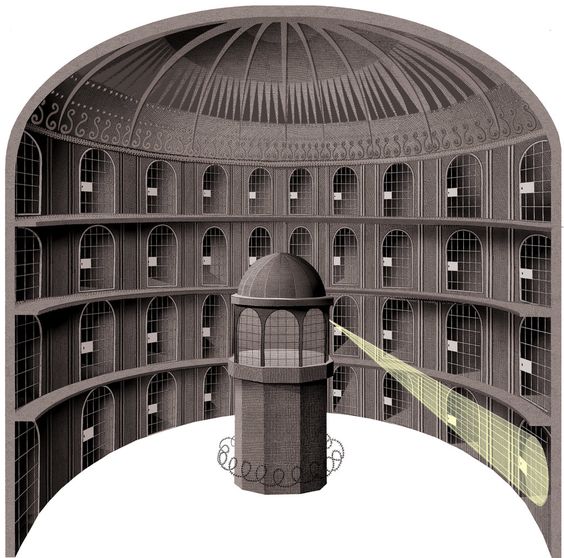
I also see – quite apart from the ECB, which is not involved in this at all – how the foundations of a surveillance society are visible in this Regulation, and how easily politicians allow themselves to be pushed in that direction as if they had come up with the idea themselves.
To the Dutch traders subject to the acceptance obligation: I’m sorry it didn’t work out. I’m happy to point out to Dutch consumers that there is no obligation to use the digital euro. At least not at the moment.
Originally published in Dutch on Nijmansnieuwsbriefje.nl
Disclaimer: www.BrusselsReport.eu will under no circumstance be held legally responsible or liable for the content of any article appearing on the website, as only the author of an article is legally responsible for that, also in accordance with the terms of use.