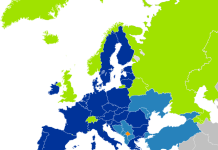
The European Union, along with the Netherlands, Germany, and Greece, has joined the US-initiated “Pax Silica” pact, an alliance aimed at strengthening secure supply chains for artificial intelligence technologies. The move, announced at a summit in Washington, underscores growing transatlantic alignment on reducing dependence on Chinese-dominated segments of the AI ecosystem, even as the EU advances its own comprehensive regulatory framework for AI.
“Pax Silica”, launched by the United States last year, focuses on securing critical elements of AI infrastructure—including semiconductors, critical minerals, energy, and related technologies—through collaboration among like-minded partners. US Under Secretary of State Jacob Helberg, a key architect of the initiative, described it as a purpose-built network to foster AI innovation resulting from the point of view that broader forums like the G7 or G20 may not be optimally suited for the task.
He told the FT: “There’s no grouping that’s purpose-built to manage the AI economy at a time when AI is revolutionising the shape of the global economy.” He thereby added that Pax Silica would promote “innovation sovereignty” at a time of “global debate” about what policies should drive AI development. He noted it would “shape” a US alternative to initiatives such as the UN’s Global Digital Compact, which emphasises “digital sovereignty” — a concept he argued would result in countries investing in duplicative ways.
A joint statement on this is expected from more than 20 countries emphasizes collaboration with trusted partners to build a resilient AI ecosystem. Additional participants this week, including Argentina, Chile, Costa Rica, Kazakhstan, and Panama, are set to bring the total membership to 24.
The EU’s participation in Pax Silica comes as the bloc implements the EU Artificial Intelligence Act (AI Act), the world’s first comprehensive horizontal legislation governing AI, which has been criticised as overly burdensome for innovation. As a result, the EU is already looking to adapt the legislation, as the second phase of AI Act obligations enter into force in August.
“The supply chain of Intelligence”
Nina Schick, a Sovereign AI Strategist, commented: “The EU joins Pax Silica, the American-led alliance to secure the silicon supply chains: i.e. the supply chain of Intelligence. This is how the AI World Order is being built in real-time. The EU is correct to ally with the United States, joining others South Korea, UAE, Australia… All credit to US United States Under Secretary of State Jacob Helberg for driving this all important work.”
The EU joins Pax Silica, the American-led alliance to secure the silicon supply chains: ie the supply chain of Intelligence.
This is how the AI World Order is being built in real-time.
Thee EU is correct to ally with the United States, joining others South Korea, UAE,… https://t.co/Dk1CrJxK2c
— Nina Schick (@NinaDSchick) June 24, 2026
The Financial Times notes that the US is focusing on Pax Silica at a time when Washington is trying to rapidly reduce its reliance on China for rare earths. Also the EU is attempting to achieve this goal.
In parallel with these high-level policy developments, businesses in individual European companies are carving out distinctive roles in the AI landscape. For example Spain’s AiKit, an artificial intelligence laboratory founded in 2024, has presented its new technology category, called Software for AIs, during its AiKit Live Private Summit , a private meeting held on June 17 at El Olivar, in Alcalá de Henares, Madrid.
Software for AIs is a category of business management software designed to be operated directly by artificial intelligence systems on the real processes of companies. According to the company, this new generation of software is not simply about incorporating artificial intelligence into traditional applications, but about building systems ready for AI to work natively. This allows for the execution of processes, the analysis of operations, the coordination of resources, the management of information, and the optimization of decisions within organizations.
“The AI race will not be won by those who build the most models. It will be won by those who build the infrastructure on which they will all operate,” the company’s executives stated during the event. By focusing on infrastructure for SMEs, AiKit aims to position itself alongside major players in the AI space.
Broader Implications
U.S. Under Secretary of State Helberg has pointed out that “Pax Silica” contrasts with initiatives like China’s “Belt and Road” as it prioritizes private-sector collaboration. He declined to say if Beijing was pressing US partners not to join Pax Silica, but noted it was in stark contrast to China’s Belt and Road Initiative, which was driven by state-run entities that lacked transparency, were inefficient in capital allocation and promoted predatory debt traps, saying:
“As Steve Jobs used to say, enchant and delight users by the billions around the world, that is our secret sauce and our superpower as a country. (…) That’s why almost everything we do really entails working in lockstep with our private companies.”
He thereby cited examples like Israel, Singapore, and the UAE leveraging US technology for domestic tech success. Complementary US efforts include educational partnerships (e.g., with Stanford on manufacturing curricula) and economic security zones for mineral access.
Furthermore, also U.S. Ambassador to the EU Andrew Puzder welcomed today that the EU entered the Pact, stating:
“I am delighted to welcome the European Union into Pax Silica. The U.S. and EU already share the world’s largest trade relationship — and over the past year, we have built on that foundation with a trade framework agreement and a critical minerals MOU. Pax Silica means secure supply chains. Trusted partners. Less dependence on adversaries. More power to private industry. That’s how we win on critical minerals, semiconductors, and AI. The EU’s accession is a powerful signal: the world’s most capable, aligned economies are choosing to build the future together.”
I am delighted to welcome the European Union into Pax Silica. The U.S. and EU already share the world's largest trade relationship — and over the past year, we have built on that foundation with a trade framework agreement and a critical minerals MOU. Pax Silica means secure… pic.twitter.com/R4E4h9TPfn
— Ambassador Andrew Puzder (@USAmbEU) June 25, 2026