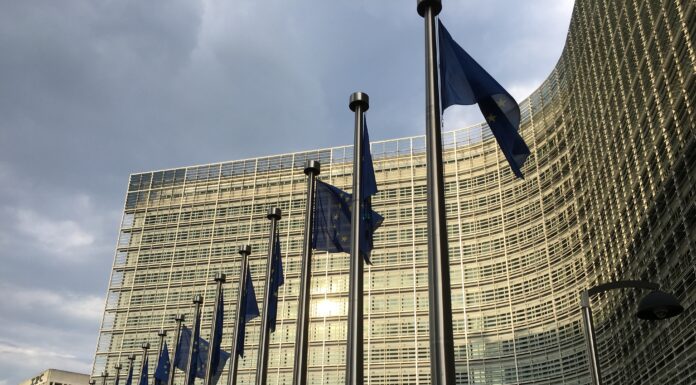
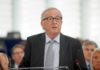
On 16 September, European Commission President Ursula von der Leyen will deliver her “State of the Union” address to the European Parliament in Strasbourg. Within her institution, the speech is already being prepared. Off the record, EU officials have confided that policies linked to climate and artificial intelligence would feature prominently in the speech.
Politico notes that one of the reasons for this is that von der Leyen’s institution is trying to “defend its 2040 emissions-cutting target while responding to mounting pressure from industry and national capitals to limit the economic cost of the green transition.” This in the context of “the damage caused by floods and wildfires over the summer.”
Last month, Danish economist Bjorn Lomborg countered similar claims, pointing out that “the global burned area was 41% below normal, and all continents were below average, with Africa, North America, and South America at record lows.” He also stated: “Disasters in France, Spain & Canada are tragic—but climate is global. Cherry-picking isn’t science. Climate policy does near-nothing for fires. We need better fire policy.”
Also, it has emerged that the European Commission is looking to retain a separate 2040 renewable energy target, which is seen as a snub to an alliance of 14 EU member states that support nuclear energy.
All of this shows the EU Commission’s stance is anything but a reflection of the current policy consensus. In this regard, it would be deeply concerning if von der Leyen would indeed use her speech to frantically resist the push by democratically elected governments to relax the EU’s economically damaging climate policies. An appointed supranational bureaucracy should not be pursuing its own political agenda, from a democratic point of view.
EU countries will today tell Ursula von der Leyen to use her State of the Union speech to commit to reviving the bloc’s economy and tackling immigration.
The push comes as public discontent boosts far-right support in Europe.
More in Brussels Playbook 👇https://t.co/C9Q8LaphEI
— POLITICOEurope (@POLITICOEurope) September 11, 2026
Artificial Intelligence
Telling is also that von der Leyen seems to be preparing action related to artificial intelligence on jobs. Her team has requested Commission officials to provide fresh statistics for the speech on the number of jobs likely to be lost and created as AI adoption spreads, an official has told Politico.
This is indicative of a hostile outlook towards AI, right at the moment that the EU seems to be missing the boat here, also due to EU policies like GDPR and the AI Act, as pointed out by former Italian PM Mario Draghi in his influential report. One would expect von der Leyen to announce new initiatives to finally do something about these innovation-hostile EU regulations. Nothing much has happened on this front, despite some talk.
Noteworthy in all of this is that new statistics show that AI actually turns out to be a net job creator in the United States. If von der Leyen is looking for any excuse to come up with even more innovation-hostile regulations, this may not be the best approach.
The long term EU budget
Without any doubt, von der Leyen will also discuss the negotiations on the EU’s 2028-2034 budget, whereby the EU Commission has proposed to largely increase EU spending as compared to the current budgetary period, between 2021 and 2027. She has already confirmed that the EU Commission demand for nearly 11 billion euro for crisis management will be a key theme in her speech, arguing these resources are needed due to “changes in global climate patterns”.
Importantly in this regard is that the Irish EU Council presidency has just welcomed progress in the talks among EU governments on EU “own resources” to finance the long term EU budget. Last year, the EU Commission had proposed a whole range of such de facto EU taxes.
Reportedly, it thereby singled out two own resources in a note to other EU governments: the Carbon Border Adjustment Mechanism (CBAM), a new EU climate tariff, as well as a separate EU levy on non-collected electronic waste. The Irish government thereby noted: “Of the Commission’s proposals for new Own Resources, the most consensual among Member States is CBAM, with many open to increasing the call rate further.” It added that there was also “a broad degree of support” among governments towards the electronic waste tax, which is expected to generate 17.9 billion euro per year. The Commission hopes to maximize the amounts of these levies that will flow to the EU budget.
Noteworthy is that the Irish EU Presidency also wrote that a majority of EU governments oppose a proposed EU corporate levy, fearing that it will undermine competitiveness, and that many governments have criticized a proposed tobacco levy. Member States like Sweden were firmly against the latter from the beginning. In July 2025, Sweden’s Finance Minister Elisabeth Svantesson branded it as “completely unacceptable.”
In particular, the Swedish government then lamented that the EU Commission wanted to impose significantly higher minimum excise duties on both conventional tobacco products and lower-risk nicotine alternatives. Thereby the markedly different health impacts of the products concerned were being ignored.
A similar less than targeted approach is apparent with the review of the Tobacco Products Directive (TPD), which is about regulating those nicotine-based alternatives. In the European Commission however, the success of Sweden continues to be ignored. The country has a record low smoking rate and is able to present lower mortality, correlated with the exemption it enjoys for more than 30 years now from an EU ban on nicotine-based alternatives for traditional smoking. In an article on the policy debate, Euractiv reports that “an EU official called on Sweden not to forget that the EU’s goal is not only to become smoke-free by 2040, but also nicotine-free.”
In any case, Von der Leyen and her EU officials are now hoping that EU Member States can secure agreement on the long term budget before next year, when there important elections coming up in France, Spain and Italy that may strengthen the euroskeptic right.
Takeaways for the day for MFF watchers:
1) Strong support for CBAM/e-waste own resources
2) Other options face strong opposition
3) Govts' need to quantify how much € they want to generate
4) Govts' must propose changes to Comm proposalsMore info 👇https://t.co/JdNObL8aHu
— Gregorio Sorgi (@GregSorgi) September 7, 2026
Age verification and Migration
The European Commission President is also expected to use her State of the Union speech to unveil plans for EU-wide age restrictions on social media. The problem is here not so much the idea to restrict social media for children, but that state intervention would be used to police this. In order to identify whether a user is under age, one needs to verify the age of every user, something that has caused many fearing that governments or – God forbid – the EU institutions acquire more control over social media use. A demo version of an EU app to verify the age of social media users in this regard was not promising, as it was hacked 2 minutes after the launch by security researchers. In March, more than 400 privacy and security researchers wrote to the Commission asking for a moratorium on deployment until the science on age-verification technology settles.
Furthermore, EU member states also expect von der Leyen’s speech to deal with the events in Ceuta, whereby tens of thousands of people illegally entered the Spanish exclave in Northern Africa, contributing to great tensions in Ceuta until today, and a European wide political tensions with the leftwing Spanish government.
Already before the Summer, the EU policy consensus on migration had moved towards a more strict approach, so von der Leyen can hardly get away with not saying anything about this. Before the end of the year, five EU member states – Germany, Austria, Denmark, the Netherlands and Greece – aim to negotiate a so-called “return hub” in a non-EU member state, and even the leftwing Spanish government has slightly toughened up its asylum policy in August, following the Ceuta influx.
Geopolitics
The speech will also have a geopolitical angle, as it was announced that Canadian Prime Minister Mark Carney will attend von der Leyen’s State of the Union address. This is connected to the upcoming announcement by the EU and of an “all encompassing” partnership which will range from trade to security, followed the latest tit-for-tat tariff war between Canada and the U.S.
For sure, also China will feature in von der Leyen’s speech. The EU policy debate on the EU’s trade deficit with China has intensified a lot over the last few months. In May, the EU’s 12-month rolling trade deficit with the country reached 376 billion euro, according to Eurostat, which is 8% higher than a year earlier. In 2025, for the first time, every single EU member state had a trade deficit with Beijing.
One diplomat from a major EU member state has commented that China’s export success “amounts to the destruction of our industrial base.” Then perhaps, this analysis is not entirely correct. As Daniel Kral of Oxford Economics has pointed out: “The EU’s key problem is not China dumping goods in the EU – as the EU’s share in China’s exports is flat. It is, first of all, a loss of EU exporters’ market share in third markets, and secondly a staggering collapse in the EU’s share of China’s imports – from 12% in 2019 to 8% now. No EU levers address these two things.”
Evidently, a lot of the blame here falls to the EU’ self-destructive energy policies. In the first place, then, the EU’s destructive Emission Trading System (ETS), a de facto climate taxation scheme which makes energy incredibly expensive and European industry uncompetitive. Even the most protectionist EU politician should admit it makes no sense to impose more barriers to trade with China before ending this kind of self-harm.
Moreover, separate from energy policy, EU overregulation happens to boost China’s importance for the EU unintentionally. Take for example vaping products. Around 90 percent of regular vapes come from China, but also a large part of the irregular market is supplied by Chinese-made products that do not comply with EU rules. The EU policy approach to tackle vaping products as aggressively as tobacco products only makes this problem worse. Non-compliant products do not tend to be bothered by every stricter regulation.
Brussels is aiming to close enforcement gaps that allow illegal products sold through e-commerce platforms to reach EU consumers, in a leaked bill seen by @euronews. The measures are part of a broader crackdown on Chinese imports.https://t.co/3KizS4wd4N
— Luca Bertuzzi (@BertuzLuca) September 10, 2026
Von der Leyen is also likely to discuss EU support for Ukraine. She may thereby well steer clear of the ultra-sensitive discussion on how to finance this support. After Belgium was able to block the idea to seize Russian Central Bank assets that are being held at custodian Euroclear in Belgium, fearing reputational loss and legal exposure, it was agreed at the end of last year to issue more joint EU debt, a win for hopelessly indebted states like France and Italy, but still better than a large-scale violation of property rights in the EU. Ukraine’s financial needs have however reopened this debate, as the likes of Sweden, Poland and the Netherlands are now demanding the seizure of the Russian assets.
It will be interesting to see if von der Leyen will once again choose sides here, but then her European Commission already did so, when it backed the asset seizure in 2025. The big political crisis that ensued over this at the end of last year should make the European Commission President realise that it is better not to intervene into such a sensitive political debate between democratically elected government leaders.