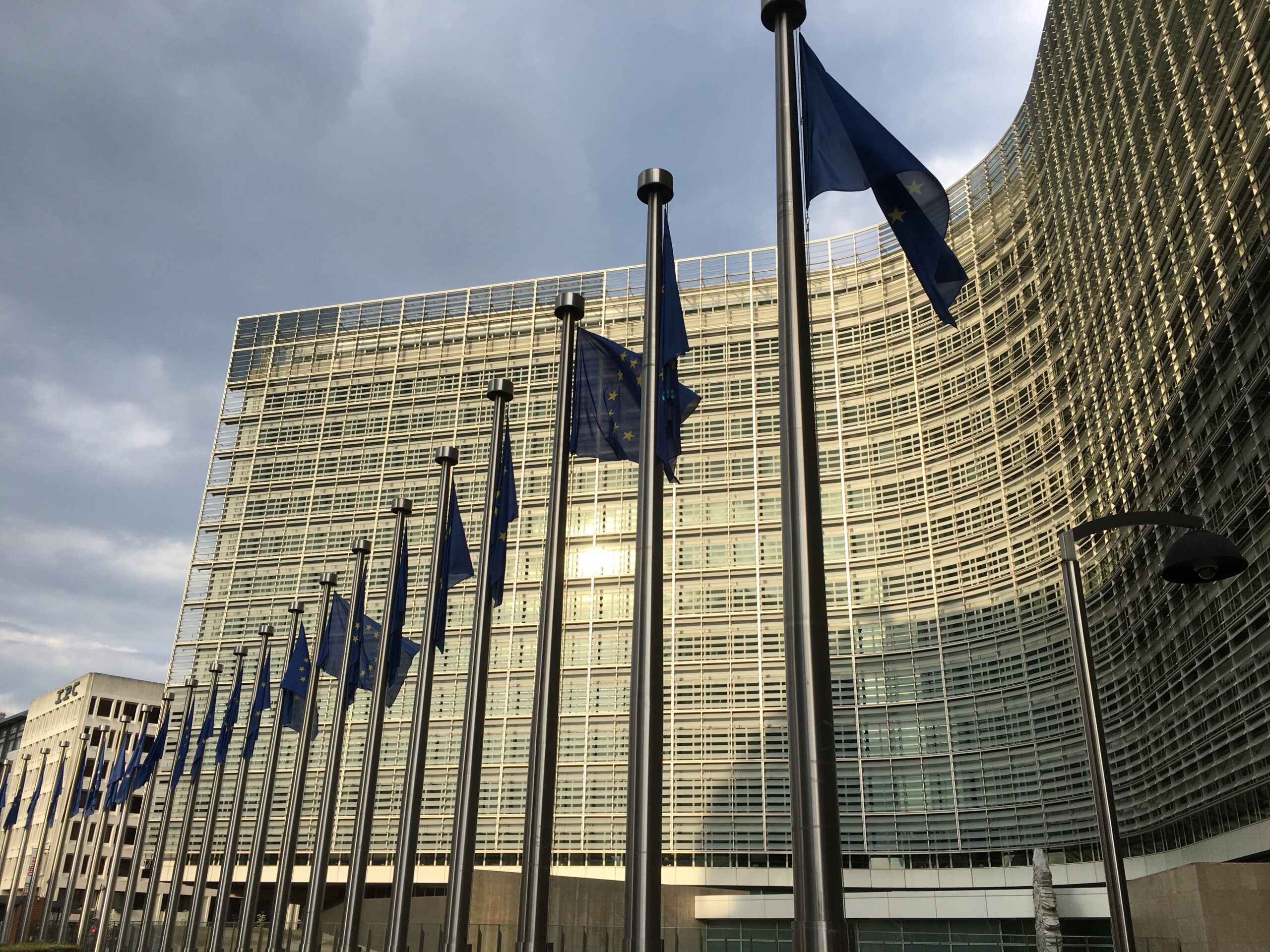
Over the last few years, the European Commission has already managed to acquire ever more powers. Yet, it has appetite for more. Whether the pretext is migration, the war in Ukraine, trade tensions with China, the new long term EU budget or the “Covid recovery fund”, the institutional reflex in Brussels remains the same: “more Europe”, more centralisation, and more resources under the Commission’s control. The pattern is familiar and, from a democratic accountability perspective, deeply troubling.
Ceuta: Never waste a good crisis
The chaotic border breach at Spain’s North African exclave of Ceuta in late July 2026 provided the latest opportunity. Tens of thousands of migrants crossed from Morocco in a matter of days, overwhelming the small territory and triggering a furious political row across the European Union. Most of those who entered subsequently returned to Morocco, but a few thousand remain, and Ceuta is now trying to transfer around a 1000 minors to mainland Spain.
Spain hopes to transfer migrant minors to mainland within weeks https://t.co/jWxYHBDEW5 https://t.co/jWxYHBDEW5
— Reuters (@Reuters) August 7, 2026
In response, twenty-two member-state leaders issued a strong-worded letter, clearly challenging the policies of Spanish Prime Minister Pedro Sánchez and his recent regularisation campaign for illegal migrants that may ultimately benefit 3 million people.
In response, Italy even decided to temporarily suspend passport-free travel arrangements with Spain, followed by Spanish retaliation in the form of border checks on flights from Italy to Spain. In later reactions, EU member states moderated their stance on Spain, but the signal was delivered. Sanchez’s mass regularisation “may not have been the sole trigger, but it was definitely a catalyst,” according to Austrian Europe Minister Claudia Bauer.
In contrast to member states, European Commission President Ursula von der Leyen praised the handling of the crisis by Sánchez, stating: “Both Spanish and Moroccan authorities have managed this efficiently and effectively, successfully preventing illegal movement onwards to mainland Spain and Europe.”
She thereby immediately also launched a demand for more EU coordination and more EU spending on migration, stating: “Migration is a European challenge that requires a European response.” In particular, she therefore advocated “vigilant monitoring and the use of physical barriers where needed,” early-warning systems, and enhanced technical and financial support to Morocco, which may raise some eyebrows among those considering Morocco to be actively or passively behind this. The European Commission furthermore also proposed to “increase support for Spain”, as well as the deployment of more members of Frontex, the EU’s border agency to Spain.
French MEP Fabrice Leggeri (RN), the former head of EU border agency Frontex, reacted: “The European Union is once again rolling out its usual catalog. More Frontex, more resources, more procedures. (…) What has never been lacking is money. What is lacking is the political will to enforce our borders.” So far, however, also the leftwing Spanish government has declined to request that the presence of Frontex in Spain is increased, insisting that border control falls under the jurisdiction of national authorities. Then, “never waste a good crisis” is a trusted EU Commission strategy to pursue its agenda.
NEW: Ursula von der Leyen has praised Pedro Sánchez’s handling of 60,000 migrant arrivals in Ceuta, while saying the episode highlights the need to strengthen EU migration policy. https://t.co/4tubHHnj2s
— Eddy Wax ✍️ (@EddyWax) August 3, 2026
EU demands for “own resources” – EU taxes in all but name
The Covid crisis presented a great opportunity for the EU Commission to gain more powers. Not only was the European Commission entrusted to negotiate joint purchasing of vaccines, EU leaders also agreed to a massive new EU fund, financed with jointly issued EU debt. This “Covid Recovery Fund” which amounted to 800 billion euro, has been rife with fraud and misspending.
The EU Court of Auditors, the EU’s in-house financial watchdog, has sharply criticised the opacity of the scheme in a report. Croatian Court of Audit member Ivana Maletić even described the way the funds were spent as “completely absurd”, stating: “EU policymakers should not allow such instruments in the future unless they first have information about the actual costs and the final recipients. They must also have a clear answer to the question of what citizens actually get for their money.”
None of this has tamed the EU Commission’s thirst for more cash. For the new long term 2028-2034 EU budget, it is pushing hard to acquire new “own resources”: duties on tobacco, e-waste and corporations, together with revenues linked to carbon pricing and greenhouse-gas emissions. In Spring, the European Parliament unhelpfully suggested three other new EU taxes, on online gambling, crypto firms and digital firms. Last month, the Irish ambassador to the EU met his counterparts to assess which of the eight taxes on the table command the most support. Meanwhile, also a sugar levy has been floated.
From the moment it was proposed, Sweden has lashed out against the proposed tobacco tax, which would channel at least 11.2 billion euro annually to the EU budget. In July 2025, Sweden’s Finance Minister Elisabeth Svantesson branded it as “completely unacceptable.”
The specific concern here was that the Commission intended to subject not only conventional tobacco products but also lower-risk nicotine alternatives to significantly higher minimum excise duties, thereby ignoring the markedly different health impacts of the products concerned. A similar less than targeted approach is apparent with the review of the Tobacco Products Directive (TPD), which is about regulating those nicotine-based alternatives.
Telling here is that more than 90 percent of submissions to the Commission’s consultation for this particular policy review raised substantive objections to the Commission’s proposed direction. Only around two per cent of the responses are recorded to openly support a more restrictive approach. 96 per cent of contributions from the academic and research communities were found to be opposed to the proposed direction.
Despite this, the Commission simply continues to prepare the new legislative framework. Clearly, these kinds of consultation exercises are inconvenient obstacles to the already established agenda.
Also the other proposed levies face opposition. Poland and Italy have strongly opposed the EU carbon levy, which is no surprise, given their criticism of the EU’s long established “Emissions Trading System” (ETS), which they rightly view as a major burden on European competitiveness.
Germany and other governments have sharply criticised the idea of an EU corporate tax, the so-called “Corporate Resource for Europe” (CORE). This seemed to have had some effect, as at the end of July, it emerged the Commission is now considering to water it down, by reducing the number of companies that would be covered by it. Politico quotes a European diplomat pondering that the levy would then result in negligable income, saying: “Is it worth the trouble?” This misses the point. Undoubtedly, The EU Commission’s thinking is that once such an EU tax arrangement is established, it can be extended.
The European Commission is considering watering down a tax on big businesses designed to raise money for the EU’s next seven-year budget, four EU officials with knowledge of the discussions said.https://t.co/NK51MVkkvG
— POLITICOEurope (@POLITICOEurope) July 27, 2026
Defence procurement and the Ukraine war
Also in the defence sphere, the EU Commission has acquired considerable powers over the last few years. Russia’s full-scale invasion of Ukraine exposed Europe’s chronic underinvestment and industrial fragmentation. With instruments such as the Act in Support of Ammunition Production (ASAP), the European Defence Industry Reinforcement through Common Procurement Act (EDIRPA), the European Defence Industrial Strategy (EDIS) of 2024, and the subsequent European Defence Industry Programme, the EU role in defence, and therefore the Commission’s role, has been considerably expanded. One target by 2030 is for 50% of defence procurement budgets and at least 40% of defence equipment procurement to come through collaboration.
Ironically, the European Peace Facility (EPF), an off-budget fund of more than 17 billion euro created in 2021, has ended up as a means to reimburse member states for sending lethal weapons, ammunition, and military equipment to war zones like Ukraine.
Last but not least, there is the EU’s SAFE loan instrument, approved in 2025 with a €150 billion envelope. This allows the Commission to raise funds on international markets and lend them to member states for defence investments, including support for Ukraine. It signifies yet more jointly issued EU debt.
What began as emergency coordination has evolved into a structural increase in EU influence over military purchasing and industrial policy – areas long regarded as core national competences.
While greater European cooperation on defence is welcome in principle, the Commission’s growing budgetary and regulatory footprint raises legitimate questions about democratic control and national sovereignty.
Also, the question is whether EU action on defence does not hinder NATO. In his farewell speech in 2024, former NATO Secretary-General Jens Stoltenberg warned that European countries should avoid “duplicating” NATO defence efforts with EU initiatives. During that time, senior NATO officials complained that the EU’s defence efforts were already diverting resources from existing NATO structures. One example here is how NATO has its own Support and Procurement Agency (NSPA), in Luxembourg, which serves as the Alliance’s primary hub for multinational joint procurement.
Outgoing Nato chief warns EU against setting up ‘competing’ force https://t.co/NoI0YE7KcI
— Financial Times (@FT) September 20, 2024
Trade defence and the China challenge
Last but not least, the EU Commission has also gained all kinds of new powers to respond to trade conflicts. A key event here was the way China pressured Lithuania in 2021 through a severe campaign of diplomatic downgrading and informal economic coercion, in response to the country’s diplomatic stance towards Taiwan. The World Trade Organisation (WTO) did not offer much as a solution for Lithuania.
One response to this is the EU’s Anti-Coercion Instrument (ACI), adopted in 2023 and often described as the EU’s “trade bazooka.” It provides the Commission with great powers to propose all kinds of retaliatory measures: import and export restrictions to limits on public procurement, services, investment and intellectual-property protection. This still require agreement from EU member states, but in the context of decision-making under the ACI, the ability of individual member states or the European Parliament to block action is reduced.
Also new are the International Procurement Instrument, adopted in 2022, and the Foreign Subsidies Regulation. There is also work ongoing on an “overcapacity instrument”, which has already provoked retaliation threats from China.
All of this comes on top of traditional powers for the EU Commission, like the right to impose anti-dumping duties, anti-subsidy measures and safeguard actions. By the end of 2025 the Commission had more than 170 such measures in place, the large majority targeting Chinese exporters, for example the additional duties of up to 35.3 per cent on Chinese electric vehicles.
There certainly are legitimate concerns about unfair competition and coercion, but when it comes to protectionism, the EU is not exactly innocent itself, and none of this should not deflect from the dangers of the accompanying centralisation of power.
Several stories today showing how fear of retaliation can paralyse EU planning on China
1. Germany & Spain lead opposition to Brussels plans to ban Huawei & ZTE from telecoms networks. They want to keep state-level control amid concerns that bans risk retaliation from Beijing pic.twitter.com/KsImcSvLpm
— Finbarr Bermingham (@fbermingham) May 27, 2026