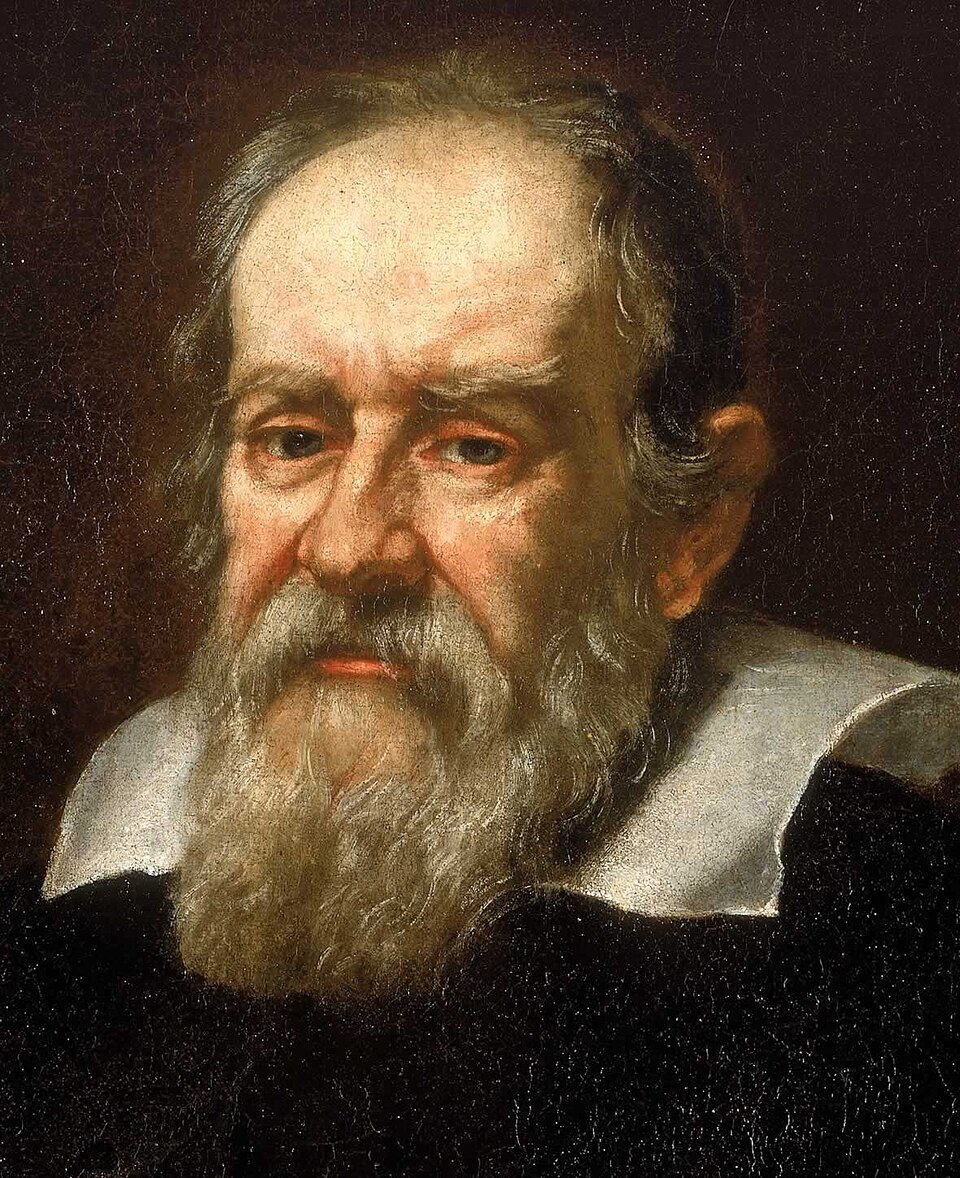
By Dr. Avv. Gian Marco Solas, who develops the idea that the European Union’s legal order has become so dense, unmeasured and internally contradictory that it now behaves less like a system of justice than like a physical system at the end of its cycle: an entropic state of maximum disorder. No institution systematically measures regulatory weight, legal friction or the effects of a rule before it is enacted, and there is still no shared method for saying what is “just.” He argues that the only way out is the one Europe already invented with Galileo: treat human law like the other laws of nature, measure it, model it, write it in code, and recodify the system so that the value now trapped under regulation can be released rather than further buried.
***
I could never have imagined that a mistake in market modelling and a personal experience could have led me to spot the Problem of our Time, i.e. that in the very long process of human evolution we still do not do legal science. No one – certainly not at an EU institutional level – seems to be measuring the law and legal systems (regulatory weight, entropy / chaos, legal quantum states, curvature of legal space-time, etc.) or doing predictive and simulation models for the law or policies as a way to understand their effects before they are enacted. Nor does there seem to be a shared or even universal methodology to measure what is “just”.
Yet that methodology has existed in Europe for at least four hundred years, since Galileo – and those who followed him. Technically it is no one’s fault: the formulas and instruments to measure human law did not exist; it would be like blaming the Romans for not flying, aerodynamics did not exist then. The same is true of legal physics, a field that started with a 1989 Harvard Law Review paper written by Professor Tribe and (future president) Obama and continued with many – including renowned European – authors (for instance the Italian constitutionalist Roberto Bin) but still hasn’t yet been “institutionalised”. It needs to.
After five years of dedicated research, policy advice, legal measurements and observations I came to the conclusion that in the absence of such scientific / empirical measurement of the law and legal systems there is no chance of making optimal policies, i.e. policies that do not make anyone worse off, in any field. The examples in the European Union are many: the EU wants to promote competitiveness while charging small and big businesses with disproportionate (if not irrational) regulatory weight / pressure; it wants to build the single market and achieve integration without measuring national and local legal frictions (and even adding more at an EU level); it wants to promote sustainable business models while decarbonising everything, without considering that CO2 in nature is the element of life; it wants to promote peace – the very purpose of the European Union according to Article 3(1) TEU – by sending weapons, and without even a minimum appearance of diplomatic activity. The law has become so complex and heavy that no one in policy-making or legal reality understands it anymore.
It is about time to draw a line, understand what the law was given for and write it in code in the same language of the universe – for the benefit of the citizens of the European Union and beyond.
“Mathematics is the language in which God has written the universe” (G. Galilei)
Codification of Sustainable Legal Systems. As Descartes said, at least once in life we must doubt everything we have learnt. Dubito ergo sum. The doubt here is whether the very logic and methodology with which EU policies are promoted and implemented stand up to the very basics of the scientific method. Empirical observations, legal measurements and models would suggest that it does not. It lacks two of the fundamental elements required to meet such standards: empirical legal measurements and dialectics.
Instead, if we look at the European Union through the prism of physics, we can easily come to the conclusion that it fits the definition of a typical random system, one that is at the end of its cycle, in the so-called “entropic state”, the state of maximum chaos and disorder. It is not the first time in our history and we have many historical cycles and legal traditions to learn from, but somehow we do not do so. Many times Europe found itself at the point of maximum chaos and as many times it managed to make its own “quantum jump upwards” in legal evolution by leveraging its outstanding natural-law tradition dating back at least to Aristotle.
Learning from our historical experience(s) and legal tradition (i.e. Solon, Iustinianus, Napoleon), in moments of chaos we can also learn what the solution is for legal chaos, as we have always codified (i.e. reordered) the law with technology available at each time. Now we should do it with modern technology (artificial intelligence, blockchain, etc.) writing the law in mathematical IT code as a way to measure it like other laws of nature and optimise it for the common good.
The institutionalisation of the traditional Galilean method is the only thing that can help the European Union legal system right now.
I published this preliminary proposal in the article: Interrelation of Human Laws and Laws of Nature? Codification of Sustainable Legal Systems, Journal of Law, Market & Innovation, 2/25, ojs.unito.it/index.php/JLMI/article/view/12266. The proposal also includes a bottom-up and participative public-private IPO type of process to optimise EU legal systems / local-real territories based on the empirical calculation of each system’s unexpressed value. Imagine it like a city bond having as its underlying the unexpressed real estate, energy and local value chain potential of each EU legal system (city, province, region etc.), and open or given to any European citizen with democratic voting rights codified in a web 3.0 type of local platform.
I did an approximate and conservative empirical calculation in a very small Sardinian village of roughly 1.000 inhabitants, which revealed approximately 35 million euro in unexpressed value. I generalised the calculation to all Italy, revealing 384 million euro in unexpressed value, a calculation that needs to be refined empirically. The same methodology at an EU level revealed 5,2 trillion euro. Such unexpressed economic and human value is trapped under the weight of regulation.
It’s like having a treasury hidden under a very intricate and complex net of laws that is waiting to be unlocked and distributed to any EU citizen that does useful work for the system, i.e. work to turn this abandoned and entropic value into “energy” or “life” for their system as a way to reach their ideal equilibrium in reality. In a world that is running in all directions with everyone competing in every sphere, we must understand that there cannot be competition to become the ideal Europe.
Dr. Avv. Gian Marco Solas is the Founder of Sustainab-Law, the world’s first natural-law tech firm specialised in natural law – Inventor of The Sustainable Legal Systems’ Meter©, the world’s first and only instrument to measure, engineer and optimise human laws and legal systems like other natural laws and systems. He is a former Leading Expert at the BRICS Competition Law & Policy Center and has worked as a litigation-funding professional with international and national law firms and the EU Commission. He holds a Joint PhD in Comparative Law & Economics (UniCA/UM) and was awarded the College of Europe LL.M. Prize Cossiga for best thesis in Constitutional Law.
Disclaimer: www.BrusselsReport.eu will under no circumstance be held legally responsible or liable for the content of any article appearing on the website, as only the author of an article is legally responsible for that, also in accordance with the terms of use.