By Prof. Dr. Dr. h.c. Carl Baudenbacher, former President of the EFTA Court (2003-2017), Visiting Professor at the London School of Economics, Baudenbacher Law AG
I.
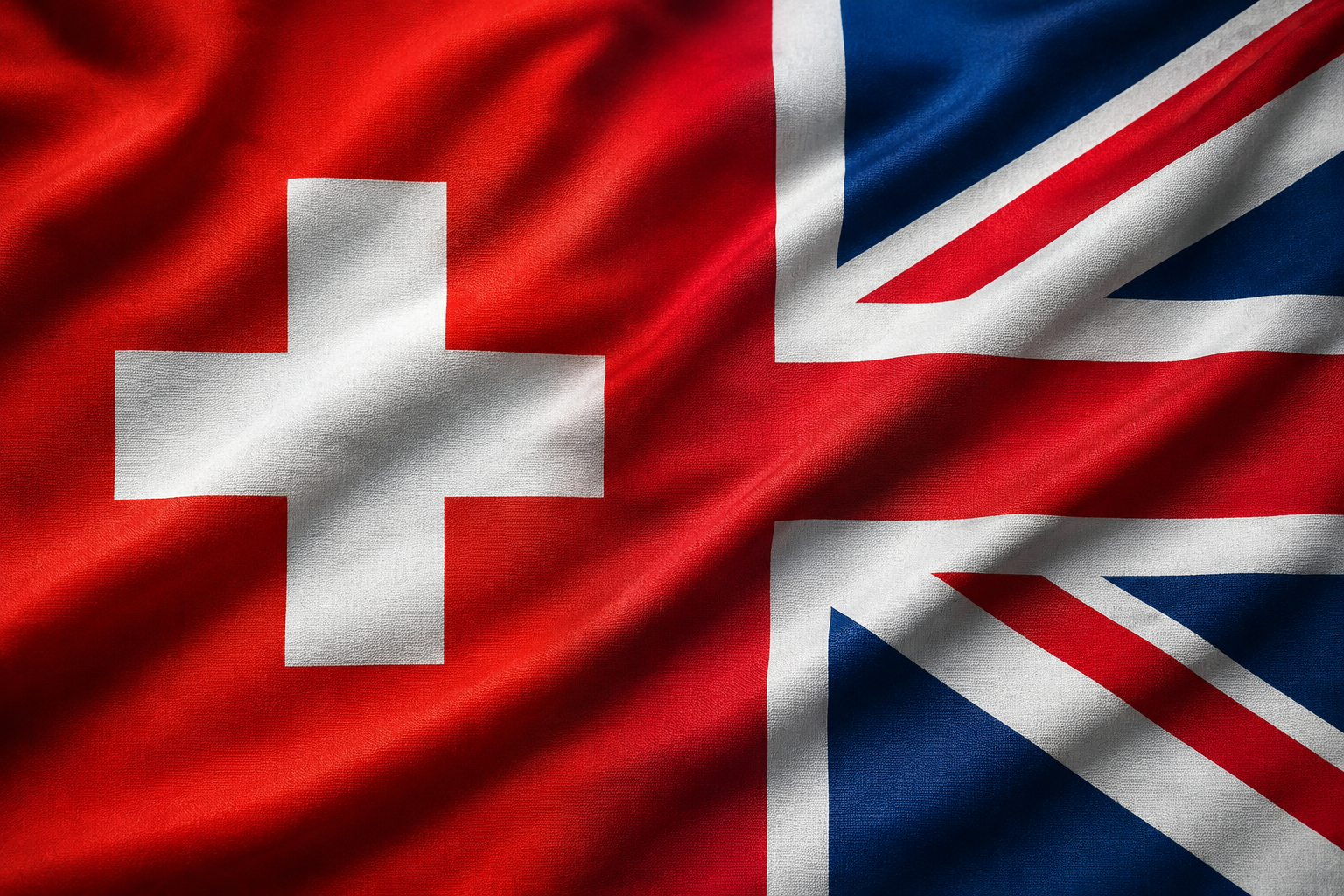
Brexit, decided ten years ago, marked the culmination of Britain’s traditional distance from supranational European integration. In this respect, there are striking parallels between the United Kingdom and Switzerland.
The United Kingdom and Switzerland were founding members of the European Free Trade Association (EFTA) in 1960, a classic free-trade arrangement without an institutional superstructure. The UK joined the European Economic Community in 1973 primarily for economic reasons and always viewed the project of political integration with reservation. The 2016 referendum was therefore not a historical accident but the logical culmination of a distinct path that had been discernible for decades.
However, the withdrawal negotiations were conducted weakly on the British side. Instead of seriously pursuing continued participation in the single market through an EEA/EFTA arrangement (the “Norway model”), as advocated by parts of the Leave campaign, London at times opted for a model that, despite formal autonomy, would still have preserved key functions for the Court of Justice of the European Union (“CJEU”).
II.
Switzerland kept its distance from the EU from the outset. In 1992, it rejected accession to the Agreement on the European Economic Area but remained in EFTA. Membership of the EEA would have entailed adopting almost the entire body of single-market law. Six months earlier, however, the Swiss Federal Council had submitted an application to join the EU. That tactical error effectively sealed the fate of the EEA in Switzerland.
Since 2014, Switzerland has negotiated an “institutional framework agreement” intended to provide for the dynamic adoption of EU law, de facto supervision by the European Commission, and a monopoly of interpretation for the CJEU. It was—and remains—obvious that the Foreign Ministry regarded this as the point of no return on the road to EU membership.
The Swiss Federal Council therefore failed to grasp Brexit as a strategic opportunity. Its diplomats gave the British the cold shoulder, with the result that it never even occurred to London to join forces with Bern. Instead of exploring with Great Britain ways of strengthening EFTA or the EEA, Bern confined itself to preserving the status quo through the so-called “mind the gap” policy. Any independent European alternative was suppressed in the hope of concluding the framework agreement and eventually joining the EU.
"Swiss exemptions from dynamic adoption of EU law are an illusion" – New article by Prof. Dr. Dr. h.c. Carl Baudenbacher, the former longtime President of the EFTA Court:https://t.co/XAQPz5OcQK
— BrusselsReport.EU (@brussels_report) February 10, 2026
III.
Because the CJEU, as the non-neutral court of the opposing party, proved politically impossible to justify in Switzerland, the EU proposed the insertion of a pro forma arbitration tribunal. However, in matters of EU law and of agreement provisions identical in substance to EU law, that tribunal would have been required to request a binding interpretative ruling from the CJEU. This was the dispute-settlement mechanism employed in the EU’s association agreements with the former Soviet republics of Ukraine, Armenia, Georgia, and Moldova. The Federal Council accepted this approach informally in March 2018.
In spring 2018, the EU offered the British a dispute-settlement mechanism that it had first proposed to Switzerland in 2013: “docking.” In Switzerland’s case, docking would have allowed the country to retain its sectoral approach while placing its agreements with the EU under the supervision of the EFTA Surveillance Authority and the jurisdiction of the EFTA Court, with one Swiss member in each institution. It was a highly generous offer. The Federal Council rejected it because, as noted above, it had long-term EU membership in mind.
Docking would also have been an ideal solution for the United Kingdom. It could have remained in the single market for goods, services, and capital without adopting the politically sensitive free movement of persons. Yet Britain missed this opportunity as well. Remarkably, the overwhelmed Prime Minister Theresa May instead sought to adopt the “Ukraine model,” with a role for the European Commission and the CJEU.
After her downfall, her successor Boris Johnson had little choice but to accept the “Ukraine model” in the Withdrawal Agreement, at least for a transitional period. In the more important Trade and Cooperation Agreement, by contrast, a genuine arbitration tribunal is provided for. Any involvement of the CJEU is expressly excluded. But Britain had to leave the single market.
IV.
The current Prime Minister, Sir Keir Starmer, was a Remainer and, after the Brexit referendum, advocated a “People’s Vote” on a second referendum. As Shadow Brexit Secretary, he probably played the decisive role in ensuring that an EEA-type solution such as docking failed in the House of Commons during the “meaningful votes.” Upon taking office in 2024, Starmer ruled out a return of the United Kingdom to the EU. More recently, however, he has pursued a policy of rapprochement under the labels of “reset” and “dynamic realignment.”
The Swiss government—which has in the meantime signed a package of bilateral agreements with the EU that must still pass through Parliament and a referendum—regards this as confirmation that Switzerland is right to pursue the framework-agreement project. But that conclusion misses the central point. The sectoral agreements sought by London in the fields of sanitary and phytosanitary measures, electricity, and emissions trading would be just as institutionally one-sided as the Swiss package.
The EU is demanding from the former world power Great Britain the dynamic adoption of its law, de facto supervision by the European Commission, and a monopoly of interpretation for the CJEU, only imperfectly concealed behind a pro forma arbitration tribunal. Parallels with Switzerland are evident in the political packaging of this transfer of sovereignty. While Bern promotes the myth of Switzerland’s supposed self-surveillance and the alleged independence of the arbitration tribunal, London—in line with Brussels—speaks euphemistically of the CJEU merely having “a role to play.”
In the 1990s, after a Swiss referendum rejecting "plan Delors", the EU concluded a sensible & flexible deal with Switzerland, granting it partial market access in return for partial rule-taking. This works fine for 20 years. Also now, we need flexibility.https://t.co/asoYX16B54
— Pieter Cleppe (@pietercleppe) June 1, 2020
V.
Neither the United Kingdom nor Switzerland has drawn the right lessons from the outcome of the Brexit referendum. Both now run the risk of drifting into a form of semi-colonial relationship with the EU.
For the governments of both countries, this is apparently intended as a transitional arrangement. Yet a return of Great Britain to the Union is no more likely than Switzerland’s accession to the EU. For Britain, the euro would be a major obstacle; for Switzerland, the hurdle would be the requirement of a double majority, meaning that accession would require not only a majority of the people but also a majority of the cantons.
Democracy was the product of ancient Athens, yet not all Greeks were free. In nearby Sparta, the helots—state-owned serfs—were compelled to work the land. If the Swiss framework agreement and the British “reset” were therefore to come to fruition, Europe’s two oldest democracies would risk sinking to the status of helots of the EU.
dDisclaimer: www.BrusselsReport.eu will under no circumstance be held legally responsible or liable for the content of any article appearing on the website, as only the author of an article is legally responsible for that, also in accordance with the terms of use.