By Nicolas Lecaussin, Director of French think tank IREF
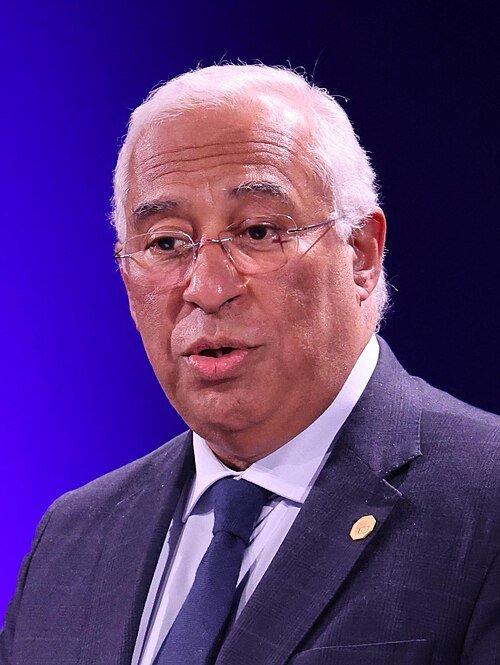
EU Council President António Costa has slipped a 3 per cent tax on the turnover of digital services into the draft EU long term budget for 2028–2034. For such a modest return, it combines every possible drawback: double taxation, a hidden tax on SMEs and consumers, and the risk of US retaliation.
On Saturday 21 November, the President of the European Council presented his new proposal for a multiannual financial framework. Its main new feature: a 3 per cent tax on annual turnover derived from online advertising, digital intermediation and data monetisation, for groups generating more than 50 million euros within the EU and 750 million worldwide. The idea is not new: the Commission had proposed it as early as 2018, and the Member States had shelved it. It is now back on the table as part of a package of five new ‘own resources’ – ranging from the carbon market to tobacco – intended to raise 64 billion euros a year.
EU tax on tech giants sends 'wrong message' – Martin https://t.co/keVMkeKM7p via @rte
— Tony Connelly (@tconnellyRTE) November 26, 2026
A tax on turnover, paid by customers
A turnover tax is payable whether or not the company makes a profit. That is its first flaw. The second concerns France in particular: our own digital services tax, at the same rate of 3 per cent, is set to raise nearly one billion euros in 2027. If Paris retains it, the companies affected would face a 6 per cent tax on their turnover generated in France.
Who will really pay? Not the digital giants. A tax on turnover is passed on downstream, just like an excise duty. As early as 2019, Amazon passed on the French tax to its sellers’ commissions, and Google passed it on to its advertisers. Retailers, craftspeople, hoteliers and restaurateurs who sell and advertise online will pay, and so will their customers. A study by the Tax Foundation confirms this: these taxes raise little revenue and are ultimately paid for by consumers. We already wrote this in 2021: taxing the GAFA companies penalises the entire economy.
That leaves the pretext of ‘tax justice’: the argument that digital giants pay too little corporation tax in Europe. If the problem is that our taxes on profits are driving profits elsewhere, the answer is not to pile on a tax on turnover, but to make the European tax system attractive to all businesses, digital or otherwise. Moreover, this argument is all the more fallacious given that a minimum tax of 15 per cent on corporate profits has already been introduced globally.
Little revenue, many risks
The Commission expects this to generate around 5 billion euros a year, which is barely 2 per cent of a seven-year budget of 1,780 billion. For this gain, the EU is risking a trade war. In June, Donald Trump threatened to impose a 100 per cent tariff on imports from countries that introduce or increase a digital tax, under Section 301 of the US Trade Act. Canada has already scrapped its own tax. And in 2019, the US retaliation against the French tax targeted wine, cheese and leather goods: French exporters would once again be on the front line.
However, the argument that the tax would only affect US companies does not hold water. Its thresholds could affect European leaders such as Criteo, Adevinta (the parent company of Leboncoin), Spotify and Zalando – precisely the companies the EU claims it wants to see flourish.
The rest of the text is hardly any more reassuring. It slashes ‘competitiveness and defence’ appropriations by 95.5 billion euros and, for the first time, cuts funding for cohesion policy. In any case, the adoption of these new taxes requires unanimity among the Twenty-Seven, whilst several Member States – led by Germany – reject any new European tax. The tax may therefore never see the light of day, but it will have served to establish the idea that a European budget must be funded by its own taxes. And this is perhaps the most serious consequence, paving the way for member states to lose their sovereignty for the sole benefit of Europe.
This, then, is the real danger. Rather than seeking new sources of revenue, the Union would do better to spend less and leave member states in control of their own taxation. It should also allow tax competition to take its course.
The EU’s “frugal” countries have walked out of small-group discussions convened by António Costa, according to one diplomat.
The move is a protest against what they see as an effort to “divide us,” he said.
Follow live 👉 https://t.co/eZEjjhGkoE pic.twitter.com/rjfWghwNs9
— POLITICOEurope (@POLITICOEurope) November 26, 2026
Originally published in French by Contrepoints
Disclaimer: www.BrusselsReport.eu will under no circumstance be held legally responsible or liable for the content of any article appearing on the website, as only the author of an article is legally responsible for that, also in accordance with the terms of use.