As the EU draws up its AI strategy for the coming decade, it faces a fundamental challenge: how to reconcile long-term strategic autonomy objectives with industry demand for immediate AI access. Ironically, in the short term, the road to European strategic autonomy may run via the Atlantic.
As the race for AI supremacy accelerates, the EU and its member states face a problem: they possess world-class industrial expertise but lack the domestic semiconductor capacity needed to power modern AI systems. Nowhere is this more apparent than in Germany. Its policymakers and industrial giants are therefore forging close alliances with Nvidia.
At the heart of Germany’s industrial AI strategy lies a rapid expansion of computing infrastructure, including specialized AI gigafactories. Nvidia’s accelerated computing platforms and Blackwell architecture are driving this investment. From Stuttgart’s High-Performance Computing Center to Bavaria’s Blue Swan initiative, supercomputing facilities are being equipped with thousands of advanced graphics processing units (GPUs).
Germany’s Industrial AI Cloud, operated by Deutsche Telekom in Munich, is another flagship project. Supported by public investment and industrial partners such as Siemens and Audi, these initiatives aim to give companies the computing power to train machine-learning models, simulate industrial processes, and develop applications ranging from autonomous driving to robotics and precision manufacturing.
Industrial Ambitions, Strategic Challenges
For Germany, the stakes are high. Europe’s largest economy relies on automotive engineering, mechanical expertise, and heavy industry. These sectors are facing profound technological change. Without access to advanced computing clusters and high-performance chips, German manufacturers risk losing ground to competitors in the US and China. Berlin is betting that close cooperation with Nvidia can coexist with the long-term objective of strategic autonomy. Keeping proprietary datasets within European infrastructure can help companies retain control over sensitive information, while local computing capacity enables manufacturers such as Mercedes-Benz to develop automated driving systems and smart factories within European safety and regulatory frameworks.
Europe has struggled to build a semiconductor industry capable of matching Nvidia’s AI chip business or the manufacturing scale of Taiwan’s TSMC. US cloud providers also dominate much of the global market for computing infrastructure. The European Commission is therefore pursuing a dual strategy: attracting foreign technology investment while supporting domestic capabilities through initiatives such as the Frontier AI Grand Challenge and the EuroHPC framework. These programmes seek to strengthen European computing capacity and support AI models suited to the continent’s regulatory environment and linguistic diversity.
Openness is key to the EU’s AI future. It gives European companies and research institutes more ability to build on the necessary technology. By lowering the costs of access to cutting-edge models, open source could also help start-ups and SMEs compete and innovate.
The EU’s AI Act provides a common legal framework, while European-language models could help address needs that global systems do not always meet. The challenge is to combine access to leading technology with greater control over the infrastructure, data, and models on which European businesses increasingly depend.
Listened to the conversation between Chancellor @bundeskanzler and @nvidia CEO @JensenHuang yesterday. It was mostly about AI, but this line fits tokenization just as well:
'There's nothing to regulate if the industry doesn't thrive.'
You can see this clearly with secondary… https://t.co/OScAHsRjvF
— 0xLucasson (@0xlucasson) October 20, 2026
Germany’s Trans-Atlantic Bet
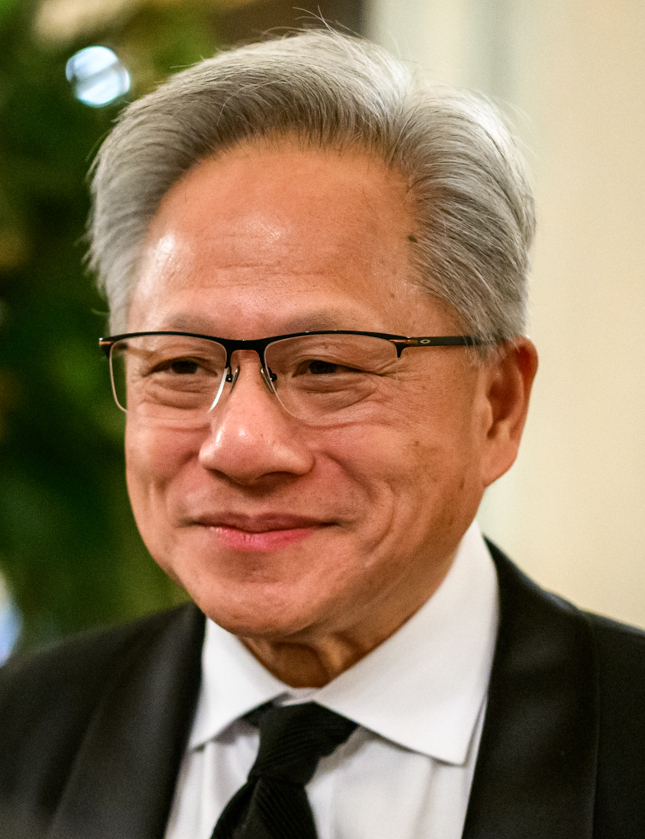
Germany’s bet is on a trans-Atlantic partnership with Nvidia. It took centre stage at the Invest in Germany conference in Berlin on Monday, where Chancellor Friedrich Merz and Nvidia CEO Jensen Huang unveiled a joint initiative to accelerate physical AI. Backed by an investment in the hundreds of millions of euros, the project aims to train robots, support autonomous vehicles, and develop industrial AI models. Deutsche Telekom’s Industrial AI Cloud, equipped with thousands of Nvidia GPUs, provides the computing foundation, while companies such as Siemens and Audi help anchor the initiative in Germany’s industrial base.
Further announcements regarding investments in Germany’s AI infrastructure and the EU’s planned AI gigafactories are expected on Wednesday, when Jensen delivers the keynote at Nvidia’s developer conference, GTC. This year, the event is taking place in Berlin’s trendy Kreuzberg district.
These initiatives illustrate: Europe can use established technologies to accelerate industrial innovation rather than wait for a fully independent hardware ecosystem to emerge.
AI Safety and European Trust
Nvidia is also linking its expansion in Europe to AI safety. The company has pledged $250 million in computing resources to support AI safety research in the United Kingdom. The commitment is intended to equip the UK’s AI Security Institute with advanced computing capacity to test AI systems, including autonomous agents, and investigate potential cyber risks.
Together, these initiatives highlight Europe’s balancing act. Nvidia’s technology offers a practical route to scaling AI in industry, but reliance on a single supplier could undermine the autonomy policymakers seek to protect. Europe cannot realistically build every layer of the digital stack from scratch, nor can it afford to miss the AI transition. Its long-term success will depend on turning foreign technology into domestic economic strength while investing in its own computing infrastructure, semiconductor capabilities, and AI models. The goal must be to remain not merely a consumer of foreign innovation, but an active shaper of its digital future.
Disclaimer: www.BrusselsReport.eu will under no circumstance be held legally responsible or liable for the content of any article appearing on the website, as only the author of an article is legally responsible for that, also in accordance with the terms of use.