The revision of the directive on tobacco taxation (TED) saw mixed progress this month. The Committee of Economic Affairs of the European Parliament approved the directive in a reduced form, but it was removed from the ECOFIN Council’s agenda the same day due to a lack of unanimous support. As a result, economic ministers did not discuss the issue at their meeting on 12 June , and the matter will be managed by the Irish Presidency. This delay highlights ongoing disagreements about tobacco taxation in the EU. In addition, deep divisions over tobacco taxation were once again exposed during a vote in the plenary session of the European Parliament on 17 June in Strasbourg.
This revision of the Tobacco Taxation Directive (TED) aims to update the current legal framework for excise duty on tobacco in line with the objectives of Europe’s Beating Cancer Plan, by better aligning the taxation of tobacco and related products with health objectives.
The report adopted by the European Parliament’s Committee on Economic and Monetary Affairs (ECON) on 3 June, is the Parliament’s position on the proposed revision of the EU’s Tobacco Taxation Directive, a law that has not been substantially updated for more than a decade despite inflation, changing smoking habits, and the emergence of new products such as heated tobacco and e-cigarettes.
On the same day, EU Member States in the Council remained at an impasse over a wide-ranging revision of tobacco excise taxes, leaving the future of the legislation uncertain. “Regrettably, despite our efforts during the past months, it was not possible at this stage to reach consensus on this important file,” said a spokesperson for Cyprus, which holds the EU’s rotating presidency and is responsible for leading the bill through the EU’s legislative process.
The proposal would have doubled the minimum cigarette tax rate across the EU and extended excise duties to newer nicotine products such as e-cigarettes. Opposition from several countries, including Sweden, prevented agreement.
As a result, the Cyprus Presidency withdrew the proposed revision of the EU tobacco taxation directive from the 12 June ECOFIN agenda after failing to secure the unanimous support required among Member States.
Earlier in the year, Cyprus had repeatedly tabled compromise texts, including: lowering proposed minimum cigarette excise rates, lengthening transition periods, softening automatic indexation mechanisms and offering flexibility on newer nicotine products.
Despite these concessions, the Presidency was unable to bridge the gap between countries seeking stronger public-health measures and higher minimum taxes – including France, Belgium, Finland and the Netherlands. And those concerned about competitiveness, cross-border trade, inflationary impacts or national tax sovereignty, such as Sweden, Greece, Italy and Romania.
Sweden represents a notably vocal opponent, emphasising risk-based taxation and national sovereignty over health policy. Its success with snus as a harm-reduction tool contrasts with a uniform EU tax approach.
The key question for the upcoming Irish Presidency will be whether it simply keeps the Cyprus compromise on the table or attempts a more fundamental redraft. Ireland will hold the next EU Presidency from July to December 2026, taking a central leadership role in guiding EU decision-making, negotiating legislation, and shaping policy.
European Parliament rejects tobacco taxation report
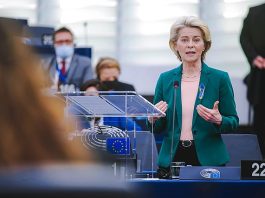
On 17 June in Strasbourg, the European Parliament voted to reject the tobacco taxation report. As a result, the EU currently lacks an official position while negotiations on TED remain stalled in the Council.
The report, drafted by MEP Tomáš Kubín (Patriots for Europe), failed to pass by 439 votes to 181, with 38 abstentions. The vote highlighted disagreements among lawmakers about how far the EU should go in raising tobacco taxes and extending taxation to newer nicotine products.
Amendments and positions that would have more strongly backed the EC’s approach failed to gain sufficient support, while alternative positions favouring a less ambitious tax overhaul attracted backing from a coalition of lawmakers with differing motivations.
The result was widely interpreted as a setback for the Commission, as Parliament did not provide the level of political endorsement the EC had hoped for. Nevertheless, the Parliament is not the final decision-maker on tax matters. EU tax legislation requires unanimous agreement among member states in the Council.
Rising new taxes
Taxes remain a hot topic for the EU, especially in the frame of talks about the next long-term budget. António Costa, the president of the Council of the EU, encouraged the 27 Member States, in his invitation letter for the Summit of 18-19 June in Brussels, to focus the discussion on the key elements (of the budget) to facilitate an agreement by the end of the year.
“This includes making progress on new own resources, which will be decisive for matching our ambitions with the necessary means,” Costa wrote in the letter dated 10 June.
Raising new taxes, known in EU jargon as ‘own resources’, is about one of the most controversial proposals of the EC to raise €58 billion annually via changes to customs revenues and existing green taxes, a tobacco tax, a levy on e-waste and a corporate duty.