For years, politicians, journalists and activists insisted that fears about ideological infiltration were either exaggerated or rooted paranoia and hatred. Eventually, of course, reality catches up.
In May last year, a confidential 73-page report from the French Ministry of the Interior was leaked to Le Figaro. Titled The Muslim Brotherhood and Political Islam in France. The report described a long-term strategy of Islamist political expansion through schools, charities, lobbying groups, youth associations, municipal networks and religious organisations. It confirmed what no elected politician wants to admit but everyone could see with their own eyes: Islamist movements build influence gradually within civil society until they become socially and institutionally indispensable.
Musulmans de France were identified as an organisational vehicle of the Muslim Brotherhood in France and the Conseil des Musulmans Européens (CEM), fundraising networks, religious institutes and advocacy organisations were linked across several countries.
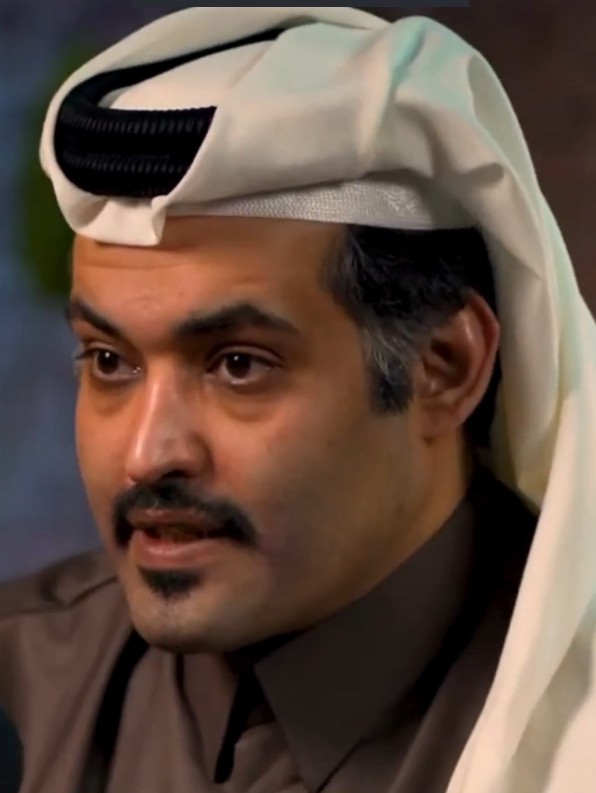
Perhaps most significantly, the report alleged that this ecosystem benefits from foreign financing originating primarily from my native Qatar, which leads us to a second smoking gun lying in plain sight.
The Qatari regime has been giving the Muslim Brotherhood free rein to brainwash people in Qatar for decades.
After Nasser banned the Brotherhood in Egypt in 1954, thousands of MB figures went into exile across the Arab world, including in Qatar.
Yusuf al-Qaradawi, their… pic.twitter.com/PrPJT6PIUA
— خالد الهيل KHALID AL-HAIL (@Khalidalhail) May 18, 2026
The Qatargate scandal of 2022, in which Belgian investigators uncovered €1.5 million in cash allegedly to soften European criticism of Qatar’s human-rights record, demonstrates how vulnerable European institutions can become to foreign patronage. Political elites like to bury their heads in the sand about this, too, but a growing number of frustrated citizens are pointing to the Gulf-backed financing of media smokescreens and subversion.
Last month in Brussels, a convoy of trucks rolled through the European Quarter carrying billboards accusing Qatar of running influence operations through bribery and politicised journalism on Al Jazeera.
Qatar denies promoting islamism and anti-Western propaganda!
The ruling Al Thani family denies funding terrorism!
It's time the world found out the TRUTH about QATAR! 🇶🇦 pic.twitter.com/90c0zTCeoP
— خالد الهيل KHALID AL-HAIL (@Khalidalhail) May 8, 2026
A giant “SOLD” sign was projected onto the façade of the European Commission building while, at a conference inside the European Parliament, opposition politicians and religious leaders expounded on what must be the West’s most troubling partnership. The immediate reaction to The Muslim Brotherhood and Political Islam in France was to postpone following intervention from President Emmanuel Macron. The version circulating publicly was heavily redacted with names of interviewees, contributors and even the authors themselves removed for ‘security’ and ‘diplomatic reasons’ and political elites remain extremely cautious about allowing the public debate to unfold openly. The leaked French report specifically warned that Islamist influence often advances by presenting scrutiny as persecution – so if these institutions seriously wish to tell Europe’s emerging ‘populist right’ that the infiltration is not a conspiracy, they’re going to have to do better than insinuate hate speech and islamophobia every time they are confronted with facts and evidence.
It is in no elected politician’s interest to take responsibility for a problem the public have barely noticed, especially when media pressure and activist networks stand ready to brand dissenters as extremists. Until the civil protests are heard loud and clear, foreign states will continue to exploit this paralysis of Europe’s political class. So eager are Western governments to avoid accusations of islamophobia that the European Union itself stands accused of funding organisations accused of proximity to Islamist networks, publicly condemning extremism while subsidising activist ecosystems and foreign influence structures that thrive under the protection of anti-Islamophobia rhetoric.
One of the largest mosques in the world is being built in Strasbourg, funded by Turkey, Qatar, and the Muslim Brotherhood-linked group Millî Görüş.
Their website says it “represents the Islamic civilization in the center of Europe” and that it will be “Europe’s most beautiful… pic.twitter.com/kSVLid2P7W
— Visegrád 24 (@visegrad24) May 15, 2026
Protecting liberal democracy requires the ability to distinguish between personal religious freedom and organised political Islamism.
The gap between official rhetoric and visible reality has widened to the point where public trust itself is breaking down and the political class will have to speak up against cronyism and their own inertia if they want to retrieve credibility with the electorate.
It is not hateful to oppose foreign-funded ideological movements seeking to subvert your way of life.
https://twitter.com/visegrad24/status/2055039545226174642
Disclaimer: www.BrusselsReport.eu will under no circumstance be held legally responsible or liable for the content of any article appearing on the website, as only the author of an article is legally responsible for that, also in accordance with the terms of use.