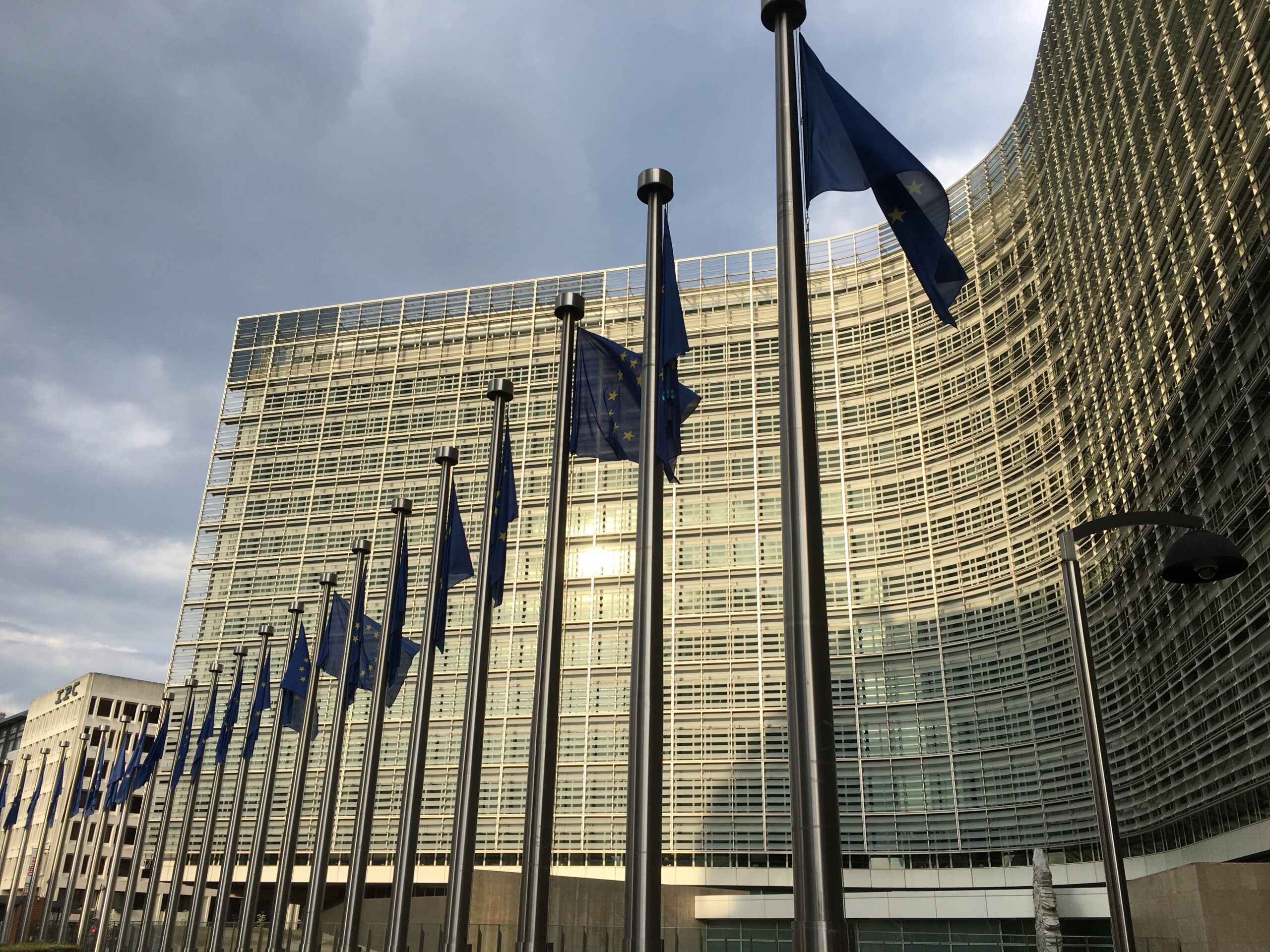
That the European Commission is a powerful body is widely recognized, but the extent of its actual power is often still underestimated.
Not only does the institution enjoy the monopoly to propose legislation that will be valid for almost 450 million people – or a lot more, when the “Brussels effect” of non-European industries voluntarily adopting EU standards is taking into account.
It also plays a major role after its proposals have been published, during the legislative process, through its role as shaping or “mediating” the negotiations – “trilogues”- between EU member states and the European Parliament.
Last but not least, also after EU legislation has been adopted, the EU Commission has great influence over the implementing measures for EU legislation, as it is chairing “comitology” committees with national representatives that are tasked to decide those measures. According to a Dutch PhD thesis, almost 50 percent of the content of legislation is decided during that stage.
A large-scale study undertaken by my former think tank Open Europe concluded that the impact of EU legislation accounts for about two thirds of all legislation in the EU. Despite this great power, the decision-making process by the European Commission often leaves much to be desired. Not only are many proposals still adopted without regulatory impact assessment, sometimes, scientific considerations are not sufficiently taken into account. An analysis by think tank ECIPE notes that even when there are impact assessments, “indirect and long-term costs are often neglected, marginalised or entirely ignored.”
Ignoring scientific evidence
The latest example of all of this are the attempts by the European Commission to control social media, whereby it is justifying its actions by referring to protection of the children. Among its many legislative tools are the Digital Services Act (DSA) and Digital Markets Act (DMA). A notable measure was the presentation of the EU’s age verification app, which has been criticized from a privacy perspective, also because the mobile app was hacked only hours after being presented.
More fundamentally, Belgian Professor of Cognitive Psychology Wouter Duyck has been warning against the assumptions underlying this approach, explaining that it is all but evident that screen time is as harmful in the first place. Recently, he wrote: “Since people are deliberately being scared with ‘brain’ research, here’s a quick look at the largest ‘brain’ study. 12,000 repeated brain scans of children (which is a huge number) published in the leading journal “Cortex”. Conclusion: “no impact”.
The study he cites notes that “exploratory analysis predicting how screen media activity impacted neural trajectories showed no significant impact of SMA [which stands for screen media activity] on neural maturation over a two-year period.”
The scientific basis for this is shaky. In the first place, this is obviously designed to restrict free speech for adults https://t.co/26L7KrBYLJ
— Pieter Cleppe (@pietercleppe) February 19, 2026
Also when it comes to health policy, the EU executive regularly comes under fire for its rather loose relationship with the scientific consensus. Last year, EU Health Commissioner, Olivér Várhelyi openly stated that that “new tobacco and nicotine products pose health risks comparable to traditional ones.” This is simply in contradiction to every single scientific assessment. For example, according to the UK government’s health department, “best estimates show e-cigarettes are 95% less harmful to your health than normal cigarettes.” Recently, Várhelyi doubled down on his stance, singling out nicotine as a source for obesity and heart disease despite evidence that excessive sugar, bad food, alcohol abuse, and physical inactivity are the major contributing factors.
At the end of April, a coalition of 26 independent scientists and public health experts submitted a formal letter to the European Commission, carrying the key message that not all nicotine products carry the same risk. While attached a number of studies, they stressed: “Europe cannot claim to “follow the science” on cancer while ignoring one of the most basic scientific distinctions in tobacco control: the difference between smoke and smoke-free products.”
This illustrates the need for more evidence-based policy making at the EU level. The debate takes place against the background of the revision of the Tobacco Excise Directive (TED) and a possible new “Eco-Nicotine” directive, which aims to target the environmental impact of disposable vapes. Individual Member States like Belgium are meanwhile implementing a ban on vape flavours, despite negative experiences with this approach in the Netherlands. At least it shows that the European Commission may not be the only institution with shortcomings when it comes to science-based policy making.
The precautionary principle
At the heart of the problem is the EU’s adherence to the “precautionary principle”, which comes with a deeply unscientific intolerance for any risk. The principle foresees that, as the EU Commission itself puts it, “where scientific data do not permit a complete evaluation of the risk, recourse to this principle may, for example, be used to stop distribution or order withdrawal from the market of products likely to be hazardous.”
David Zaruk, an academic and commentator specialised in risk and EU policy explains that this interpretation of the principle by the European Commission, which comes from green NGO “European Environmental Bureau”, “essentially reverses the burden of proof, which means that unless you can prove with certainty that something is completely safe, you cannot put it on the market.”
He notes that as a result, “we’re systematically removing products from the market now. No new pesticides are going on the market and farmers are losing valuable tools. And then it got even more complicated when the Commission said “by the way, you have to also prove that it’s not an endocrine disruptor” [a chemical that mimics endocrine hormones]. Well, coffee is an endocrine disruptor. In fact, defining an endocrine disruptor on its own is pretty hard to do.”
Peter McNaughton, a Professor of pharmacology at the University of Cambridge, thinks that the aspirin would not have been allowed back in the day if this principle had been applied to the matter, stating: “This drug has considerable adverse side-effects, and would never be licensed today. The benefits, however, are enormous and growing.”
Cognitive dissonance in EU regulations
Why are we allowing the EU to set UK food regulations when it does so unscientifically, based on the precautionary principle?
The UK Food Standards Agency uses demonstrated risk and the probability of exposure, and so does the European… pic.twitter.com/s2l5JrtSQc
— Catherine McBride OBE (@CeeMacBee) February 10, 2026
Paternalism
The precautionary principle is engrained in the EU’s regulation of chemicals, for example in the EU’s 2006 REACH directive, one of the most complex pieces of legislation in EU history. It requires companies to register chemical substances with the European Chemicals Agency (ECHA). This was not only incredibly bureaucratic, but it also serves to keep new entrants from the EU market. Somehow, paternalism and protectionism tend to go hand in hand.
The precautionary principle is furthermore enshrined in the European Commission’s action plan to restrict alcohol consumption in order to reduce cancer. Thereby, the Commission aims to support EU member states in limiting the affordability and availability of alcohol as well as restricting advertising and promotion. While there is obviously a link between alcohol abuse and cancer, it is perfectly possible to consume alcohol responsibly and in moderation. Recently, studies show that even low to moderate alcohol consumption carries health risks, but the question is of course whether those risks stand in proportion to policies aiming to curtail alcohol use for adults. They should be free to make the trade-off themselves.
This paternalistic risk-averse attitude can also be witnessed in the European Parliament when it comes to regulating digital innovation, according to German CDU MEP Axel Voss. “What is happening in the European Parliament is that most people are being guided by fear and concerns and trying to rule out everything”, he has commented on the attitude of MEPs towards Artificial Intelligence. It may help explain a thing or two about the EU running behind the United States and China when it comes to AI.
In that regard, it is amusing to point out that if science is not always inspiring EU legislation, at least science fiction seems to be. In 2021, KU Leuven academic Domenico Orlando listed in a rather amusing article examples where according to him, policy measures appear to have been “inspired by fiction”. As one example, he lists the now infamous EU AI Act, which he notes is “influenced by popular culture’s fears about technology rather than purely scientific or technical assessments”
He thereby refers to how in “an episode of Black Mirror, a near future is depicted where individuals are given a social score depending on their behaviour.” According to Orlando, this was one of the inspirations for the prohibition of social scoring in the AI Act.
Surely, there may have been proper, empirical justifications for social scoring as well, but clearly, the AI Act isn’t the great success it was hoped for. Touted as the “world’s first comprehensive AI law” in 2023, it is now already up for simplification review, to make it “simpler” and “innovation-friendly.” The EU clearly did not heed the warning from the proverb: “Measure twice, cut once.”
"What is happening in the European Parliament is that most people are being guided by fear and concerns and trying to rule out everything." – MEP @AxelVossMdEP on AI regulation: https://t.co/sFi8BruqDL
— Pieter Cleppe (@pietercleppe) April 19, 2023