By Sumit Singh, a freelance journalist based in New Delhi
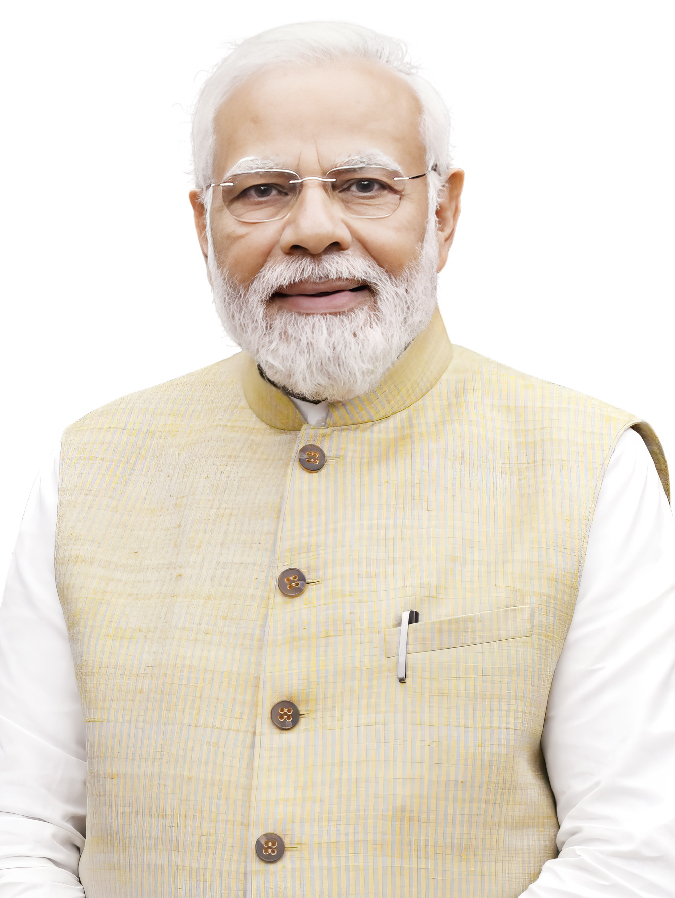
As Prime Minister Narendra Modi (picture) prepares for a high-profile summer tour of Europe — including a five-nation Nordic Summit, a bilateral visit to the Netherlands, and participation in the G7 outreach session in France — the European Union is accelerating its internal procedures to ratify the landmark EU-India Free Trade Agreement (FTA). Brussels increasingly views the pact as a cornerstone of its “open strategic autonomy” and de-risking policy amid ongoing global supply-chain disruptions linked to the West Asia conflict.
The intensified EU-India engagement underscores the bloc’s broader trade and foreign policy priorities, which include building resilient, values-based partnerships with like-minded democratic powers to reduce vulnerabilities exposed by recent geopolitical shocks. EU officials and Members of the European Parliament are now prioritising swift parliamentary consent and Council approval for the FTA, concluded in January, with hopes of implementation as early as late 2026 or early 2027.
Prime Minister Narendra Modi to embark on a four-nation Europe tour next month: Sources
1. PM Modi to participate in the India-Nordic Summit in Norway.
2. PM Modi to visit Sweden, Netherland and Italy.
3. This would be PM Modi’s first European tour after the signing of the…
— India Today Global (@ITGGlobal) April 21, 2026
🪷 Closing our very fruitful @europarl_EN #DIN mission to India 🇮🇳 with positive perspectives on the future EU-India #trade relations and strengthening inter-parliamentary relations.
Final stop in Bangalore to visit the Minister of Commerce @india_deptofcommerce and EU companies… pic.twitter.com/lc3oemtlQP
— European Parliament Diplomacy (@ep_diplomacy) April 2, 2026
An 11-member European Parliament delegation for relations with India, chaired by German MEP Angelika Niebler, wrapped up a three-day visit to New Delhi and Bengaluru on April 1. The group held high-level meetings with India’s External Affairs Minister S. Jaishankar, Commerce Minister Piyush Goyal, and Lok Sabha Speaker Om Birla, and also participated in a session of the India-European Parliament Parliamentary Friendship Group.
Central to the discussions was the fast-tracking of the European Parliament’s vote on the FTA to enable early implementation and boost bilateral trade, currently valued at around €120–140 billion in goods alone.
Niebler described India as a “trustworthy and reliable partner,” reflecting the EU’s strategic framing of the relationship within its Indo-Pacific strategy and Global Gateway initiative. The delegation’s mission was explicitly aimed at building cross-party support in the Parliament and countering residual concerns over market access and regulatory alignment.
2 days of all-out exchanges for 🇪🇺 @Europarl_EN delegation for relations with 🇮🇳 on the outlook for our bilateral partnership in trade, tech, security, mobility, on regional & global challenges, on shared commitment to democratic values. Now off to Bengaluru to meet 🇪🇺 business. pic.twitter.com/M3V7bYSgD0
— Hervé Delphin (@EUAmbIndia) March 31, 2026
The FTA, dubbed the “mother of all deals” by European Commission President Ursula von der Leyen, marks the culmination of nearly two decades of negotiations. It covers extensive tariff liberalisation, services, regulatory cooperation, sustainable development, and digital trade, while carefully managing sensitive sectors such as agriculture.
The European Commission projects significant gains, including the potential doubling of EU exports to India over time and support for hundreds of thousands of European jobs.
From an EU policy perspective, the agreement embodies several interlocking priorities. First, it advances “friend-shoring” and supply-chain diversification at a time when Red Sea disruptions and West Asia tensions have driven up shipping costs and energy prices across the continent. India offers a stable, large-scale alternative in pharmaceuticals, IT services, textiles, machinery components, and green technologies.
Second, it operationalises the EU’s Indo-Pacific strategy by deepening economic ties with the world’s fastest-growing major economy and a key democratic counterweight in Asia. This aligns with broader efforts to engage partners that share commitments to rules-based trade, even as the bloc navigates a more fragmented global order shaped by US policy shifts under President Donald Trump and persistent competition from China.
Third, the deal fits into the EU’s “open strategic autonomy” doctrine, maintaining open markets while proactively shaping partnerships that enhance resilience without full decoupling. Unlike more contentious agreements, the India FTA has been structured to minimise political friction in European capitals by limiting exposure in highly sensitive agricultural sectors.
The political momentum is evident in the flurry of high-level visits. In recent months, von der Leyen and European Council President António Costa visited New Delhi as chief guests for India’s Republic Day celebrations in January, coinciding with the FTA’s political conclusion.
Lok Sabha Speaker Shri Om Birla met Ms. Angelika Niebler, Chair of the Delegation for Relations with India (D-IN) in the European Parliament, along with other members at the Parliament House.
The Speaker noted with satisfaction that the first meeting of the Parliamentary… pic.twitter.com/kYdE6xLZ6K
— Lok Sabha Speaker (@loksabhaspeaker) March 30, 2026
German Chancellor Friedrich Merz, French President Emmanuel Macron, Finnish President Alexander Stubb, and other European leaders have also travelled to New Delhi, signalling unified support across member states for rapid implementation.
On the EU side, Jaishankar’s four trips to Europe in the past three months — including visits to Brussels, Munich, and France — along with repeated meetings with EU High Representative Kaja Kallas, have kept diplomatic channels active. These engagements are designed to smooth the path through the EU’s complex ratification process, which requires Council adoption, European Parliament consent, and eventual national-level procedures in member states.
Legal scrubbing and translation of the texts into all official EU languages are already underway. Once the European Commission formally proposes the agreement, the Council will seek qualified-majority approval for signature, followed by Parliament’s consent. EU officials are targeting signature by mid-2026 and full entry into force by early 2027, although some provisions could be provisionally applied earlier if political momentum holds.
Delighted to meet the European Parliamentary Delegation led by Ms. Angelika Niebler.
India-EU ties continue to strengthen, marked by growing dynamism and expanding cooperation across key sectors including trade, technology, green energy, connectivity, defence, space, mobility,… pic.twitter.com/xAAzeDQd9h
— Piyush Goyal (@PiyushGoyal) March 30, 2026
Modi’s upcoming European itinerary provides a natural platform to sustain this momentum. Officials in New Delhi are finalising dates for the India-Nordic Summit with Denmark, Finland, Iceland, Norway, and Sweden, as well as a bilateral visit to the Netherlands — both originally planned for last year but postponed following the Pahalgam terror attack in India.
These visits carry strong resonance for EU policy. Denmark, Finland, and Sweden are key EU member states with strengths in green transition, defence, and innovation. The Netherlands remains a vital logistics and investment gateway, while non-EU Nordic partners Norway and Iceland share overlapping priorities in maritime security and sustainable development.
The tour will culminate in Modi’s participation in the G7 outreach session hosted by Macron in Évian-les-Bains from 15–17 June, where leaders from the United States, Germany, Italy, the United Kingdom, Japan, and Canada will also gather. While global economic stability, security in the Strait of Hormuz, and broader geopolitical issues are expected to dominate discussions, EU and Indian diplomats see the gathering as an opportunity to reinforce the FTA’s role in fostering diversified and resilient supply chains.
Pleased to interact with Members of European Parliament, led by @ANiebler, here in Delhi.
Discussed the new chapter in 🇮🇳🇪🇺 ties, and the growing convergence between us. As the agenda of cooperation expands, so too will be the levels of comfort.
Confident that the European… pic.twitter.com/Ge88pZ7cna
— Dr. S. Jaishankar (@DrSJaishankar) March 30, 2026
For Brussels, the India FTA is not merely a trade agreement but a template for future engagement with emerging economies. It demonstrates the EU’s capacity to conclude ambitious deals that deliver commercial gains while advancing strategic objectives ranging from critical minerals and semiconductors to clean energy and digital standards.
The inclusion of chapters on sustainable development and labour rights further aligns the pact with the European Green Deal and the EU’s values-based trade agenda. However, the European Parliament is expected to closely scrutinise provisions related to investment protection (negotiated separately), intellectual property enforcement, data flows, and non-tariff barriers. Some member states may also raise concerns over reciprocity in services and public procurement.
On the Indian side, stakeholders continue to emphasise the importance of smooth implementation of mobility provisions for professionals and the reduction of regulatory hurdles. Nevertheless, senior EU figures appear optimistic, as reflected during the April parliamentary delegation, which highlighted constructive engagement and shared strategic goals.
🇮🇳🚀 It's time to bring our strategic partnership with India to life!
MEPs from the @Europarl_EN's delegation for #India will travel there to meet with their counterparts from the @LokSabhaSectt. D-IN chair @ANiebler gives you all the details.#parliamentarydiplomacy… pic.twitter.com/m1PinW72rz
— European Parliament Diplomacy (@ep_diplomacy) March 27, 2026
More broadly, the EU’s accelerated push on the India FTA reflects a maturing strategic calculus. In an era of heightened uncertainty — ranging from Middle East conflicts to potential shifts in transatlantic trade policy — deepening ties with reliable partners such as India is increasingly viewed as essential insurance for European economic security and competitiveness.
As legal processes advance and Modi prepares for his summer diplomacy, the coming months will determine how quickly the agreement translates from political consensus into tangible benefits for businesses and citizens on both sides. For the EU, swift ratification would not only unlock major commercial opportunities but also validate a strategic approach that treats trade policy as a central instrument of geopolitical resilience in an increasingly multipolar world.
Disclaimer: www.BrusselsReport.eu will under no circumstance be held legally responsible or liable for the content of any article appearing on the website, as only the author of an article is legally responsible for that, also in accordance with the terms of use.