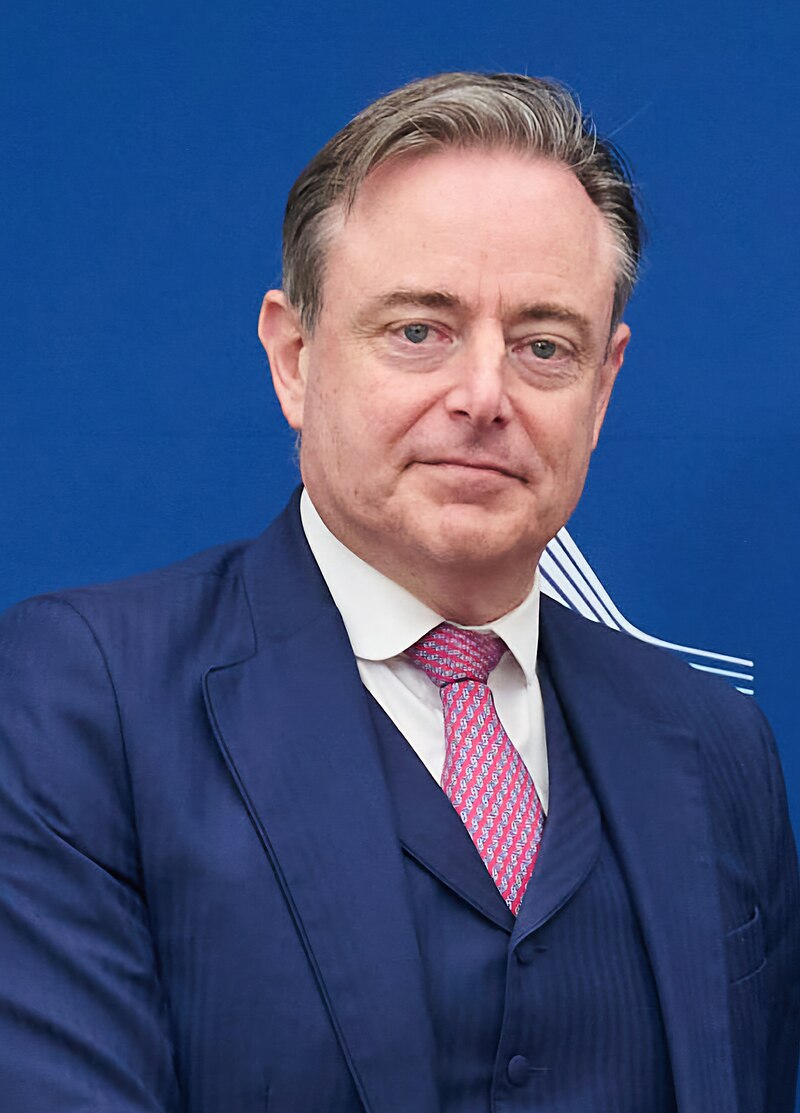
By Maarten Verheyen, a Belgian investor, entrepreneur, and author of an investment newsletter with more than 60.000 subscribers
It is always extremely dangerous to change the rules of the game. Our financial system is so complex that it is impossible to accurately predict the consequences of one’s actions.
The bankruptcy of Lehman Brothers is a good example of this.
Governments had bailed out one financial institution after another, so investors knew what to expect.
Then suddenly Lehman Brothers was not bailed out and had to file for Chapter 11 bankruptcy. That decision caused complete panic on the financial markets and led to a total meltdown.
Two weeks later, the US Congress was forced to vote on the TARP programme and keep the financial sector afloat with £750 billion in extra capital.
Confiscating Russian frozen assets is a dangerous experiment – My latest for @brusselssignalhttps://t.co/pDrIfnqOHM
— Pieter Cleppe (@pietercleppe) December 3, 2025
But freezing Russian reserves can also be seen as a catastrophic decision.
I realised this immediately at the time and wrote the following about it:
“Russia has shown that the US, through the dollar, can completely destroy the economy of almost any country in the world.
You can be sure that the world’s central bankers suddenly have a very different view of the dollar as a reserve currency.
What is the value of that dollar if the US can block your account in the event of a conflict?
Do you think that countries such as China, India, Brazil, etc. are still keen to hold their reserves in US dollars? You would be crazy.
And since the EU took the same measures, you can also immediately rule out the euro as a possible alternative.
What does that leave us with? Will the world revert to gold as the reserve asset? It certainly looks that way.
It seems clear to me that this analysis was spot on, doesn’t it? Central banks around the world have been buying gold en masse since the war in Ukraine.
Het is altijd bijzonder gevaarlijk om de regels van het spel te veranderen. Ons financieel systeem zit zo complex in elkaar dat je nooit precies de gevolgen van je acties kan inschatten. https://t.co/sJNrrCuLP2
— Maarten Verheyen (@MaartenVerheyen) December 5, 2025
What’s more, since then, much more trade has been settled in local currencies rather than US dollars.
The dominance of the dollar has crumbled spectacularly in recent years, and it can all be traced back to the moment when the West changed the rules of the game and blocked Russian reserves. Not even Hitler managed that.
And in the EU, they want to go even further and lend those frozen reserves to Ukraine via a roundabout route. But how will Ukraine ever repay that loan if they lose the war?
Why isn’t the European Commission's 🇪🇺 plan to provide cash for #Ukraine 🇺🇦 addressing #Belgium's 🇹🇩 concerns?
https://t.co/DpLYq5A7OE— Pascal Heyman (@PascalHeyman) December 4, 2025
Yesterday, I heard an “expert” on television say that the chance of it going wrong is not that great. “It’s worth the risk”.
These are, of course, the words of a Europhile who has no idea how our financial system works.
But this action could indeed cause very serious problems.
Putin has already announced reprisals and will confiscate the assets of Western companies and individuals in Russia. And that would involve larger amounts than the reserves the EU wants to seize.
According to Russia, this amounts to $300 billion in assets. That is a potential hole of $300 billion in the balance sheets of Western companies. These are not small sums, and losses of this magnitude could well lead to bankruptcies.
“It’s crazy and I don’t understand how they think they will get away with this,” said a senior member state official in response to the proposal to use art. 122 TFEU to circumvent veto powers: “The precedent that you set with this could have wide-ranging ramifications.” https://t.co/DNPSjX7hEO pic.twitter.com/M2a4ExFdeO
— Pieter Cleppe (@pietercleppe) December 4, 2025
A much greater impact is the breach of trust that will arise in the Western financial system.
Imagine you are the CFO of an oil company in the Middle East: would you still risk parking large sums with Western banks?
Non-Western companies will think twice in future before depositing their surpluses with local banks.
If the world’s central banks exchange their euros and dollars for gold, how do you think companies from Brazil, Saudi Arabia, India, China, etc. will react when the EU sends Euroclear funds to Ukraine?
It is these kinds of ill-considered decisions that have far-reaching consequences. Consequences for which we in the EU may be presented with the bill.
And that applies even more so to the Belgians, who are legally at risk of facing a claim of €140 billion.
The plot thickens: "Countries such as France, Germany, Cyprus and Sweden also appear to have billions in frozen assets. The question is whether they will transfer the additional tax revenue from these frozen assets to Ukraine, as Belgium has done." https://t.co/NgKVoZY39B
— Pieter Cleppe (@pietercleppe) December 4, 2025
In Parliament, I responded to questions about our country’s position regarding Euroclear. Many false insinuations are being spread to put pressure on us, but our conditions are reasonable and constructive. We are not going to burden ourselves with irresponsible risks. pic.twitter.com/W39Koiy9Kf
— Bart De Wever (@Bart_DeWever) December 4, 2025
Originally published in Dutch on Beurs.com
Disclaimer: www.BrusselsReport.eu will under no circumstance be held legally responsible or liable for the content of any article appearing on the website, as only the author of an article is legally responsible for that, also in accordance with the terms of use.