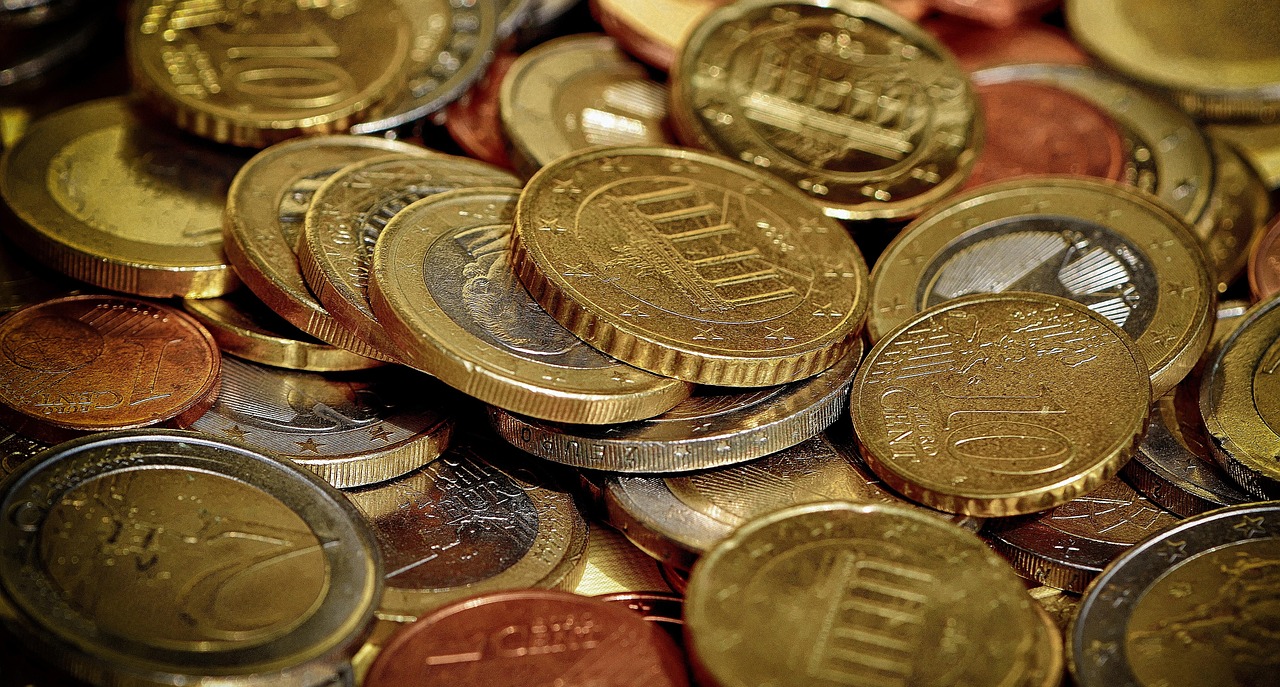
As the end of the year approaches, policy making in Brussels continues in full gear, with the negotiations on the EU’s long term budget becoming ever more intense. According to an EU diplomat, these talks on the “multiannual financial framework” (MFF), which involves EU spending between 2028-2034, are shaping up to be the “hardest in EU history.” In July, the European Commission shamelessly proposed to almost double its spending, from about 1.2 trillion euro over seven years to 2 trillion euro, despite the fact that this fall, the European Court of Auditors issued an ‘adverse’ opinion on EU expenditure for the sixth consecutive year.
Thereby, the European Commission also requested more so-called “own resources” powers, which amounts to EU taxes, in particular on large companies, tobacco, electronics waste and carbon emissions.
In a sign of how out of touch the European Commission bureaucracy has become, it emerged that the proposed “Corporate Resource for Europe” (CORE), which would generate around €6.8 billion per year by taxing companies with over €50 million in annual turnover and a permanent establishment in the EU, did not receive a single positive remark from any single EU member state, when presented.
Don’t model next EU budget on pandemic recovery fund, auditors warn: The €650 billion Recovery and Resilience Facility has "limited focus on results, no information on actual costs, [and] it is not clear what we got for the money,” the… https://t.co/mV8SAxxUR0 pic.twitter.com/hBDuFwKkpm
— Euractiv (@Euractiv) May 6, 2025
Also the “Tobacco Excise Duty Own Resource” (TEDOR) is facing strong resistance. In July, Sweden’s Finance Minister Elisabeth Svantesson called the proposal “completely unacceptable”, thereby pointing out that the Commission not only wants to tackle tobacco products, but also alternatives to tobacco. She stated: “It seems that the European Commission’s proposal would mean a very large tax increase on white snus and, in addition, the Commission wants the tax revenue to go to the EU and not to Sweden.”
It is no coincidence that Sweden is hostile to such a paternalistic approach. The country is the only EU member state with an exemption from the EU ban on snus, which serves as an alternative to smoking tobacco. The results are clear, after three decades: Not only does Sweden has among the lowest smoking rates in Europe, but it also has a much lower incidence of smoking-related diseases. In comparison to other EU countries, Sweden has 44% fewer tobacco related deaths, 41% lower lung cancer rates and 38% fewer cancer deaths.
The European Commission does not even seem to understand the argument proponents of this approach make, as people like the European Commissioner responsible for revising the EU’s Tobacco Excise Tax Directive, Wopke Hoekstra, have stated at a European Parliament hearing that “Smoking kills, vaping kills.” Hoekstra thereby equated the two, even though according to the UK government’s health department, “best estimates show e-cigarettes are 95% less harmful to your health than normal cigarettes.”
The Danish Presidency of the Council of the European Union, pressured by hard-line NGOs, is making a bold, last-minute push to significantly increase taxes on most tobacco and nicotine products. https://t.co/SSOhjexfhx
— Brussels Signal (@brusselssignal) December 3, 2025
NGO pressure
Also the Danish Presidency of the Council of the European Union is on the side of the paternalists. Reportedly under pressure from NGOs, it has doubled down on the approach with its new proposal to amend the EU’s Tobacco Excise Directive (TED) through significantly higher taxes on most tobacco and nicotine products. Brussels Signal notes that “the revised Danish proposal introduces stricter definitions, higher tax rates and a more aggressive approach to closing loopholes. It reflects the priorities of hard line NGOs such as Smoke Free Europe and seems, in parts, at odds with the positions of member states and ongoing scientific debates.
The Danish amendments adopt the numerical proposals championed by NGOs. They include setting the tax rate for heated tobacco products (HTPs) at €360 per kilogramme, more than double the European Commission’s initial suggestion of €155/kg.”
Surely, the Danish Presidency could have avoided copy pasting the suggestions put forward by NGOs, certainly in the face of the ongoing NGO scandal, whereby it emerged that the Commission would have spent billions of taxpayers money to NGOs, while providing them with instructions on how to influence EU policy making.
Hearings in the European Parliament about this have already taken place. One of the former European Commissioners involved, Frans Timmermans, is refusing to take part, but the director of DG ENVI, Eric Mamer, did appear. There, he acknowledged that, in the past, specific lobbying activities were detailed in the work programmes NGOs attached to applications for operational grants, however stressing that under the new guidelines in place since 2024, this would no longer happen. Still, MEPs like Sander Smit have demanded subsidy contracts to be made public in the future. Witnessing how NGOs remain very influential towards the EU policy making process, despite the recent revelations, should only strengthen the case for making sure that fake representatives of civil society are not being propped up by taxpayers.
NGO funding probe: first sitting of scrutiny board retreads old ground https://t.co/vWt8wYV2Fe pic.twitter.com/xLAJBlMrm2
— Euractiv (@Euractiv) November 27, 2025
The return of the frugals
In any case, a hopeful development is the return of frugal EU member states building a coalition to rein in demands for ever more EU spending. Politico notes that the traditional “frugal” alliance which is composed of Austria, Sweden, Germany, the Netherlands, Finland and Ireland is now being joined by France and Belgium, both net payers to the EU budget. Denmark is likely to join from January, when it will no longer be chairing the EU Council.
What this coalition reportedly will be demanding is to reduce the size of the EU’s long-term budget. Austria’s Europe Minister Claudia Plakolm commented about this that “If we have to tighten our belts at national level, we cannot possibly explain why the European Commission has presented the biggest ever EU budget … We must not spend more, we must spend better.” Swedish Minister for EU Affairs Jessica Rosencrantz added: “I don’t see any other way going forward than to put this budget on a diet and focus on our key tasks.”
The frugals seem to have already managed to convince other EU member states to pressure the EU institutions into more fiscal rectitude. A draft EU Council position on the next seven-year budget demands “budgetary discipline” across all EU institutions, with respect to the EU Commission’s proposal to increase spending for EU administrative costs from €82 billion to €118 billion. EU member states thereby state: “simplification efforts across policy areas, including omnibus packages and the reduction in the number of [Multiannual Financial Framework] programmes, as well as the introduction of new technologies, including AI, should lead to reduced administrative burdens and corresponding savings.”
Is the party over in Brussels?
An Omnibus for the Commission itself? https://t.co/qaBcLX0d4H
— Eddy Wax ✍️ (@EddyWax) December 1, 2025