By Luis Arellano, a contributor on finance, geopolitics and the Middle East
After nearly two years of political paralysis in Iraqi Kurdistan, Masrour Barzani has little to show for his leadership. Europe must stop treating the crisis as business as usual and start using its influence to demand accountability.
For years, Iraqi Kurdistan was presented to European policymakers as one of the few success stories to emerge from post-Saddam Iraq. Despite the instability surrounding it, the region offered relative security, attracted foreign investment and maintained close relationships with Western governments. European officials cultivated ties with Erbil, viewing the Kurdistan Region as an important partner in a difficult neighbourhood.
That reputation is becoming increasingly difficult to sustain.
Nearly two years after the October 2024 regional elections, Kurdistan still has no new government. Political negotiations have repeatedly stalled, relations between the Kurdistan Democratic Party (KDP) and the Patriotic Union of Kurdistan (PUK) have deteriorated, and the region is increasingly threatened by a return to the political divisions that once brought it close to civil war.
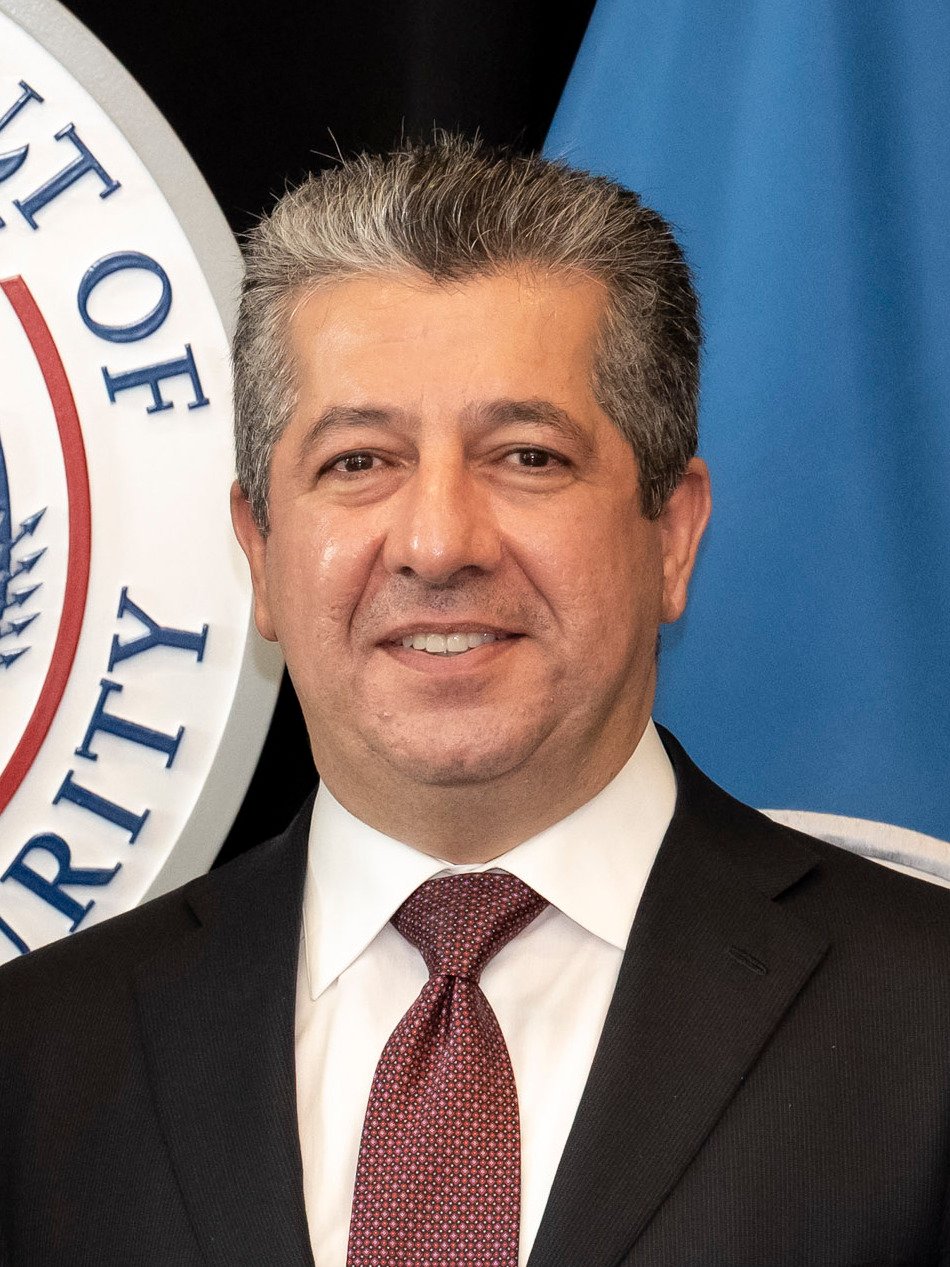
Masrour Barzani bears considerable responsibility. He is not a junior figure caught in a crisis created by others. He is the prime minister and the head of the political party that dominates much of the Kurdistan Region. He has been in office since 2019. Whatever difficulties he inherited, he has had years to address them. Instead, Kurdistan’s political problems have become more entrenched, its institutions remain divided and the prospect of competing administrations is once again being discussed.
Europe should be asking a simple question: what exactly is Masrour Barzani delivering?
Political leaders cannot indefinitely blame history, rival parties or Baghdad for problems that persist under their own watch. The KDP and PUK have spent decades competing for power, maintaining separate political networks and exercising influence over their own security structures. These arrangements are hardly new. But a prime minister’s job is to overcome them, not allow them to become an excuse for permanent paralysis.
The consequences extend well beyond Kurdish politics. Kurdistan matters to Europe because of its position between Iraq, Turkey, Iran and Syria, its energy potential, its commercial opportunities and its role in a region where instability rarely remains confined within borders. A breakdown in Erbil’s political institutions would complicate European efforts to promote investment and stability in Iraq and could create new security problems at a time when the region is already under considerable pressure.
Yet European policy has often been too comfortable. Maintaining access to political leaders is not the same as achieving meaningful progress. European governments have invested in Iraq’s institutions, governance programmes and economic development. They should be asking why those investments have failed to produce a functioning political system in Kurdistan and whether their engagement is doing enough to encourage change.
The EU has leverage, even if it rarely uses it decisively. Development assistance, institutional partnerships, political access and European investment are all valuable to the Kurdistan Regional Government. They should come with expectations. Government formation cannot be allowed to drift indefinitely. Parliamentary institutions must function. Public finances need greater transparency. Political interference in institutions and the economy must be addressed.
European officials should also widen their circle of interlocutors. Too much of the region’s international engagement revolves around established political families and party leaderships. Europe’s relationship with Kurdistan should not be reduced to its relationship with Masrour Barzani or the KDP. Independent journalists, businesses, civil society, universities and elected representatives deserve far greater attention and support.
The economy is another area where European policy needs to be more demanding. Kurdistan has enormous potential, but investors need predictable rules, transparent contracts and institutions that do not depend on political connections. European companies cannot be expected to take long-term risks in an environment where political disputes threaten government functioning and where economic decisions remain closely tied to party structures. Reform is not simply a condition Brussels can add to a funding agreement. It is fundamental to attracting the investment Kurdistan says it wants.
Security presents an equally serious concern. Efforts to unify and reorganise the Peshmerga are important, but political divisions continue to undermine the prospect of a genuinely unified security structure. European governments should coordinate their assistance with the United States and Baghdad, focusing on professional institutions, unified command and accountability rather than arrangements that risk reinforcing existing political loyalties.
There is also a wider strategic cost to Kurdistan’s internal divisions. Baghdad is increasingly central to decisions over Iraq’s budget, oil revenues and economic future. A divided Kurdish leadership is in a much weaker position to defend its constitutional rights or negotiate effectively with the federal government. Political disputes in Erbil are not merely damaging the region’s internal stability. They are gradually diminishing its influence over the rest of Iraq.
Masrour Barzani may see confrontation as a way of consolidating political power. But a region without a functioning government, increasingly divided between rival political camps, is hardly a demonstration of strength. It is a warning that political ambition is being allowed to take precedence over governing.
Europe should not abandon Iraqi Kurdistan. Its people have too much at stake, and the region remains strategically important. But European policymakers need to distinguish between supporting Kurdistan and protecting the political interests of its current leadership. The two are not the same.
If Masrour Barzani cannot deliver a functioning government, meaningful reform and stronger institutions, European officials should be prepared to reconsider the assumptions underpinning their relationship with his administration. Diplomatic engagement should not become a substitute for accountability, and longstanding partnerships should not grant political leaders an unlimited benefit of the doubt.
Kurdistan was once held up as a reason for optimism about Iraq’s future. It is increasingly difficult to make that case. Europe should stop pretending that the situation will resolve itself and start treating the political crisis in Erbil for what it is: a failure of leadership with consequences far beyond Kurdistan.
The factual backbone is also supported by recent EUAA reporting, which confirms that no new KRG cabinet had been formed and that the prolonged deadlock had contributed to a de facto administrative division.
Disclaimer: www.BrusselsReport.eu will under no circumstance be held legally responsible or liable for the content of any article appearing on the website, as only the author of an article is legally responsible for that, also in accordance with the terms of use.