By Prof. Dr. Dr. h.c. Carl Baudenbacher, former President of the EFTA Court (2003-2017), Visiting Professor at the London School of Economics, Baudenbacher Law AG
I.
A central component of direct democracy and concordance in Switzerland is the consultation procedure (Vernehmlassungsverfahren). Cantons, political parties, associations, and even individual citizens are invited to comment on draft legislation and international treaties before they are submitted to Parliament. The procedure has three objectives:
-
to strengthen the potential for consensus on projects and reduce the risk of them later being blocked by a referendum;
-
to provide an objective and political reality check by gathering the perspectives of those affected by implementation;
-
to promote transparency and enable broad participation in the political decision-making process.
II.
The Swiss consultation procedure has long served as a model for other countries and was even seen as a potential export. In 2015, I had the honour of advising the Chilean government of President Michelle Bachelet, on behalf of the Federal Department of Foreign Affairs (FDFA), on the drafting of a new constitution. Although the Pinochet era had formally ended in March 1990, the wish for a definitive constitutional break with that period remained. The Swiss ambassador in Santiago hosted a dinner in honour of my wife and me with Chilean dignitaries. A very knowledgeable Swiss diplomat advised me to focus on the consultation procedure. The Chilean left-wing government, influenced by Cuban and Venezuelan advisers, wanted to exclude the political right from the preparations. I referred to the Swiss approach and recommended that all sides be involved early, openly, honestly, and transparently. SwissInfo reported on my intervention, and the organisers published my paper in a separate booklet—it is one of my few publications in Spanish. Unfortunately, the Bachelet government did not follow this advice. Two referenda later failed. Chile still has no new constitution.
Swiss government wins backing for deal deepening ties with EU https://t.co/D7UFIHzCmm https://t.co/D7UFIHzCmm
— Reuters World (@ReutersWorld) December 5, 2025
III.
Since 2013, the Swiss government has been seeking to conclude a “framework agreement” with the EU. Only now is this project, so to speak, on the home stretch. At its heart are mechanisms enabling the European Commission to monitor Switzerland and giving the Court of Justice of the European Union (CJEU) a monopoly on interpreting EU law and treaty provisions with identical content. Disputes are conceived as conflicts between the EU and Switzerland. Individuals and businesses have no right of action. Formally, an “arbitration tribunal” has decision-making authority, but if EU law is involved, it must request a binding ruling from the CJEU.
With the framework agreement project, the consultation procedure has undergone a functional shift. It no longer serves to guarantee the broadest, most transparent, and unbiased participation possible. Instead, its main objective has become to produce a result that aligns with the government’s wishes. At the time in Chile, I would never have imagined that the FDFA would oversee such an operation.
The material basis for the consultation procedure on the framework agreement was the Federal Council’s 931-page Explanatory Report of 13 June 2025. This report contains numerous incorrect statements on key institutional issues. The most important is the contention that the agreement would create a two-pillar model with an EU pillar and a Swiss pillar in which Switzerland would monitor itself. In reality, the European Commission would be the de facto supervisor of Switzerland. The Commission has drifted far from its traditional role as “guardian of the treaties”. It constantly invokes “values” and the “rule of law”, yet has become increasingly political in recent decades, as reflected in its selective enforcement of EU law within the Union. Even the EU’s closest partner states, Norway and Iceland, recently had unpleasant experiences when they were unlawfully subjected to protective measures on ferroalloys.
Any significant dispute between Switzerland and the EU, no matter who initiates it, would end up before the CJEU, which has been granted a monopoly on interpretation. In reality there would be only one pillar—the EU’s. Georges Baur, former Assistant Secretary-General of EFTA, has likewise emphasised that talk of a two-pillar model is unfounded.
Secondly, the Explanatory Report is full of misleading claims portraying the “arbitration tribunal” as the central decision-maker and the CJEU as its subordinate. To an EU audience, this idea is downright absurd. The Report claims, for example, that the “arbitration tribunal” would independently decide whether to refer a case to the CJEU, that the CJEU could not intervene if the tribunal interpreted EU or parallel agreement law on its own, and that the tribunal would have the monopoly on decision-making and the “final say”. All of this is, to say the least, misleading. The Report also conceals the fact that the model originates from association agreements with post-Soviet developing and emerging states such as Armenia, Georgia, Moldova, and Ukraine.
Thirdly, the Report’s assertion that this would be a classic international agreement is simply incorrect. In classic treaties—such as Switzerland’s free trade agreements with China and Japan—disputes are settled by genuine arbitration tribunals, not by bodies subordinated to the court of the other party.
Finally, the Explanatory Report completely ignores what is the “crucial question” for EU law: the principle of autonomy. The notion that an “arbitration tribunal” could interpret EU law in a binding way is incompatible with this principle. The CJEU would surely react if the tribunal acted as claimed by the Swiss Federal Council.
The decisive point now is that many supporters—particularly in business circles and among most cantons—based their positions precisely on these incorrect or misleading statements. Their submissions are therefore contestable as a matter of general legal principle.
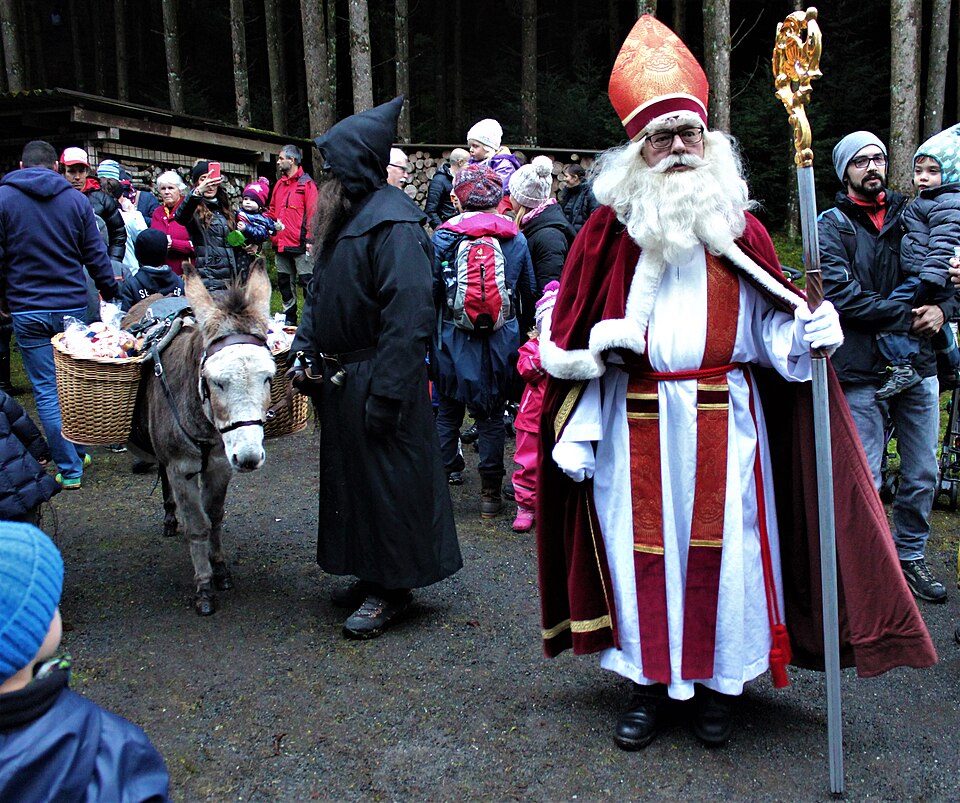
IV.
5 December 2025 (the evening St. Nicholas visits children in certain parts of Switzerland) is a historic date. On that day, the Foreign Minister, supported by numerous federal officials, announced the results of the consultation procedure at a press conference. At the same time, the new agreement was given a misleading new name: “Bilaterals III”. This suggests it is merely a continuation of Bilaterals I and II. It is not, due to its institutionalisation. Brussels also rejects the term but is willing to overlook Bern’s linguistic sleight of hand—at least for the duration of the referendum campaign.
As noted, the consultation procedure has been repurposed. The process was steered by the federal government in two key ways. First, the starting point was the Explanatory Report of June 2025, whose incorrect statements on crucial institutional questions I have described above. Second, the responses were guided toward the preferred outcome by means of a questionnaire containing leading questions and, for example, the suggestion that domestic implementation was at least as important as the framework agreement itself.
Voters in Switzerland rejected by large majorities two initiatives in a referendum today, one proposing to tax the super-rich on their inheritance and another to extend mandatory civic or military service to women.https://t.co/3hcpk17ODe
— POLITICOEurope (@POLITICOEurope) November 30, 2025
V.
Added to this is a step whose audacity surprises even those who have grown accustomed to official untruths and manoeuvres since 2013. The Swiss Federal Department of Foreign Affairs FDFA (FDFA) took it upon itself to invalidate countless unwelcome submissions—apparently more than 1,000. Of the accepted responses, 215 addressed the Switzerland–EU package as a whole; 159 of these (74.0%) supported the package in principle, 31 (14.4%) rejected it, and 25 (11.6%) expressed no clear position and saw both opportunities and risks.
A prominent member of parliament even praised the “majority of responsible actors and interest groups” and claimed that “orchestrated, pre-written responses from those who criticise the state bureaucracy” had rightly been eliminated. The FDFA, for its part, asserts that it acted because the excluded statements had been written with the help of AI.
(My own submission also fell victim to this approach—even though the FDFA had confirmed to me in writing on 13 October 2025 that it had been received and was being processed. Luckily, I had already published the text myself as a precaution.)
On the basis of this procedure, the government announced—on the eve of St. Nicholas Day and with feigned pride—that the framework agreement had received broad support and that the Federal Council’s dispatch would follow in spring. It can be assumed that work on this dispatch has been underway for some time, since it must have been clear in Bern that most participants would accept the incorrect assertions in the Explanatory Report and the leading questions.
Yet despite all these manoeuvres, the government failed to achieve a positive outcome on one crucial point. Relying on a conveniently favourable opinion from the Federal Office of Justice, it decided that the framework agreement should not be subject to a mandatory referendum but only to an optional one. In that case—if a referendum is held at all—a simple majority of voters would suffice; a majority of cantons would not be required. Among those consultation participants who were not excluded, a clear majority demanded a mandatory referendum with a double majority. The final decision now lies with Parliament.
Please keep in mind Switzerland's current arrangement with EU is not "dynamic alignment" but "static":
"Under the Swiss-EU bilateral agreements, the adoption of each new EU directive by Switzerland has to be negotiated."https://t.co/KLSOQbCoWo
The Swiss may well reject… pic.twitter.com/yxaPx7bqEh
— Pieter Cleppe (@pietercleppe) May 20, 2025
VI.
It is doubtful whether Switzerland will continue to be admired internationally for its centrally managed “St. Nicholas consultation procedure”. Today, I would be embarrassed to recommend the once-famous Swiss model in Chile (or anywhere else). Unlike in the Netherlands and Flanders, there is no debate here about whether St. Nicholas’s sinister helper—known as Zwarte Piet in the Netherlands and Flanders and as Schmutzli in Switzerland—violates rules of political correctness and should be abolished. But 5 December 2025 must nevertheless be regarded as a black day for direct democracy in Switzerland.
Originally published in German in Inside Paradeplatz
Disclaimer: www.BrusselsReport.eu will under no circumstance be held legally responsible or liable for the content of any article appearing on the website, as only the author of an article is legally responsible for that, also in accordance with the terms of use.