By Miłosz Manasterski, a Polish essayist, political commentator, and CEO of Agencja Informacyjna.
Why the EU’s defence rules fail the eastern flank
Brussels likes to talk about “strategic autonomy”. Yet while Russia probes NATO’s eastern flank with drones and missiles, Poland buys tanks from South Korea, missiles from the United States and drones from Turkey. The problem is not a lack of European solidarity but a lack of European supply. Should the answer really be rules that make it harder to buy what Europe does not make?
In 1845 Frédéric Bastiat published his satirical “Petition of the Candlemakers”. The makers of candles, lamps and wicks begged the French Chamber of Deputies for protection against a ruinous competitor that flooded the market with light at a price of zero: the sun. Their demand was simple. Order every window, shutter and skylight closed, and domestic industry would flourish. Bastiat’s point was that protectionism speaks for the producer, never for the person who needs the light.
Autonomy on paper
The EU has produced many documents on strategic autonomy and one flagship financial instrument. SAFE, the Security Action for Europe, offers €150 billion in defence loans, raised by the European Commission on capital markets and then lent to member states. There is a catch: components from outside the EU, Ukraine and eligible EEA/EFTA countries may not exceed 35 per cent of total component costs.
The situation on NATO’s eastern flank is different. Europe does make air-defence systems, such as SAMP/T and IRIS-T, but not in the numbers or at the speed a country bordering Russia and Belarus needs. It has no operational fifth-generation fighter of its own, and the fighter-aircraft pillar of the Franco-German-Spanish FCAS programme collapsed in June 2026, when Paris and Berlin concluded that the companies could not build the jet together. In 2023 the EU promised Ukraine one million artillery shells within a year; in January 2024 Josep Borrell admitted it would deliver around 52 per cent. Strategic autonomy exists mainly in press releases.
The sun rises in the east
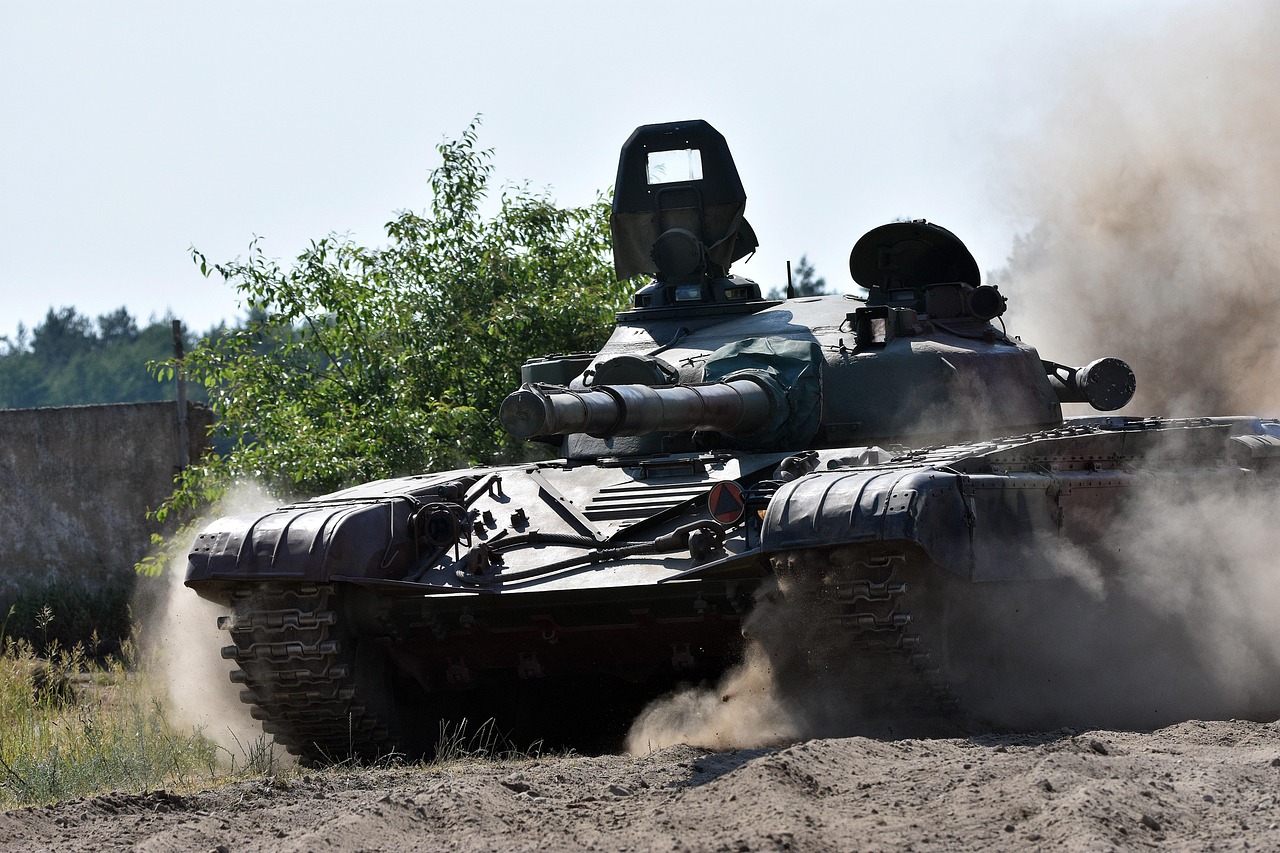
In the summer of 2022, months after Russia’s full-scale invasion of Ukraine, Poland signed deals with South Korea for K2 tanks, K9 howitzers and FA-50 light combat aircraft. “We have no time. We cannot wait,” said the then defence minister, Mariusz Błaszczak. The contracts for the first K2s and K9s were signed in late August, and the first tanks and howitzers arrived in December, less than four months later. The Koreans offered a combination of scale and speed that Poland could not get from European suppliers on comparable terms. A second contract, signed in August 2025, covers 180 more K2s, 61 of them to be built in Poland. Add Turkish Bayraktar drones and American F-35s, Abrams, Apaches, HIMARS and Patriots.
This is not a matter of whim or disloyalty, just the calculation every buyer makes: price, delivery time, combat record, technology transfer. A front-line state cannot wait for the competition to catch up. Nor does buying from Seoul mean giving up security of supply: the Korean deals come with technology transfer and local production, as the Polish-built K2s show, and so build up supply at home without waiting for multi-year EU programmes.
Baykar shows how blurred the nationality of defence technology has become. The Turkish maker of the Bayraktar bought Italy’s Piaggio Aerospace in 2025 and now builds drones in Italy through LBA Systems, a joint venture with Leonardo. The Italian venture uses the TB3 as the basis for the Astore Levante. SAFE rules may still treat the Turkish components and design authority as an eligibility problem. Yet combat capability is the product of an entire technology chain, not of the passport stamped at final assembly.
Europe is rearming at a speed not seen in decades.
SAFE, the new €150bn EU defence fund, already filled: 19 states applied, Poland alone asks for €43.7bn, writes The Economist.
— Tymofiy Mylovanov (@Mylovanov) December 3, 2025
Brussels pays for what Poland already makes
Poland is SAFE’s largest beneficiary. It signed a loan agreement for €43.7 billion on 8 May 2026 and received a first payment of €6.6 billion on 29 May. The government says 89 per cent of the money will stay in the Polish economy; Prime Minister Donald Tusk noted with some satisfaction that German industry’s share would be 0.37 per cent. SAFE money is buying Piorun missiles, 146 Borsuk infantry fighting vehicles, trucks, loitering munitions and Polish components for air-defence and artillery systems.
These are good products, and building them at home is exactly what SAFE was designed to encourage. The problem lies elsewhere. Because access to cheap EU credit depends on where components come from rather than on what the army needs first, Poland has to split its procurement in two. What qualifies goes into SAFE. The rest – F-35s, American launchers and interceptors – is paid for from the national budget, national borrowing and American military loans. The financing follows the origin rules, not the urgency of the threat.
There are other risks, too. Poland signed up to loans with maturities of up to 45 years without knowing the interest rate. “We will know that rate at the moment when the European Commission actually takes out the loan on the market,” admitted Finance Minister Andrzej Domański. Payments can be suspended if a country fails to meet its plan or the attached conditions. President Karol Nawrocki, who vetoed the implementing law in March before the government found another legal route, warned that Brussels could withhold the money arbitrarily. Legally, this differs from the mechanism that froze Poland’s EU recovery funds for years; politically, Poles remember how quickly EU money becomes a lever.
Protectionism on credit
In Poland, SAFE amounts to protectionism twice over. Brussels restricts non-European suppliers, and Warsaw plans for 89 per cent of the money to remain in the Polish economy, with numerous major contracts going to companies in the state-owned PGZ group. There are good reasons to support a national defence industry: no sensible government wants to rely on someone else’s warehouses in wartime. But SAFE is not paid for out of revenue. Even if its financing proves cheaper than Polish government borrowing, Poland is still taking on debt to support a policy that narrows its choice of suppliers, and it will be servicing that debt for decades.
In March, Nawrocki proposed an alternative: a “Polish SAFE 0%”, a PLN 185 billion defence fund financed from future central-bank profits, with no interest and no external conditions. The European Central Bank objected that this would run counter to the EU’s ban on monetary financing, yet the proposal raises a fair question: should a country that can finance its own defence hand part of the control over it to an outside creditor?
The rating agencies are counting
On 18 September 2026 Moody’s cut Poland’s rating from A2 to A3 – its first-ever downgrade of the country, which had held A2 since 2002. The general government deficit reached 7.3 per cent of GDP in 2025, the second-highest in the EU, behind Romania, and Moody’s expects debt to rise from 59.7 per cent of GDP in 2025 to 68.9 per cent in 2027. Poland has earmarked around PLN 200 billion for defence this year: 4.81 per cent of GDP by its own count, or 4.68 per cent by NATO’s, which puts it fourth in the Alliance after Lithuania, Estonia and Latvia.
Defence is not the only culprit; Moody’s also points to health, social spending and public investment. A front-line state’s borrowing capacity is finite. True, the Commission borrows more cheaply than the Polish Treasury. But Poland repays the SAFE loans, and the IMF counts them in its analysis of Polish debt.
If money is finite, the answer is not to spend less on defence; Poland’s neighbourhood rules that out. What matters is how much capability each borrowed złoty buys, and how soon. Fewer suppliers usually mean longer delivery times and fatter margins. For France or Germany, that may be a deliberate cost of industrial policy. For Poland, Lithuania or Finland, it is a cost counted in missiles that may not be there when they are needed.
Moody’s, one of the big three global credit rating agencies, has cut Poland’s rating from A2 to A3.
The last time the agency had Poland at such a low level was 2002. It is also the first time any of the big three agencies has downgraded Poland since 2016 https://t.co/qUAEouqhlx
— Notes from Poland 🇵🇱 (@notesfrompoland) September 19, 2026
Open the shutters
Another debt vehicle, or another preference for “qualifying” origin, will not fix this. Europe is short of factories, capital and competition, and all three are scarce where permits take years and buyers are told by law whom to buy from. South Korea built its defence industry with heavy state support, but then put it to the test on open export markets, competing on price, delivery and technology transfer. Europe wants the state support without the exam.
In February 2026 Washington warned that if the EU introduced a European preference in defence procurement, it could review the Buy American waivers granted under reciprocal procurement agreements with 19 member states. A trade war with Europe’s most important ally, while Russian drones stray into Polish airspace, would be the most expensive route to autonomy imaginable.
Bastiat’s candlemakers wanted every window shut. EU planners are more modest. They merely ask Poland, Lithuania and Estonia to close the windows facing Seoul, Ankara and Washington. But can countries on Russia’s border afford to sit by candlelight?
Disclaimer: www.BrusselsReport.eu will under no circumstance be held legally responsible or liable for the content of any article appearing on the website, as only the author of an article is legally responsible for that, also in accordance with the terms of use.