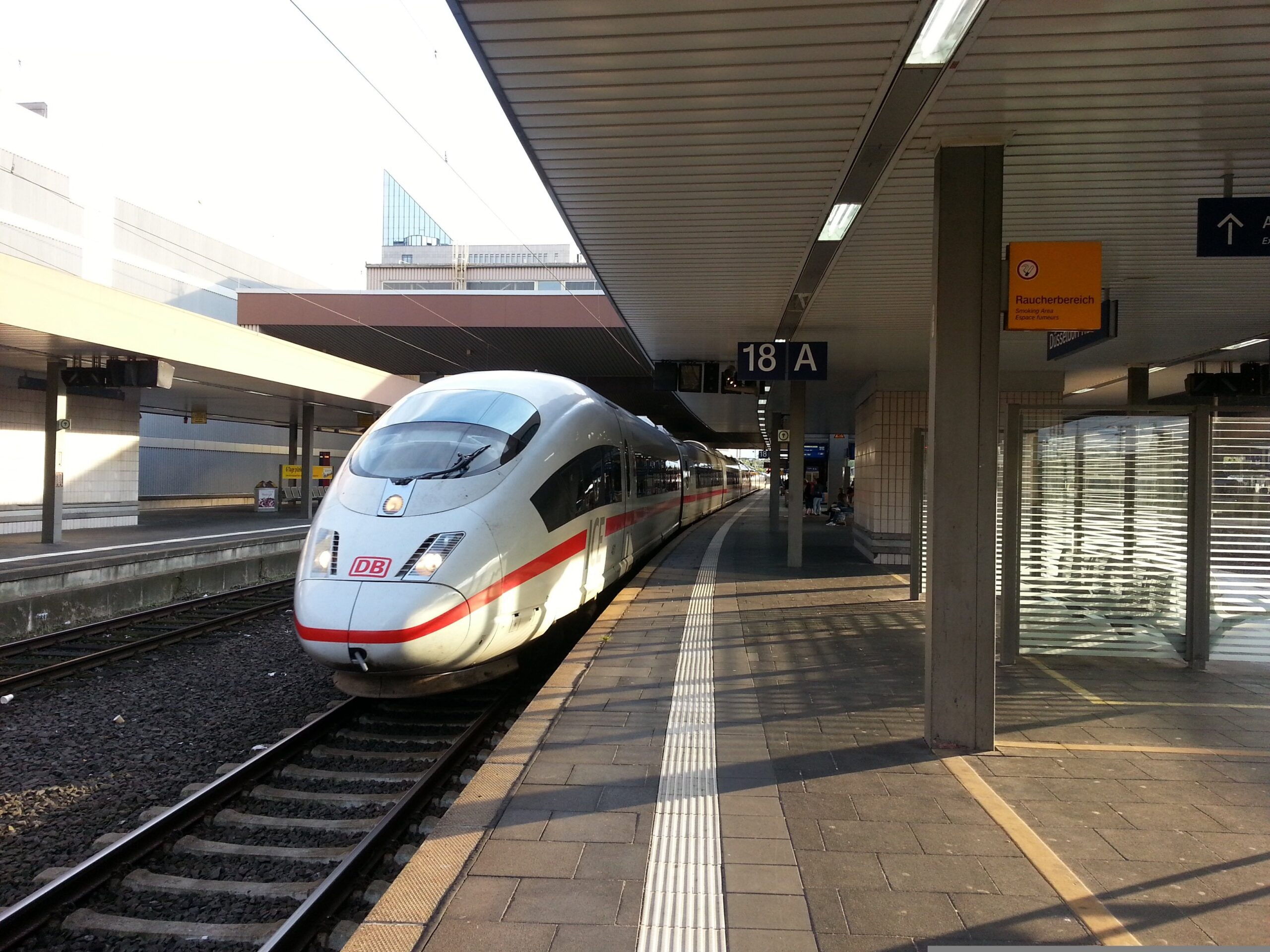
By Francesco Ramella, Research Fellow, Istituto Bruno Leoni, and Emelie Franzén, Research & Content Coordinator, EPICENTER – European Policy Information Centre
When former Italian Prime Minister Enrico Letta commented on the EU’s new High-Speed Rail Action Plan last autumn, he captured the prevailing mood in Brussels perfectly: “We need it. And we must achieve it whatever it takes.” It is a phrase that should alarm every European taxpayer. Because when politicians declare that cost is no object, it is invariably the public who picks up the bill.
A new briefing paper published by EPICENTER—drawing on a January 2026 audit by the European Court of Auditors—offers a timely reality check on what “whatever it takes” actually looks like in practice. The picture is not pretty.
The Court of Auditors examined eight flagship projects within the Trans-European Transport Network (TEN-T), the EU’s grand plan to stitch the continent together with roads, railways, and waterways. Its findings were stark. On average, actual costs now run 82% above original estimates. The average delay in project completion has grown from eleven years—already scandalous—to seventeen. Rail Baltica, the high-capacity railway linking the Baltic states to Warsaw, has seen its estimated cost balloon by 291%, from €4.6 billion to over €18 billion at 2019 prices. Even that figure may not be the final word, since detailed design studies exist for only one-third of the total route.
The Turin–Lyon high-speed rail link, which achieved rare notoriety in 2019 when an Italian government cost-benefit analysis found it would destroy nearly €8 billion in social value, has since seen its price tag more than double to €11.8 billion. The project is now expected to be completed in 2033, eighteen years behind schedule. The air quality disaster predicted by the link’s most fervent supporters, meanwhile, never materialised; vehicle emissions in the Susa Valley have continued to fall, exactly as the much-criticised cost-benefit analysis forecast.
These are not isolated mishaps. They reflect a structural problem at the heart of EU infrastructure policy. When the EU co-finances major projects, it separates those who decide and those who benefit from those who pay. A member state government that can draw on European funds to cover a large share of costs has every incentive to be optimistic in its forecasts and complacent about overruns. If the numbers go wrong, much of the burden is dispersed across the continent. This is not a governance failure that can be patched with a new regulation and a few non-binding opinions from the Commission—it is baked into the logic of the system itself.
The Court’s 2026 report acknowledges that new EU rules introduced in 2024 should improve oversight. The Commission can now monitor member states’ compliance with TEN-T priorities more closely, and national transport plans must align with EU objectives. These are modest steps forward. But as the Court itself notes, they mainly concern projects in the planning stage and will have little effect on the ongoing failures catalogued in the audit. And the deeper problem—the misalignment of incentives—remains entirely unaddressed.
🚄 The @EUauditors found that although the length of national high-speed #rail networks is growing, the EU target of tripling the length of high-speed rail lines (to 30,000 km) by 2030 will not be reached ▶️ https://t.co/sR2BhsI2I0 pic.twitter.com/F0QBezAbqw
— European Court of Auditors (@EUauditors) June 26, 2018
What makes this all the more frustrating is that the EU’s ambitious transport vision rests on questionable foundations. The claim that massive high-speed rail investment is essential to European integration or to climate goals does not withstand scrutiny. The real revolution in European connectivity over the past three decades was not delivered by TEN-T megaprojects. It was delivered by aviation liberalisation, which sent airfares plummeting and connections multiplying. Passenger kilometres travelled by air in the EU-27 grew by 344 billion over that period; high-speed rail managed just 100 billion. Low-cost airlines have connected Europeans far more effectively than any tunnel or viaduct.
The climate case is similarly weak. According to the EU’s own external cost assessment, the annual environmental benefit of the new rail plan amounts to around €500 million—roughly 0.1% of the plan’s estimated €500 billion total cost. Rail travel could reduce CO₂ emissions from air travel by only a few percentage points, even before accounting for the substantial emissions embedded in construction itself.
No private investor would fund these projects on commercial terms. That alone should give pause. When even the most optimistic projections cannot attract risk capital, the case for public subsidy rests entirely on projected social benefits that, history shows, are systematically overstated and consistently unrealised.
Rather than asking what reforms might finally make TEN-T work, European policymakers should be asking a harder question: whether EU-level financing of largely national transport infrastructure was ever the right model. The subsidiarity principle exists for a reason. Decisions and costs should be borne at the same level of government, with private capital brought in wherever possible to impose genuine financial discipline.
Until that structural question is honestly confronted, we can confidently predict what the next European Court of Auditors report will say. The projects will have cost more than expected, taken longer than planned, and delivered less than promised. And somewhere in Brussels, someone will declare that what is needed is simply more ambition—and more money.
Disclaimer: www.BrusselsReport.eu will under no circumstance be held legally responsible or liable for the content of any article appearing on the website, as only the author of an article is legally responsible for that, also in accordance with the terms of use.