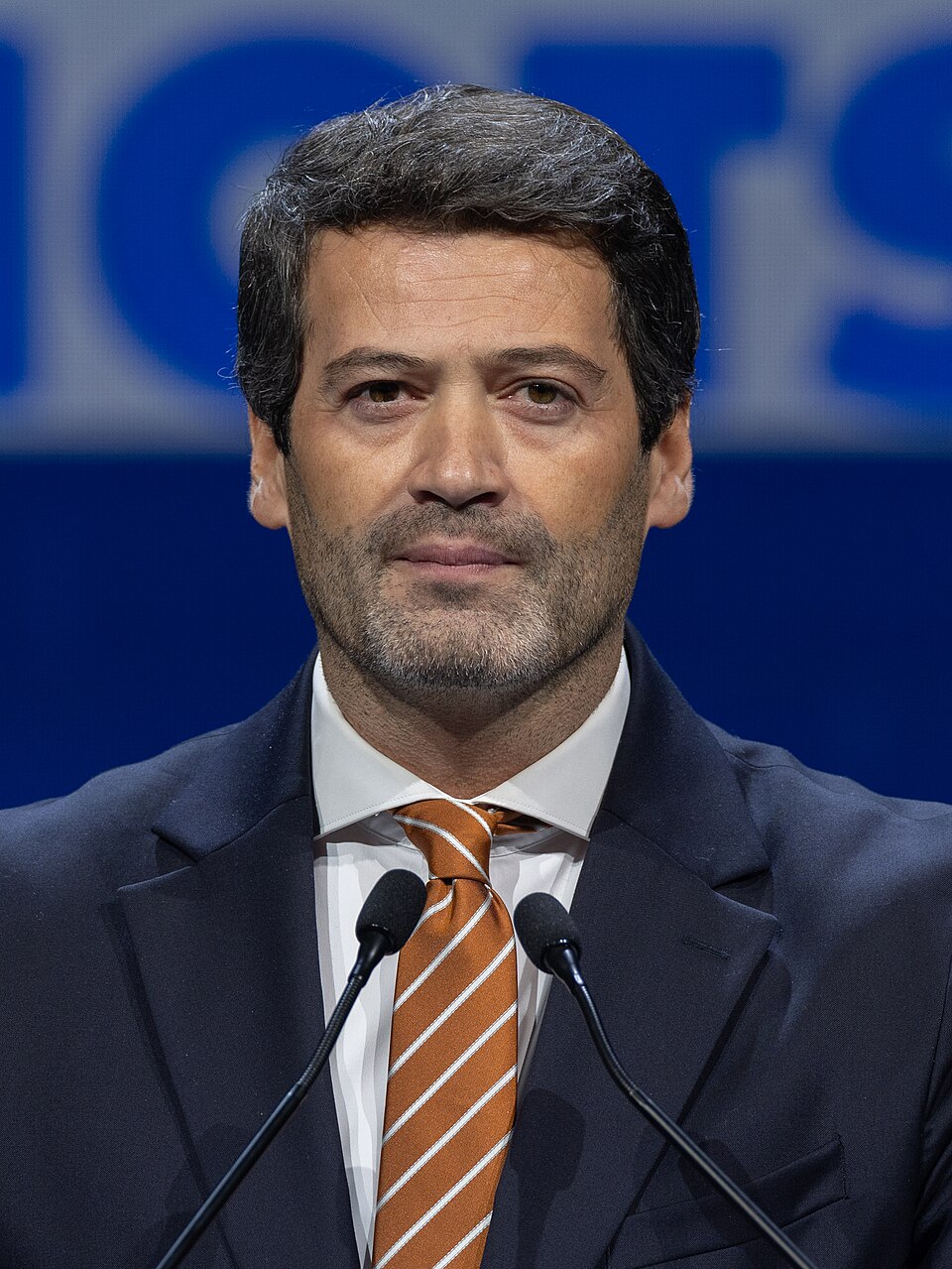
In Portugal, the insurgent right-wing party CHEGA! (CH | PfE) has secured another upset in its struggle against the establishment. On 18 January, its leader, André Ventura (picture), advanced to the second round of the presidential election.
The Portuguese traditionally elect their presidents in a single round, and the winner is usually an elder statesman with a long track record and strong name recognition. Yet all recent prime ministers have been controversial, and the pool of eligible statesmen has been depleted. Even the current president built his public profile primarily as a television political pundit rather than through ministerial office.
🇵🇹 Portugal's centre-left Seguro to face far-right rival Ventura in presidential runoff. pic.twitter.com/himb6RbZXn
— Xavi Ruiz (@xruiztru) January 19, 2026
For the first time since 1986, the first round of the presidential election proved so competitive that no candidate secured more than 50% of the vote. Seguro, the socialist candidate and former leader of the PS (S&D), benefited less from personal charisma than from tactical unity on the Left. By contrast, the Right completely forgot the meaning of unity: votes were split among the old “centre-right” social democrats, fashionable liberals, and populist conservatives. Taken together, the Portuguese Right commands roughly 60% of the electorate—but the mainstream Right never misses an opportunity to squander an advantage.
When the current “centre-right” government of Luís Montenegro was elected in 2024, Ventura immediately offered to form a coalition with Montenegro’s AD/PSD (EPP). Such an arrangement could have enabled Portugal to pursue structural reforms: restoring border controls, curbing mass Third World immigration, reducing national debt, reforming an education system steeped in cultural Marxism, and potentially even undertaking constitutional reform. Instead, the bien-pensant elites afflicted with profound Ventura Derangement Syndrome swiftly dismissed the proposal. The justification is always the same: CHEGA! is portrayed as a “threat to democracy” and a danger to the Republic’s “fundamental values.” Yet the same centre-right establishment raised no such objections when the Socialist Party allied with communists and Trotskyists to bring down a minority PSD/AD government in 2015. During the height of wokism and the renationalisations under António Costa’s PS government, there were, curiously, no “red lines” and no cordons sanitaires. Go figure.
In 2024, André Ventura warned that a minority government would be forced to make concessions to the Left, would be incapable of meaningful structural reform, and would ultimately risk instability. A year later, predictably, the government collapsed and Portugal was sent to early elections. The result was largely unchanged—except that CH gained even more parliamentary seats. Once again, AD/PSD refused any alliance with CH.
VIDEO: Why has Chega grown so fast? How has immigration reshaped Portuguese politics? What would a Ventura defeat or breakthrough mean for Europe?@ThatAlexWoman and @JustinStares break down the second round of Portugal’s presidential election. https://t.co/m3OLY7Gbyo
— Brussels Signal (@brusselssignal) February 5, 2026
We now arrive at the 2026 presidential election and observe, once again, the Left triumphing through divide and rule. Ventura could win with the support of liberals and the establishment Right—but the cucked will cuck. Montenegro refused to endorse either candidate, while much of AD/PSD and the liberal camp have either openly backed the socialist candidate or signalled that they will not vote for Ventura.
It is true that Seguro belongs to the centrist faction of the PS and is not among the most radical figures within the party. Nevertheless, handing the Socialists an easy victory will further tarnish the centre-right’s credibility. Since the founding of CH in 2019, populist conservatives have warned that there is little substantive difference between the centre-right and the centre-left. The persistent refusal to cooperate with CH in parliament—and now in this presidential election—will once again prove them right.
The Montenegro government has hardly helped its case. Its Minister for Youth refers to women as “uterus people”; LGBT rainbow colours are projected onto the façades of both the parliament and the Health Administrative Authority; AD/PSD commentators call for increased immigration; and the Defence Ministry has even contemplated diverting military procurement away from U.S. suppliers out of hostility toward the Trump administration. In the cultural sphere, the government has done nothing to defund totalitarian left-wing NGOs and cultural associations, nor has it attempted to purge national museums of cultural-Marxist initiatives.
It does not help that AD/PSD has become internally dependent either on highly urbanised progressive voters or on uninformed rural voters shaped by mainstream media indoctrination.
Should the socialist Seguro prevail, his presidency risks repeating the failures of the current head of state, who presided over Portugal’s radical demographic-replacement policies and the government-driven spread of wokism in schools—resulting in a surge in childhood gender dysphoria cases, increasingly culminating in genital mutilation. Seguro is a yes-man and is unlikely to resist any radical, Orwellian policies emanating from the extremist establishment.
Such is the fate of the politically correct West.
Miguel Nunes Silva is the Director of Portugese think tank Trezeno Institute, and a local councilman affiliated with CHEGA!
Disclaimer: www.BrusselsReport.eu will under no circumstance be held legally responsible or liable for the content of any article appearing on the website, as only the author of an article is legally responsible for that, also in accordance with the terms of use.